



For many first-time laser hair removal users, the moment the treatment ends, they expect the hair to disappear instantly. However, reality often confuses beginners-why is there no change in the hair after treatment? Is laser hair removal ineffective?
The question of how long after laser does hair fall out is essential knowledge for anyone seeking smooth skin. The "hair loss" after laser isn't like a haircut where the hair falls out immediately; it's a physiological process of the hair follicle being damaged and then expelling the dead hair. Understanding the mechanism of hair loss not only alleviates anxiety but also helps you scientifically assess the treatment's effectiveness.
How long after laser does hair fall out?
Most people will observe noticeable hair loss between 7 and 14 days after treatment. The exact time varies from person to person, but about 2 weeks is a reliable reference point.
The Complete Timeline of Laser Hair Removal
Days 1-3 Post-Treatment
Within the first three days after laser treatment, you might be disappointed, feeling that the hair looks similar to before, or even appears darker and coarser. This is because the hair follicles are slightly swollen after the laser treatment, pushing the dead hair shafts towards the skin surface. Since the hair itself hasn't broken, there's no visible sign of hair loss.
Days 4-6 Post-Treatment
During this stage, the damaged hair follicles gradually stop receiving nutrients, and the connection between the hair shaft and the follicle loosens. Some people may notice a few hairs falling out when washing their face or showering, but the number is very small and almost imperceptible without close inspection.
Days 7-14 Post-Treatment
This is the most noticeable stage of hair loss. At this time, you can try gently brushing the hair with your fingers or wiping it with a towel. You'll find that the hair falls out easily as if it had no root, and sometimes you can even see a small "black dot" at the root of the hair shaft-that's the hair follicle bulb, indicating that the laser has successfully targeted the hair root.
Days 15-21 Post-Treatment
Most of the hair in the treatment area that was in the "growth phase" at the time of treatment should have already fallen out or be about to fall out. The remaining hairs are usually in the resting phase and will be gradually removed in subsequent treatments.

Why doesn't the hair disappear immediately after laser treatment?
Unlike waxing, laser hair removal doesn't pull the hair out of the skin the instant the laser is fired. The laser energy targets the melanin in the hair follicle, destroying its activity through a photothermal effect. At this point, although the hair has "withered" at the root, the hair shaft is still stuck in the skin's pore. Your skin needs time to process these dead hair follicle tissues, and like rejecting foreign objects, it slowly pushes the remaining hair upwards until it falls out naturally.
Key Factors Affecting Hair Fall-Out Speed
Not everyone experiences the same rate of hair loss after laser treatment. The following factors play a decisive role in how long for hair to fall out after laser:
Treatment Area
Hair fall out after laser at different rates in different areas. Hair on the legs and back may take longer to fall out due to deeper hair follicles; while hair on the face or underarms usually falls out faster. The approximate time for hair loss in different treatment areas is as follows:
| Treatment Area | Average time of hair loss onset | Characteristics |
| Underarms | 5-7 days | Hair follicles are shallower, so shedding is faster. |
| Bikini/Groin | 7-10 days | Hair follicles are deeper, so shedding is slower. |
| Legs | 10-14 days | Hair cycle is longer, so shedding is the slowest. |
| Face (lip/cheek hair) | 7-10 days | Fine, soft hairs shed less noticeably. |
Hair Texture
Hair characteristics also affect the rate of hair loss. For example, coarse, dark-colored hair absorbs more energy and tends to fall out more noticeably than fine, soft hair.
Laser Type
Different wavelengths of laser light have different absorption rates for melanin in the hair follicle, which leads to differences in the degree of thermal damage and affects the rate of hair loss.
| Laser Type | Wavelength | Hair Shedding Speed | Typical Presentation |
| Alexandrite | 755 nm | Very fast | Noticeable hair loss is usually visible within one week after the procedure. |
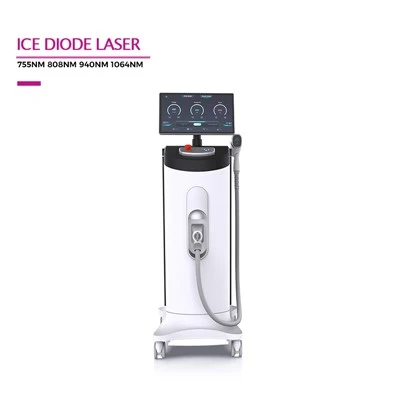
| Diode | 808 nm | Moderate | Shedding occurs within 1-2 weeks, and the process is smooth. |
| Nd: YAG | 1064 nm | Slower | The focus is on deep damage, and the shedding may be relatively delayed. |
| IPL | 500–1200 nm | Slow/uneven | Multiple treatments are required, and the shedding effect is not obvious. |
Post-treatment Care: How to Facilitate Hair Removal?
While we emphasize that hair fall out after laser is a natural process, you can promote it through proper care:
Gentle Exfoliation
About a week after the procedure, you can gently massage the treated area with a mild scrub or towel while showering. This helps loosen the severed hairs.
Be sure to use a gentle exfoliating product to avoid irritating the newly damaged hair follicles with physical abrasive particles. Although exfoliation can help remove hair, it should be done a week after treatment; doing it too early can worsen irritation.
Do Not Plucking
Never pluck the hairs you see! Plucking forcibly pulls out the hair shaft along with the follicle, disrupting the laser's continued effect on the follicle and easily causing folliculitis and pigmentation. Let it fall out naturally.
Adequate Hydration
Keep your skin well-hydrated using a gentle moisturizing product. Moisturized skin metabolizes faster, helping hair to fall out more easily.
What if the hair hasn't fallen out after 3 weeks?
If the hair still hasn't fallen out after 3 weeks, it usually means the treatment didn't effectively target the hair follicle.
You can gently pull a hair upwards with your fingers (not tweezers). If it slips out easily, the follicle is dead; the skin's metabolism is just slow. You can gently massage the area with a mild scrub while showering to help remove the hair. However, if you feel pain or the hair root is firmly planted, the follicle is still alive, and the treatment has failed.
Possible reasons
Energy parameters too low
For patient safety, especially for first-time laser hair removal patients, operators usually set the energy level lower. This is insufficient to completely destroy the hair follicle. It's recommended that you discuss adjusting the parameters with your technician at your next treatment.
Pre-treatment Hair Removal
Shaving is different from plucking. If you plucked hair or used hair removal cream within four weeks before the procedure, the laser won't be able to find the target melanin, making it ineffective.

Missed Areas
If large patches of hair haven't fallen out, it's possible that those areas were missed during the procedure.
Hair in non-anagen phase
Human hair goes through different growth phases: anagen (growth phase), catagen (transitional phase), and telogen (resting phase). Laser energy can only effectively remove hair in the growth phase. Therefore, if you find that hair in a certain area hasn't fallen out after three weeks, it's likely that the hair in that area is in a non-growth phase. If hair hasn't fallen out in any treated area, it's most likely not a problem with the treatment cycle, but rather with the laser parameters.
Important Notes:
Do not attempt to remove the hair yourself.
Even if it doesn't fall out, never pluck or wax it. This will disrupt the hair growth cycle, causing the hair follicles to be in a non-growth phase again during the next laser treatment, creating a vicious cycle.
Don't use hair loss as the sole criterion for judgment
If you are still concerned about the pain during the laser treatment while observing hair loss, or want to know how to achieve a truly "painless" experience, you can click to view our main topic: "Is laser hair removal painful? A Complete Guide to painless hair reduction"
If you have just had your first laser hair removal treatment and want to know what to do next, we recommend continuing to read our post-treatment recovery topic: "Can you go in the sun after laser hair removal?"
If you are a beginner and curious about your experience after laser treatment, you are also welcome to check out our detailed sharing on post-treatment conditions: "What to expect after first laser hair removal?"
If you have questions about hair removal for intimate areas, you can continue reading: "Laser Hair Removal Vulva: What's The Real Feeling"
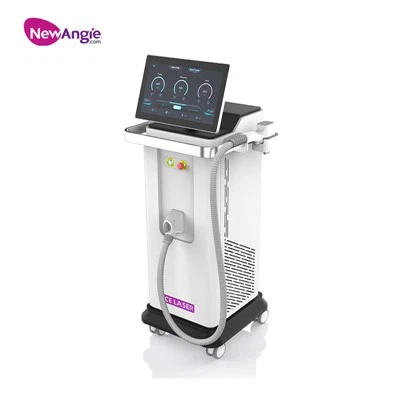
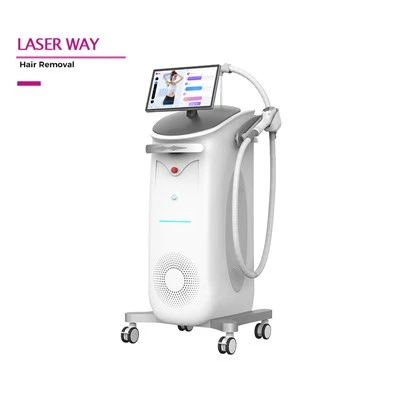
Want to know which high-quality laser hair removal machines Newangie offers? Click here."Diode Laser Hair Removal Series"