



Choosing the right laser hair removal technology is one of the most important decisions for clinic owners, medical spas, and aesthetic equipment distributors.
Among professional laser hair removal systems, Alexandrite laser and diode laser technologies remain the two most widely adopted solutions worldwide. Both technologies offer excellent hair reduction results, but they differ significantly in wavelength, treatment comfort, skin type compatibility, operating costs, and long-term business value.
For clinics evaluating new equipment investments, understanding these differences is essential for maximizing treatment outcomes and return on investment (ROI).
In this guide, we compare Alexandrite and diode laser technologies from both a clinical and business perspective to help modern clinics make informed purchasing decisions.
What Is Alexandrite Laser Technology?

Alexandrite laser systems operate at a wavelength of 755nm, which has a very high absorption rate in melanin. Because of this characteristic, Alexandrite lasers are highly effective for:
- Fine hair
- Light skin tones
- Fast treatment sessions
- High-contrast hair-to-skin combinations
The strong melanin absorption allows energy to be concentrated directly into the hair follicle, often producing excellent results in fewer treatment sessions. Many premium laser platforms utilize Alexandrite technology, particularly in dermatology clinics and high-end aesthetic practices. Clinics researching Alexandrite systems often evaluate premium platforms discussed in our Candela GentleMax Pro Cost & Review, one of the industry's most recognized Alexandrite-based laser solutions.
Advantages of Alexandrite Laser
- High melanin absorption
- Effective for fine hair
- Fast treatment speed
- Strong clinical reputation
Limitations of Alexandrite Laser
- Less suitable for darker skin types
- Higher risk of epidermal heating
- Requires effective cooling systems
- Typically carries a higher equipment investment
What Is Diode Laser Technology?

Diode laser systems typically operate at 808nm, although modern platforms increasingly combine multiple wavelengths to improve treatment versatility. Unlike Alexandrite lasers, diode lasers provide a more balanced relationship between melanin absorption and penetration depth. This makes diode technology particularly suitable for:
- Multiple skin types
- Coarse hair
- Deep follicles
- Large treatment areas
Modern diode systems often incorporate advanced cooling technologies and high-frequency treatment modes to improve patient comfort. One of the most recognized diode laser platforms is the Soprano Ice Titanium, which combines SHR treatment concepts with multiple wavelengths to create a comfortable treatment experience. Clinics evaluating diode laser systems frequently compare technologies discussed in our Soprano Ice Titanium Laser Price & Cost: A Buyer's Guide for Modern Clinics.
Advantages of Diode Laser
- Suitable for a wider range of skin types
- Excellent penetration depth
- Comfortable treatment experience
- Strong scalability for high-volume clinics
Limitations of Diode Laser
- May require additional sessions for some fine hair types
- Clinical outcomes depend heavily on cooling and energy stability
- Performance varies significantly between manufacturers
Alexandrite vs Diode Laser: Key Differences

Although both technologies are designed for long-term hair reduction, their clinical behavior differs considerably.
| Factor | Alexandrite Laser | Diode Laser |
|---|---|---|
| Primary Wavelength | 755nm | 808nm (or multi-wavelength) |
| Melanin Absorption | Very High | Moderate |
| Penetration Depth | Moderate | Deeper |
| Fine Hair Treatment | Excellent | Good |
| Coarse Hair Treatment | Good | Excellent |
| Skin Type Compatibility | Best for I–III | Suitable for I–VI |
| Treatment Comfort | Moderate | Higher with cooling |
| Popular Applications | Dermatology Clinics | Medical Spas & Aesthetic Clinics |
| Equipment Cost | Premium | Flexible |
| OEM Availability | Limited | Common |
The choice is not necessarily about which technology is better.
The more important question is:
Which technology aligns best with your patient demographics and business goals?
Treatment Comfort Comparison
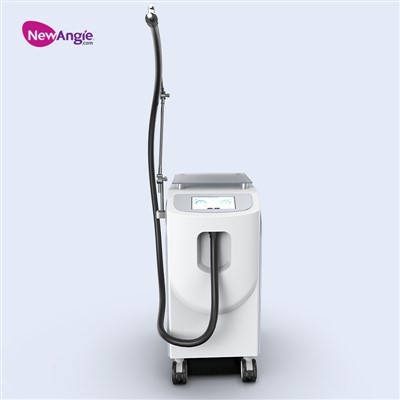
One of the biggest changes in the laser hair removal market has been the growing demand for comfortable treatment experiences. Historically, Alexandrite lasers were known for delivering strong clinical results but often required aggressive cooling methods to improve patient comfort. Modern diode laser systems have increasingly focused on:Contact cooling/Compressor cooling/TEC cooling/SHR treatment concepts/High-frequency low-fluence energy delivery.
These developments have helped create the "ice laser" treatment category that many patients associate with virtually painless hair removal. For clinics, patient comfort directly influences:Treatment completion rates/Customer satisfaction/Online reviews/Repeat business. As a result, cooling technology has become nearly as important as wavelength selection when evaluating laser platforms.
Which Technology Offers Better ROI for Clinics?

From a business perspective, ROI often matters more than technology alone. Many clinic owners discover that the most technically advanced platform is not always the most profitable investment. When evaluating laser equipment, clinics should consider:
- Initial acquisition cost
- Maintenance expenses
- Treatment speed
- Consumable costs
- Service support
- Equipment lifespan
Business Comparison
| Business Factor | Alexandrite Laser | Diode Laser |
|---|---|---|
| Initial Investment | Higher | More Flexible |
| Maintenance Cost | Medium to High | Lower |
| Treatment Throughput | High | Very High |
| Patient Coverage | Moderate | Broad |
| Scalability | Moderate | Excellent |
| Distributor Opportunities | Limited | Strong |
| OEM/Private Label Options | Rare | Common |
| ROI Potential | High | Very High |
For many modern clinics, diode platforms offer an attractive balance between performance, flexibility, and profitability. This is one reason why multi-wavelength diode systems continue gaining market share globally.
Why More Clinics Are Choosing Multi-Wavelength Diode Platforms

The newest generation of diode laser platforms combines multiple wavelengths into a single system.
Common configurations include:755nm,808nm,940nm,1064nm. This approach allows practitioners to customize treatments based on:Hair thickness,Hair depth,Skin type,Treatment area
Many clinics are now moving toward multi-wavelength diode platforms because they provide:
- Greater treatment flexibility
- Broader patient coverage
- Comfortable treatment experiences
- Faster ROI potential
The NewAngie Diode Laser Therapy Series incorporates advanced multi-wavelength technology together with:
- Up to 3000W configurable power
- US Coherent laser bars
- FAC beam shaping technology
- Compressor + TEC dual cooling
- Up to 50 million shots lifespan
- Multiple magnetic spot size options
For clinics seeking a modern hair removal platform, multi-wavelength diode technology offers an attractive balance between clinical performance and long-term business value.
Related Resources
Before selecting a laser platform, we recommend exploring the following resources:
《Professional Laser Hair Removal Machine Guide》
《Medical Grade Laser Hair Removal》
《Candela GentleMax Pro Cost & Review》
《Soprano Ice Titanium Laser Price & Cost》
《NewAngie Diode Laser Therapy Series》
These guides provide additional insights into treatment technologies, equipment investment strategies, and clinic growth opportunities.
Frequently Asked Questions
Is Alexandrite laser better than diode laser?
Not necessarily. Alexandrite lasers excel in treating fine hair and lighter skin tones, while diode lasers offer broader skin-type compatibility and greater treatment flexibility.
Which technology is more comfortable?
Modern diode laser systems often provide a more comfortable treatment experience due to advanced cooling systems and SHR-style treatment methods.
Which laser is better for clinics?
The answer depends on your business model. Clinics focused on premium dermatology services may prefer Alexandrite platforms, while medical spas and high-volume aesthetic clinics often benefit from diode laser systems.
Why are multi-wavelength diode lasers becoming more popular?
Multi-wavelength systems combine versatility, broader patient coverage, comfortable treatments, and strong ROI potential, making them attractive for modern clinics and distributors.
Final Thoughts
Alexandrite and diode laser technologies both play important roles in professional hair removal. Alexandrite lasers remain highly effective for specific patient groups and continue to be used in many premium aesthetic practices. At the same time, modern diode laser platforms have evolved significantly, offering improved cooling, multi-wavelength flexibility, and stronger business scalability. For today's clinics, the best choice is not simply the most famous technology-it is the platform that delivers the right balance of treatment performance, patient satisfaction, operational efficiency, and long-term profitability.