



Is IPL hair removal permanent? Strictly speaking, IPL is better understood as a method for long-term hair reduction rather than a guarantee that every treated hair will disappear forever.
After a successful course of IPL treatments, many people experience substantially less visible hair growth, while remaining hairs may become finer or lighter. However, some hair can gradually return over time, which is why maintenance treatments are often part of long-term IPL hair management.
This distinction is important because "permanent hair removal" and "permanent hair reduction" do not mean the same thing.
FDA documentation defines permanent hair reduction in terms of a long-term, stable reduction in the number of hairs regrowing, measured at 6, 9 and 12 months after completing a treatment regimen. It does not mean that absolutely no hair can ever grow in the treated area again.(Authoritative Source: https://www.accessdata.fda.gov/cdrh_docs/pdf12/K123257.pdf)
Quick Answer
| Question | Answer |
|---|---|
| Is IPL hair removal permanent? | Not in the sense of eliminating every hair forever |
| Can IPL provide long-term hair reduction? | Yes |
| Can hair grow back after IPL? | Yes |
| Is regrowth usually the same as before? | Not necessarily; successfully treated areas may show reduced regrowth |
| Are multiple treatments required? | Yes |
| May maintenance treatments be needed? | Yes |
| Is IPL the same as laser hair removal? | No. IPL uses broad-spectrum light; laser systems use specific laser wavelengths |
How Does IPL Hair Removal Work?
Before answering "is IPL hair removal permanent?", let's first understand how it works.
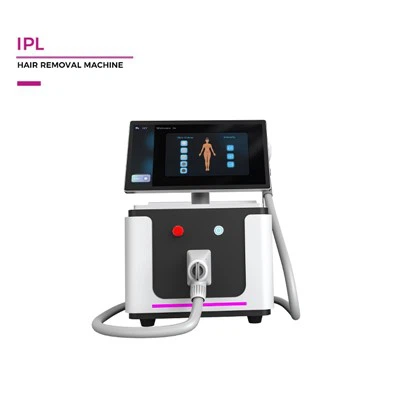
In fact, IPL stands for Intense Pulsed Light. It's not a laser; rather, it is a form of broad-spectrum, high-intensity light. Its mechanism relies on a core principle known as "selective photothermolysis." Hair follicles and shafts contain high levels of melanin. When the intense light-emitted at specific wavelengths by the IPL device-penetrates the skin's surface and reaches this melanin, the pigment preferentially absorbs the light energy and converts it into heat. This causes the local temperature within the hair follicle to rise rapidly to a level sufficient to destroy it. Once the follicle is damaged, it can no longer support hair growth.
However, IPL is effective only on hair follicles that are currently in the growth phase. Hair anywhere on the body cycles through three distinct stages: anagen phase, catagen phase, and telogen phase . When IPL energy is applied, it targets only those hairs currently in the growth phase, where the hair shaft is tightly connected to the follicle; follicles in the resting phase remain completely unaffected. Once these resting follicles "wake up" and enter the growth phase, new hair will naturally grow back. This is the fundamental reason why IPL treatment requires a series of treatments rather than a single session. It also helps explain why some people initially see excellent results but later notice new or returning hair.
Does IPL Permanently Remove Hair?
Permanent Hair Removal vs. Permanent Hair Reduction
FDA documentation has described permanent hair reduction as the long-term, stable reduction in the number of hairs regrowing when measured at 6, 9 and 12 months after completion of a treatment regimen. (Authoritative Source: https://www.accessdata.fda.gov/cdrh_docs/pdf12/K123257.pdf). The official definition of "permanent hair removal" refers to a long-term, significant, and stable reduction in hair count following a complete treatment cycle. The technical term is "Permanent Hair Reduction" rather than "Permanent Hair Removal"-and the distinction between these two concepts lies at the heart of the issue.
Therefore:
Permanent reduction ≠ permanent elimination of every hair.
In contrast, consumers often interpret "permanent" to mean "done in one go" and "hair never grows back." Compounded by marketing claims promising "permanent hair removal," many consumers come to believe-subtly but firmly-that IPL can eliminate hair forever. However, upon actually undergoing IPL treatment, they discover the reality differs from their expectations; This is one of the most important distinctions to understand when asking is IPL hair removal permanent.
Clinical data shows that one month after IPL treatment, hair count decreases by approximately 83.3%, with a 78.1% reduction maintained after three months. While the results are highly impressive, the treatment does not completely eradicate hair; rather, IPL hair removal primarily achieves long-term management by making the hair finer and softer.
What Does Research Say About Long-Term IPL Hair Reduction?
Clinical research supports IPL's ability to produce meaningful hair reduction, but the results should be interpreted carefully.
In one clinical evaluation of a home-use IPL system for facial hair removal, participants underwent six treatments at two-week intervals. Researchers reported approximately:
83.3% hair reduction one month after treatment
and
78.1% hair reduction three months after treatment.
The study therefore demonstrated substantial short-to-medium-term hair reduction, but it did not prove that IPL permanently eliminated all hair. The researchers also identified the relatively short three-month follow-up period as an important limitation.(Authoritative Source: https://pmc.ncbi.nlm.nih.gov/articles/PMC4509583/).
Another study involving six biweekly home IPL treatments reported approximately 78% reduction at one month and 72% at three months after the final treatment. (Authoritative Source: https://pmc.ncbi.nlm.nih.gov/articles/PMC2921762/).
What these studies actually tell us
They provide evidence that IPL can substantially reduce visible hair growth after a treatment course.
They do not justify a universal claim such as:
"IPL permanently removes 80% of hair."
Results depend on the device, treatment protocol, body area, hair and skin characteristics, follow-up period and individual response.
Why Does Hair Grow Back After IPL?
Seeing hair return after IPL does not necessarily mean that the treatment "failed."Several mechanisms can contribute to apparent regrowth.
1. Not Every Hair Was in the Active Growth Phase
IPL cannot effectively target every follicle during one session because hairs are at different points in their growth cycles. Some follicles that were inactive during earlier treatments may later enter an active growth phase.
2. Treatment Response Varies
Hair color, hair thickness, skin tone, treatment area and device parameters can all influence how strongly hair responds to IPL.
3. New Hair Growth Can Occur
The human body is not biologically static. Hormonal and physiological changes can affect hair-growth patterns over time.
4. Maintenance May Be Necessary
Even after a successful initial treatment course, occasional maintenance treatments may be used when noticeable regrowth appears.
So when asking "does IPL hair removal last forever?", a better expectation is: IPL can provide long-lasting reduction, but maintaining the result may require occasional additional treatments.
How Long Does IPL Hair Removal Last?
There is no universal number of months or years that applies to everyone. The durability of IPL results depends on several factors:
| Factor | Why It Matters |
|---|---|
| Hair color | Melanin content affects light absorption |
| Hair thickness | Coarse and fine hairs may respond differently |
| Skin tone | Skin–hair contrast influences treatment parameters and energy absorption |
| Hair growth cycle | Not all follicles are treatable at the same time |
| Treatment consistency | A complete treatment course generally matters more than isolated sessions |
| Device and parameters | Fluence, pulse characteristics and treatment protocol affect energy delivery |
| Body area | Hair-growth patterns vary across different areas |
| Hormonal factors | Hormonal changes may influence future hair growth |
| Maintenance | Additional sessions may help manage visible regrowth |
This is why two people using IPL may experience very different long-term results even when following similar schedules.
Which Hair and Skin Types Respond Best to IPL?
Because IPL hair removal relies heavily on melanin absorption, dark hair with sufficient pigment generally provides a more suitable optical target than very light hair.
Hair with little melanin-including white, gray and some very light blond hair-may respond poorly because there is less pigment available to absorb the light energy.
Skin tone is also important because melanin is present in the skin as well as the hair.
The appropriate device settings and suitability therefore need to be considered according to the person's skin tone, hair color, hair thickness and treatment area, especially when professional IPL equipment is being used.
IPL vs. Professional Laser: Why the Difference?
IPL and professional laser hair removal both use light-based energy to target pigmented hair, but they are not the same technology.
IPL uses a broad spectrum of light, while laser hair removal systems operate using specific laser wavelengths. Professional laser platforms may use technologies such as diode, alexandrite or Nd:YAG lasers depending on the system and intended application.
This difference affects how energy is delivered and how treatment parameters can be selected for different hair and skin characteristics.
Neither technology should be described as guaranteeing that every hair will be permanently eliminated forever. A more appropriate treatment goal is substantial, long-lasting hair reduction.
For professional clinics, the choice between IPL and laser should therefore consider more than permanence alone, including:
- Skin types being treated
- Hair characteristics
- Treatment speed
- Spot size
- Cooling
- Available wavelengths
- Adjustable parameters
- Additional treatment functions
- Operator experience

For more information on the differences between laser and IPL regarding principles, efficacy, and comfort, you can read "Diode Vs IPL Laser Hair Removal Machines: Which Is Better For Your Salon Or Clinic?"
Key Factors Determining the Longevity of IPL Hair Removal Results
Even when undergoing the same IPL hair removal treatment, individual results and reactions can vary. The primary factors influencing these differences include:
- Contrast between skin tone and hair color: The best results are achieved with light skin and dark hair; the darker the skin or the lighter the hair, the lower the absorption efficiency.
- Frequency of use: Initially, 1–2 sessions per week are recommended, with a full cycle spanning 8–12 consecutive weeks. Adhering to the entire course is essential; quitting midway is the number one reason for suboptimal results.
- Hormone levels: Hormonal fluctuations-such as those caused by pregnancy, Polycystic Ovary Syndrome (PCOS), or thyroid abnormalities-can stimulate the activation of new hair follicles and promote hair growth.
- Maintenance treatments: After completing the initial cycle, maintenance sessions every 1–3 months are recommended; this is a crucial step that many people overlook.
How Can You Make IPL Hair Removal Results Last Longer? you can read "How Often to Use IPL Hair Removal?"
Is IPL hair removal permanent? Strictly speaking, no. However, IPL achieves significant and long-lasting hair reduction-delivering results that satisfy most people by reducing hair growth by over 80%, making remaining hair finer and lighter, and transforming hair removal from a daily grooming chore into a long-term routine requiring maintenance only every few months.
If you are seeking total, permanent eradication in the medical sense, professional laser treatment is the closer match; if you need a cost-effective, long-term hair management solution for home use, IPL is currently the most practical choice. Satisfaction levels are highest when you view it as a hair management regimen requiring ongoing maintenance rather than a one-time curative procedure.
FAQ
Q: Is IPL hair removal permanent after 10 sessions?
A: Not necessarily. The number of sessions alone cannot guarantee permanent elimination of all hair. Results depend on hair-growth cycles, hair and skin characteristics, treatment parameters, body area and individual response.
Q: Does IPL hair removal last forever?
A: IPL can provide long-lasting hair reduction, but some hair may eventually return. Occasional maintenance treatments may therefore be appropriate.
Q: Does hair grow back thicker after IPL?
A: IPL is intended to reduce hair growth rather than make hair thicker. Apparent changes in regrowth can vary between individuals and treatment stages.
Q: Why is my hair growing back after IPL?
A: Hair may appear after treatment because previously inactive follicles enter the growth phase, because some hairs responded incompletely, or because biological and hormonal factors influence subsequent growth.
Q: Is IPL permanent or temporary?
A: It is more accurate to think of IPL as providing long-term hair reduction rather than either completely temporary removal or guaranteed permanent elimination.
Q: Is laser hair removal more permanent than IPL?
A: Both technologies can provide long-term hair reduction, but they deliver light differently. Treatment outcome depends on the technology, device parameters, hair and skin characteristics, protocol and operator-not simply whether the system is labeled IPL or laser.
References
【U.S. Food and Drug Administration (FDA), 510(k) documentation - definition of permanent hair reduction.】
【Gold MH, et al. Clinical Evaluation of a Novel Intense Pulsed Light Source for Facial Skin Hair Removal for Home Use. Journal of Clinical and Aesthetic Dermatology.】
【Clinical evaluation of low-energy intense pulsed light for home hair removal - six biweekly treatments with one- and three-month follow-up.】
Explore More Professional Resources >>
If you're still researching before purchasing, explore our expert buying guides and educational resources: