



In the realm of modern aesthetic medicine-where the pursuit of a balance between non-invasiveness and high efficacy is paramount-non-ablative fractional lasers are playing an increasingly vital role. Among these, the 1927 nm Thulium laser and the 1550 nm Erbium laser have emerged as two leading high-tech modalities, distinguished by their precise targeting capabilities and relatively short recovery periods in the treatment of photoaging, pigmentary irregularities, and scarring. These two technologies can be utilized independently or employed synergistically within a single device to achieve a therapeutic outcome where the combined effect is greater than the sum of its parts.
This guide comprehensively addresses a pivotal question: how to effectively apply 1927nm Thulium and 1550nm Erbium laser technologies within the field of medical aesthetics. To this end, we will delve deeply into the underlying principles and advantages of both laser technologies, offering clear recommendations to assist you in selecting the treatment plan best suited to your individual needs.
What are 1927 nm Thulium lasers and 1550 nm Erbium lasers?
Both modalities belong to the category of non-ablative fractional lasers, operating based on the theory of "fractional photothermolysis." This principle involves segmenting the laser beam into numerous microscopic beams to create an array of microscopic treatment zones (MTZs) within the skin, thereby stimulating tissue regeneration while preserving the surrounding healthy skin to accelerate the healing process.
1927 nm Thulium Laser
With a wavelength closely approaching the peak absorption of water (approximately 1900nm), this laser exhibits strong absorption within the water content of the epidermis, allowing it to target the epidermis and the superficial dermis with precision. Utilizing a fractional delivery method, the Thulium laser beam is divided into multiple micro-beams to gently remove damaged epidermal cells and stimulate cellular regeneration, all while maintaining the structural integrity of the surrounding healthy tissue.
1550 nm Erbium Laser
The operating wavelength of our 1550nm Erbium laser falls within a region of low absorption for both water and hemoglobin. Consequently, it achieves a deeper depth of penetration, acting primarily within the dermis without causing damage to the skin's surface. The Erbium-glass fractional laser specifically targets water molecules within the skin, enabling the precise heating of targeted areas while simultaneously minimizing the risk of overheating the surrounding tissues.
What are the characteristics of the two types of laser equipment?
Why have 1927nm Thulium lasers and 1550nm Erbium lasers emerged as exceptional tools for new skin regeneration treatments? Each laser possesses a unique set of advantages, making them suitable for addressing different skin conditions and specific patient needs.
Advantages of 1927 nm Thulium Lasers
-
Precise Action on the Epidermis
The 1927nm wavelength closely aligns with the absorption peak of water; consequently, its energy is primarily concentrated within the epidermis and the superficial dermis. This specific characteristic endows it with exceptional selectivity for pigmented lesions: it can uniformly disrupt abnormally distributed melanin within the epidermis, effectively improving conditions such as melasma, sun spots, freckles, uneven skin tone, and actinic keratosis. It currently stands as one of the most precise tools among non-ablative lasers for addressing epidermal pigmentation issues.
-
Extremely Short Recovery Period
Due to its shallow depth of penetration and limited thermal impact zone, treatment typically results in only mild erythema (redness), which subsides within 24 to 48 hours. This may be followed by very fine desquamation (peeling), similar to the mild peeling experienced after a sunburn. The vast majority of patients are able to resume their normal makeup routine and social activities by the very next day, making this treatment exceptionally convenient for busy professionals seeking to improve their skin health.
-
Laser-Assisted Drug Delivery
The micro-channels created by the 1927nm laser feature a controllable depth (approximately 100–200 μm), precisely sufficient to breach the epidermal barrier without causing significant tissue damage. Leveraging this characteristic, therapeutic agents-such as skin brighteners, reparative compounds, and growth factors-can be immediately introduced following the laser treatment, thereby enhancing their penetration rate by several-fold, or even by an order of magnitude. This "laser-plus-medication" combination strategy is particularly well-suited for the comprehensive management of complex dermatological issues, such as melasma and the restoration of a compromised skin barrier.
-
Minimal Discomfort and High Patient Comfort
Given its shallow depth of action and relatively gentle energy output, 1927nm laser treatment typically requires no anesthesia-or at most, only topical anesthesia. The sensation of pain is significantly lower than that associated with 1550nm lasers or ablative lasers, resulting in high patient tolerability and acceptance.

Advantages of 1550nm Erbium Lasers
-
Potent Dermal Remodeling Capabilities
The 1550nm wavelength exhibits moderate absorption by water and penetrates deep into the dermis (approximately 1–2 mm), effectively stimulating the *de novo* synthesis and structural remodeling of collagen and elastic fibers. It delivers significant and long-lasting results for various skin concerns, including atrophic acne scars (pockmarks), surgical scars, enlarged pores, fine lines, and wrinkles.
-
Broad Spectrum of Treatment Applications
Beyond skin rejuvenation and scar revision, the 1550nm erbium laser is also utilized to treat active acne (by suppressing sebaceous gland activity), stretch marks, and mild skin laxity, offering a wide range of clinical indications.
-
High Safety Profile; Suitable for All Skin Tones
Due to minimal epidermal injury and the fact that it does not rely on melanin as its primary chromophore target-unlike Q-switched lasers or Intense Pulsed Light (IPL)-the 1550nm laser presents a relatively controllable risk of post-inflammatory hyperpigmentation when used on individuals with darker skin tones. While clinical prudence remains necessary, its safety profile has been extensively validated through clinical practice.
-
Short Recovery Period
Following treatment, patients typically experience only mild redness, swelling, and a sensation of warmth; some individuals may observe subtle skin flaking for 1–3 days. The recovery period is generally brief-lasting just 1 to 3 days-and does not interfere with normal social activities or work commitments, making it significantly shorter than that of ablative lasers.
-
Continuously Optimized Treatment Experience
Most modern 1550nm laser systems are equipped with integrated cooling mechanisms. When combined with topical anesthesia, any associated discomfort remains largely within a tolerable range. Furthermore, as the procedure does not create open wounds, post-treatment care is simple and straightforward.
| characteristic | 1927 nm Thulium Laser | 1550nm Erbium Laser |
|---|---|---|
| Target | Epidermal Moisture | Dermal Moisture |
| Primary Action Layer | From the epidermis to the superficial dermis | Dermis |
| Core Advantages |
Pigment Management: Fading dark spots, evening out skin tone, and improving actinic keratosis; Enhanced Drug Penetration: Laser-assisted drug delivery. |
Reshaping and Regeneration: Stimulating Collagen Neogenesis to Improve Wrinkles, Acne Scars, and Enlarged Pores |
| Treatment Experience | The sensation of pain is relatively mild, often requiring no anesthesia or only topical anesthesia; erythema and edema typically subside within 24 hours. | The sensation of pain is relatively pronounced, typically requiring the application of topical anesthesia; following the procedure, a sensation of warmth and mild redness and swelling may be experienced. |
| Recovery Period | Very Short: Mild flaking, with virtually no noticeable downtime. | Shorter Duration: May involve 1–3 days of mild peeling, with a short recovery period. |
Introducing Newangie's Advanced Dual-Wavelength Laser
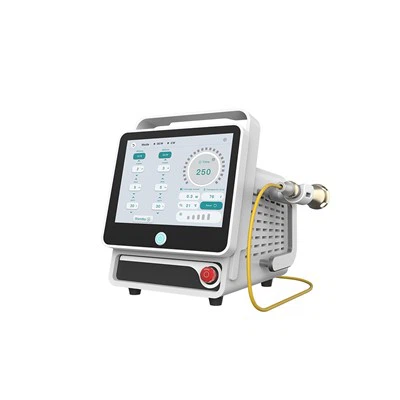
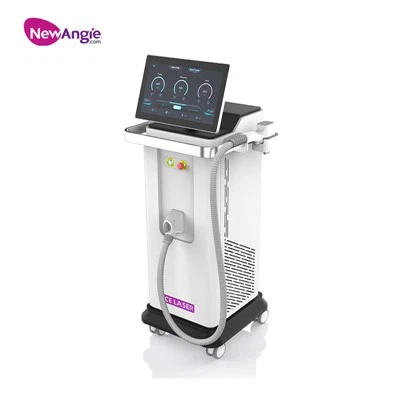
Modern technology has successfully integrated these two "golden wavelengths" into a single system (such as dual-wavelength non-ablative fractional laser systems). The Newangie dual-wavelength laser incorporates both 1927nm and 1550nm handpieces-or enables wavelength switching within a single device-allowing physicians to flexibly select a single wavelength or administer combination treatments tailored to a patient's complex dermatological concerns.
This represents a significant innovation in non-ablative fractional laser technology. The synergistic action of these two wavelengths facilitates a layered treatment approach extending from the epidermis to the dermis, thereby offering a more comprehensive and integrated solution for photo-aged skin, pigmentation issues, and scar revision.

- Fast Treatment
The fastest resurfacing solution, with full face treatment completed in just 6-8 minutes.
- Wide Coverage
Larger beam diameter (200μm & 350μm) and scan size (4 x 10 mm & 6 x 10 mm) for increased treatment efficiency.
- Intuitive Operation
Easy-to-navigate display with customizable options for Coverage Rate, Total Energy, Density, and Interval.
- Customizable Software
Supports language and software customization to meet diverse needs.
Professional Clinical Applications
Core Applications of the 1927nm Thulium Laser:
- Pigmented Lesions: Facial melasma, sun spots (solar lentigines), freckles, and uneven skin tone (pigmentary irregularities).
- Actinic Keratosis: Effective treatment for precancerous lesions, reducing the risk of skin cancer.
- Assisted Drug Delivery: Utilizes microchannels created by the laser within the skin to facilitate the penetration and absorption of therapeutic agents-such as skin-brightening and reparative ingredients-thereby enhancing treatment efficacy.
- Other Exploratory Applications: Keratosis pilaris ("chicken skin"), female-pattern hair loss, etc.
Core Applications of the 1550nm Erbium Laser:
- Skin Rejuvenation: Facial fine lines, wrinkles, skin laxity, and enlarged pores.
- Scar Revision: Atrophic acne scars (pockmarks) and surgical scars.
- Active Acne: Suppression of sebaceous glands and improvement of inflammatory acne.
Combined Dual-Wavelength Application:
For patients presenting with complex photoaging concerns-such as a simultaneous combination of uneven skin tone, pigmentation spots, wrinkles, and enlarged pores-a dual-wavelength system allows for staged or layered treatment. The 1927nm wavelength is applied first to address superficial pigmentation, followed by the 1550nm wavelength to stimulate deep-layer collagen remodeling, thereby achieving comprehensive rejuvenation across all layers of the skin.
https://pmc.ncbi.nlm.nih.gov/articles/PMC12997386/
1927nm vs. 1550nm: Which Should You Choose?
The specific wavelength you should select for your treatment depends on your primary concerns.
- Choose the 1927nm Thulium laser if your core issues are:
facial pigmentation spots, dull or uneven skin tone, or actinic keratosis (requiring a physician's diagnosis)-and if you desire a recovery period that is as short as possible, with minimal disruption to your work and social life.
- Choose the 1550nm Erbium laser if your core issues are:
prominent facial acne scars, enlarged pores, fine lines, or skin laxity-and if you are comfortable with a recovery period of 2–3 days involving mild skin peeling.
- Consider a dual-wavelength combination treatment if your core issues involve:
a desire to simultaneously improve pigmentation and uneven skin tone while also addressing wrinkles, pores, and acne scars-aiming for comprehensive anti-aging results.
The 1550nm wavelength penetrates deep into the dermis to effectively improve wrinkles and scars, while the 1927nm wavelength targets the epidermis and superficial dermis to treat issues such as pigmentation and uneven skin texture. Seamlessly integrated through modern dual-wavelength technology, these two wavelengths provide the field of aesthetic medicine with a comprehensive, personalized solution-addressing everything from superficial to deep layers, and from pigmentation to skin texture-thereby enabling clients to achieve more holistic improvements with minimal downtime. It is recommended that you consult with a medical professional prior to treatment to determine the most suitable wavelength or combination therapy plan based on your specific skin condition and needs.