



Among numerous hair removal technologies, the 755nm Alexandrite Laser has long been hailed as the "gold standard" in the professional field. However, for consumers seeking hair removal solutions, a fundamental question remains: Is it truly effective? Is it merely marketing hype, or a scientifically proven and reliable technology? This article will delve into this advanced laser technology to provide you with a systematic answer to this question.
Along the way, we will examine why the alexandrite laser best for light skin dark hair hair removal continues to dominate professional clinics worldwide and what makes its 755nm wavelength uniquely suited for this specific skin-and-hair combination.
Why can 755nm Alexandrite lasers precisely remove hair?
Precise wavelength selection: 755nm lasers fall within the near-infrared spectrum. This specific wavelength is one of the "optimal absorption peaks" for melanin. Melanin in the skin (whether it's freckles, sunspots in the epidermis, or melanin in hair follicles) absorbs this wavelength with extremely high efficiency, while surrounding tissue absorbs very little. This means that when a 755nm laser pulse acts on the skin, the energy is "greedily" absorbed by the melanin target and rapidly converted into heat, instantly generating high temperatures. This precisely destroys pigment granules or hair follicle structures, while minimizing damage to surrounding normal skin.
Compared to shorter wavelengths of lasers (such as 532nm laser), 755nm lasers penetrate deeper into the skin, reaching the dermis, thus effectively targeting hair follicles, pigment granules, and other targets.
Compared to longer wavelengths of lasers (such as 1064nm Nd:YAG lasers), the proportion absorbed by hemoglobin is relatively lower, reducing the risk of subcutaneous bleeding and purpura during treatment, thus improving safety.
Unlike traditional methods that only temporarily remove hair shafts (such as shaving and waxing), lasers directly target the hair follicle's growth structure, completely destroying its activity and achieving permanent hair reduction.
Compared to electrolysis, laser treatment covers a large area at the speed of light, making it extremely efficient, and the skill requirements for operators are relatively standardized.
The U.S. Food and Drug Administration (FDA) and several major global medical device regulatory agencies have approved it for "permanent hair reduction." This means that its safety and effectiveness meet stringent medical-grade standards.
755nm Alexandrite Laser vs 808nm Diode Laser
Hair and Skin Tone Adaptability:
755nm lasers offer excellent hair removal results for light skin with dark hair. 808nm is more versatile, safely and effectively covering skin tones from light to medium-dark, and is more adaptable to hair thickness.
Treatment Efficiency:
The 755nm laser has the highest melanin absorption rate among all hair removal lasers. This means it has a very strong "attraction" and energy conversion efficiency to melanin in the hair follicle.
For thick, dark hair, the energy absorbed by the hair follicle is more concentrated, and the thermal damage to the hair follicle caused by the 755nm laser is more thorough, generally considered to result in more significant effects per treatment, potentially requiring fewer sessions.
The 808nm wavelength is slightly longer, penetrating deeper than the 755nm laser. Its melanin absorption efficiency is slightly lower than 755nm, but still excellent, and it absorbs very little hemoglobin.
How do I choose the laser hair removal solution that best suits my needs?
Choose 755nm alexandrite laser:
- Skin type I-III: This is the ideal scenario where the alexandrite laser best for light skin dark hair delivers maximum effectiveness. The strong contrast between fair skin and dark hair allows the 755nm wavelength to precisely target melanin in the follicle while sparing surrounding tissue, providing patients with the fastest and most thorough results.
- Desiring as few treatment sessions as possible: Under ideal conditions, satisfactory hair reduction can be achieved with fewer sessions.
- Prioritizing efficiency: Its large spot size and gliding mode saves significant time.
Choose 808nm diode laser:
- Skin type III-IV: The 808nm laser is most effective for this skin type and offers higher safety.
- Dark hair color: Excellent for medium-thickness, dark hair.
- Sensitive skin or high pain sensitivity: Its deeper penetration and stable energy output, combined with superior cooling, result in a gentler treatment experience.
- Complex hair types: As a more "balanced" option, the 808nm laser offers greater tolerance for both skin tone and hair characteristics.
Why Alexandrite laser best for light skin dark hair?
The 755nm alexandrite laser's reputation as the alexandrite laser best for light skin dark hair is not merely a marketing claim - it is grounded in the fundamental physics of selective photothermolysis.
🔹Advantage of Selective Absorption:
The absorption coefficient of melanin peaks within the 700–800nm wavelength range. This differential in energy absorption is most pronounced in patients with light skin and dark hair. The laser energy passes almost entirely through the epidermis to concentrate on the hair follicle, converting into thermal energy sufficient to destroy the follicle's regenerative capacity.
🔹Penetration Depth:
The 755nm wavelength penetrates to a depth of approximately 2–3mm within the dermis-precisely where the majority of hair follicles are located. This ensures precise energy delivery to the target area, preventing energy dissipation in superficial or excessively deep tissue layers.
🔹Speed and Coverage:
Modern Alexandrite laser systems feature large spot sizes (up to 18mm) and high repetition rates, enabling practitioners to treat large areas-such as the back, legs, and chest-in a fraction of the time required by traditional technologies. For clinics serving a high volume of patients with Fitzpatrick skin types I–III (light skin), this translates to greater treatment efficiency and enhanced patient satisfaction.
Who is best suited for 755nm Alexandrite Laser treatment?
Decades of clinical research and widespread professional adoption have established that the alexandrite laser best for light skin dark hair hair removal. Because melanin is the target for energy absorption, the darker and thicker the hair, the more energy it absorbs, and the better the effect. Conversely, white, gray, blonde, or red hair lacks melanin and absorbs very little energy, making it essentially ineffective.
At the same time, the skin tone cannot be too dark (Fitzpatrick type IV and above require extreme caution), as the melanin in the epidermis will compete with the hair for energy absorption, increasing the risk of epidermal burns, hyperpigmentation, or hair loss. Although modern equipment is equipped with cooling systems to protect the epidermis, skin tone limitations remain an important consideration.
How many treatment sessions are needed to achieve the desired results?
Treatment is most effective when hair is in its growth phase, with intact follicles and abundant melanin. However, human hair goes through different cycles (anagen, catagen, and telogen phases), and a single treatment can only cover a portion of the hair in the growth phase. Therefore, multiple treatments (usually spaced 1-2 months apart) are necessary to "capture" all active phases of the hair follicles. This is a scientifically necessary step to achieve cumulative and lasting results, not something that manufacturers intentionally increase the number of treatments for.
Genetics and endocrine levels significantly influence hair characteristics. For hair stimulated by androgens, laser treatment can effectively remove existing hair. However, if internal hormone levels remain abnormal, it may stimulate the activation of new, smaller hair follicles, requiring subsequent maintenance treatments. Therefore, a single laser treatment is insufficient to permanently reduce unwanted hair.
Multi-technology combined treatment
Is the Alexandrite Laser Right for You?
If you fall into the Fitzpatrick I-III category with naturally dark terminal hair, the evidence is unequivocal: the alexandrite laser best for light skin dark hair hair removal represents the most efficient, well-documented, and clinically proven option available today.
Operating at a wavelength of 755 nm, it offers superior melanin absorption; combined with modern cooling systems and large-spot technology, it delivers a treatment experience that balances speed, comfort, and long-lasting results.
While other wavelengths-such as the 808 nm diode laser and the 1064 nm Nd:YAG laser-play a vital role in treating darker skin tones and finer hair, the Alexandrite laser remains the gold standard for individuals with the typical "light skin, dark hair" profile.
To achieve smooth, hair-free skin, the recommended first step is to consult a professional practitioner to assess your specific skin type, hair characteristics, and treatment goals.
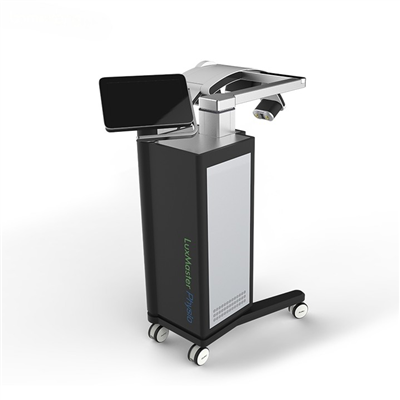
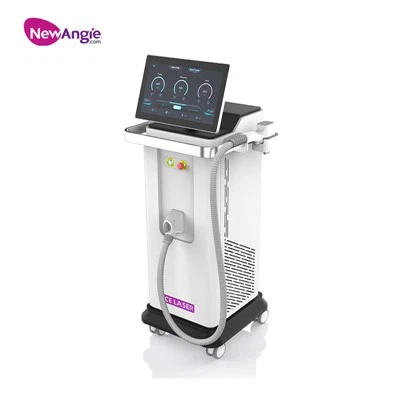
Newangie 755nm Alexandrite Laser


Related Resources Before You Buy
Before making a final purchasing decision, we recommend reviewing the following resources:
《Is Alexandrite Laser Better Than Nd:yag For Hair Removal?》
《Diode Laser vs Alexandrite Laser: Which Technology Is Better For Modern Hair Removal Clinics?》
《Candela GentleMax Pro Cost & Review: The Best Alexandrite Nd:YAG Alternatives For Clinics》
《Candela Alexandrite Laser: Features, Alternatives & Buying Guide For Professional Buyers》