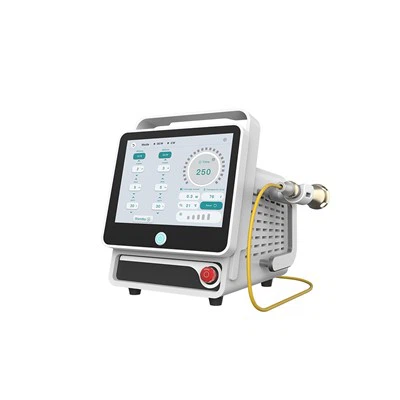




In the field of laser hair removal, Alexandrite (755 nm) and Nd:YAG (1064 nm) are the two most prominent laser technologies and are frequently compared against each other. Alexandrite vs. Nd: YAG laser is a topic of great interest. While people often seek to identify the single "best" laser technology, there is no machine that is "absolutely superior"; rather, the choice depends on which option is "better suited" to a specific individual. The advantages and disadvantages of each depend entirely on the user's skin type, hair color, and comfort preferences.
Technical Basis: Alexandrite Laser vs. Nd:YAG Laser
Both Alexandrite and Nd:YAG lasers operate on the same core principle-selective photothermolysis-yet their differing wavelengths result in distinct treatment characteristics
755 nm Alexandrite Laser
-
Operating in the visible red light spectrum, this laser exhibits extremely high selective absorption by melanin, allowing energy to precisely target the melanin within hair follicles.
Furthermore, the absorption efficiency of the 755 nm Alexandrite beam by melanin is approximately three times that of the 1064 nm Nd:YAG beam. This means more laser energy is delivered directly to the hair follicle to heat and destroy it-the ultimate goal of hair removal treatment.
-
Its shallower penetration depth and high affinity for melanin make the Alexandrite laser the fastest and most efficient choice-provided there is sufficient contrast between hair pigment and skin pigment. For fair skin (Fitzpatrick types I–II) with dark hair, the laser can efficiently target follicular melanin.
However, for darker skin tones (types V–VI), the laser struggles to distinguish between follicular melanin and epidermal melanin, potentially leading to epidermal burns.
1064 nm Nd:YAG Laser
Operating in the near-infrared spectrum, this laser can penetrate to a depth of 4–6 mm-where the hair follicle bulb is located-while being less readily absorbed by epidermal melanin.
The Nd:YAG laser's ability to bypass epidermal melanin makes it the only safe laser hair removal option for darker skin tones (Fitzpatrick types IV–VI). It is also a safer choice for tanned skin of any complexion. However, it requires a greater number of treatment sessions and higher energy densities, as less pulse energy is absorbed by the melanin during each shot.
| Parameter | Alexandrite (755 nm) | Nd:YAG (1064 nm) |
| Melanin absorption | Very high | Moderate |
| Penetration depth | Shallow (~2–3 mm) | Deep (~4–6 mm) |
| Epidermal melanin interference | Significant | Minimal |
| Treatment speed | Fast | Slower |
| Optimal skin types | Fitzpatrick I–III | Fitzpatrick I–VI |
| Cooling requirements | Moderate | High |
Skin Tone Suitability: Nd:YAG Laser vs. Alexandrite Laser
Light Skin Tones (Fitzpatrick Types I–III): Alexandrite Laser
The 755 nm wavelength is highly absorbed by melanin, concentrating energy in the hair follicle and delivering more significant results per session.
Clinical data shows that the Alexandrite laser achieves the fastest and most noticeable hair reduction for the combination of light skin and dark hair.
Dark Skin Tones (Fitzpatrick Types IV–VI): Nd:YAG Laser
The Nd:YAG laser penetrates deeper and involves less competing absorption by epidermal melanin, effectively avoiding the risks of epidermal burns and pigmentary changes.
If your skin tone falls under Fitzpatrick Type IV, V, or VI, the Nd:YAG laser is not merely a "better choice"-it is the only safe choice.
Treatment Results: Alexandrite Laser vs. Nd:YAG
Hair Removal Speed and Longevity
One of the most noticeable differences between the two technologies is how quickly you see results:
🔹Alexandrite Laser: Treated hairs typically begin to shed 2–3 days after the procedure. Patients often notice hairs falling out naturally while showering around the 5–7 day mark.
🔹Nd:YAG Laser: Hair shedding usually begins about 10–14 days after treatment. While this delay is significant, the deeper thermal damage may result in more thorough destruction of the hair follicle bulb.

How many sessions? Alexandrite vs. Nd:YAG
| Treatment Area | Alexandrite laser | Nd:YAG laser |
| Underarms | 6–8 sessions | 8–10 sessions |
| Bikini Line / Brazilian | 6–8 sessions | 8–10 sessions |
| Whole leg | 6–8 sessions | 8–10 sessions |
| Face | 6–10 sessions | 8–12 sessions |
| Men's Back/Chest | 6–8 sessions | 8–10 sessions |
Facial hair is driven by hormones and is exceptionally stubborn, regardless of the wavelength used.
Patients with PCOS (Polycystic Ovary Syndrome) or other hormone-related conditions require more treatment sessions and more frequent maintenance treatments, regardless of the type of laser used.
Treatment Experience: Alexandrite vs. Nd:YAG Laser
"Comparing pain levels in laser hair removal" is one of the most frequently searched topics among patients undergoing the procedure for the first time.
A comparative study published in the Journal of Cosmetic and Laser Therapy evaluated patient pain scores for Alexandrite and Nd:YAG lasers using a standardized visual analog scale. The results were clear:
- The Alexandrite laser was rated as the least painful option.
- The Nd:YAG laser was rated as the most painful option.
The vast majority of patients describe the sensation of the Alexandrite laser as a "rubber band snapping against the skin," whereas the Nd:YAG laser feels more like a "hot needle prick" or a "deep heat sensation" that lasts slightly longer. This is because the Nd:YAG laser's deeper penetration and requirement for higher energy density result in greater thermal energy deposition within the tissue.
Although pain perception varies from person to person, the Alexandrite laser is rated as more comfortable in multiple studies.
Cost Comparison: Nd:YAG Laser vs. Alexandrite
The cost of laser hair removal varies significantly depending on geographic location, the type of clinic, the laser technology used, and the treatment area.
| Treatment Area | Alexandrite | Nd:YAG |
| Upper Lip or Chin | $75–150 | $100–175 |
| Underarms | $150–250 | $200–300 |
| Bikini Line | $150–300 | $200–350 |
| Brazilian (Full) | $250–400 | $300–500 |
| Full Legs | $350–600 | $400–700 |
| Full Back (Male) | $400–700 | $500–800 |
| Full Face | $200–400 | $250–450 |
The price ranges below are for reference only; actual costs depend on your location and the specific pricing of the clinic or beauty salon you choose.
If you are looking for full-body hair removal, many clinics and beauty salons offer package deals that are typically 30–40% cheaper than the cost of treating individual areas separately.
Technological Frontier: From Dual-Wavelength to Multi-Wavelength
The most significant technological trend in laser hair removal for 2025–2026 is the shift from single-wavelength systems to multi-wavelength integration. Search interest in "dual-wavelength laser hair removal" continues to rise; since no single wavelength can perfectly accommodate every skin tone, integrating multiple wavelengths into a single device offers a fundamental solution to this challenge.
Clinical studies from 2025 demonstrate that mixed-wavelength emission is both safe and effective across the full spectrum of Fitzpatrick skin types (I–VI), with lower adverse event rates compared to single-wavelength treatments on darker skin tones. Yet, this is merely the starting point-the true evolution lies in the integration of four wavelengths.

Four-Wavelength Integration: One Device for All Skin Tones
Take Newangie's Laser Way as an example: this FDA-cleared, high-end laser hair removal system integrates four wavelengths-755nm, 808nm, 940nm, and 1064nm-into a single platform, ensuring comprehensive coverage for Fitzpatrick skin types I through VI:
| Wavelength | Core Positioning | Best Skin Tone Match |
|---|---|---|
| 755 nm | High melanin absorption, effectively destroys hair follicles | Fitzpatrick I-III, light skin + dark hair |
| 808 nm | Diode "golden wavelength," balanced melanin absorption | Fitzpatrick I-IV, light to medium skin tones |
| 940 nm | Low melanin absorption + high capillary absorption, more comfortable | Fitzpatrick IV-VI, safe preferred choice for dark skin |
| 1064 nm | Deepest penetration, bypasses epidermal melanin | Fitzpatrick IV-VI, dark skin + deep hair follicles |
Furthermore, Laser Way features an AI-driven intelligent treatment analysis system that automatically recommends optimal treatment parameters based on patient data. Its industrial-grade quadruple cooling system (compressor, TEC, fan, and water cooling) lowers the treatment head temperature to -25°C, virtually eliminating pain. Combined with FL laser bars (capable of 100 million pulses without degradation) and a zero-consumable design, the system enhances treatment efficacy while significantly reducing long-term operational costs for clinics.
If dual-wavelength platforms are putting an end to the "Alexandrite vs. Nd:YAG" debate, then four-wavelength platforms render the debate itself irrelevant. When a single device offers flexible combinations of four wavelengths, practitioners can customize the precise wavelength strategy for every inch of skin-all on one machine and within a single treatment session.
FAQ
Why is multi-wavelength synergistic treatment more advanced than single-wavelength treatment?
Single-wavelength systems are limited to specific skin tones and hair types. Multi-wavelength devices (such as dual- or quad-wavelength combinations) allow for wavelength switching during a single session or across different stages of treatment; they target both superficial and deep hair follicles simultaneously, balancing high efficiency with minimal side effects. Clinical data shows that simultaneous dual-wavelength modes achieve significantly better hair reduction rates than single-wavelength modes.
Are multi-wavelength devices suitable for everyone?
Yes. By combining wavelengths as needed (e.g., 755nm, 808nm, 940nm, and 1064nm), practitioners can customize treatment plans based on a patient's specific Fitzpatrick skin type, hair color, and treatment area, thereby accommodating a wider range of skin tones-from very fair to dark.
Is multi-wavelength treatment more painful?
No. Take the Newangie quad-wavelength device, for example; it features an industrial-grade intelligent cooling system capable of rapidly cooling the skin to -25°C. This effectively protects the epidermis and significantly enhances treatment comfort. Pain levels are primarily determined by energy settings and cooling efficiency, not the number of wavelengths used.
What should I prioritize when choosing a hair removal device?
First, identify your Fitzpatrick skin type and hair color. Second, prioritize devices that offer multi-wavelength capabilities and are equipped with highly efficient cooling systems. Finally, ensure the device holds authoritative certifications (such as FDA approval) and is operated by experienced professionals.
Is the Alexandrite laser better than the Nd:YAG laser for hair removal? For individuals with light skin and dark hair, the Alexandrite laser offers faster and more potent results; for those with darker skin or a tendency to tan easily, the Nd:YAG laser is the safest choice. The key to making the right decision lies not in the specific name of the device, but in accurately understanding your own skin type. Patients are advised to determine their Fitzpatrick skin type before making a decision and to prioritize medical facilities equipped with multi-wavelength systems that allow for flexible parameter adjustments.
Related Resources Before You Buy
Before making a final purchasing decision, we recommend reviewing the following resources:
《Is 755nm Alexandrite Laser Really Effective At Removing Hair?》
《Diode Laser vs Alexandrite Laser: Which Technology Is Better For Modern Hair Removal Clinics?》
《Candela GentleMax Pro Cost & Review: The Best Alexandrite Nd:YAG Alternatives For Clinics》
《Candela Alexandrite Laser: Features, Alternatives & Buying Guide For Professional Buyers》