


Introduction
Choosing an RF microneedling machine for a dermatology clinic requires more than comparing prices and advertised specifications. The equipment must suit the clinic's treatment scope, practitioner requirements, expected patient volume, and local regulatory conditions. This guide covers the key factors clinic owners and purchasing managers should evaluate before investing in professional RF microneedling equipment.
View Our RF Microneedling Machines
Match the Machine to Your Clinic's Treatment Requirements
The first step is to identify the procedures the clinic plans to offer, then determine which equipment configuration can support those services.
Treatment Scope & Equipment Utilization
RF microneedling machines may be used for procedures involving acne scars, fine lines, wrinkles, skin texture, and skin tightening. Some configurations may also support selected neck and body applications, but buyers should verify the manufacturer's stated intended uses and compatible handpieces rather than assume that every machine covers all treatment areas.
Expected treatment volume is equally important. A clinic performing a limited number of procedures each week may prioritize straightforward operation and manageable consumable costs, while a high-volume practice should pay closer attention to operating consistency, cartridge availability, and service response times.
Buyers should also consider how many practitioners will share the machine, whether it needs to move between treatment rooms, and how much space is available. These factors help determine whether a compact desktop unit or a floor-standing system is more suitable.
Technical Specifications That Affect Equipment Selection
Once the treatment scope is clear, compare the machine's RF output, needle depth, and movement control.
RF Frequency & Power
Frequency and maximum power provide useful comparison points, but neither figure alone establishes treatment performance; buyers should ask how each frequency is used, what energy adjustments are available, and whether the supplier can provide output verification records.
Needle Depth
The available depth range should match the manufacturer's intended applications and operating instructions. Newangie's MR16-5S and MR16-6S products have a penetration depth range of 0.25–3 mm, but buyers should also confirm adjustment increments and depth accuracy.
Needle Movement
A stepping motor can help control needle movement, while monitoring and protection functions may help identify abnormal operating conditions; ask the supplier how insertion, withdrawal, and RF delivery are controlled during operation.
Output Consistency
Request technical documentation or performance test information that explains how the machine maintains its specified output, rather than relying only on general claims about stable energy delivery.
For example, Newangie's MR16-5S product has operating frequencies of 700 kHz ±20% and 2.2 MHz ±20%, with maximum power of 45 W. Buyers should confirm which modes use each frequency and whether the quoted configuration includes the functions required by their clinic.
Check Handpieces, Needle Cartridges, and Regulatory Requirements
The main unit is only part of the investment. Handpiece compatibility, cartridge design, and product documentation affect both daily operation and purchasing risk.
Handpieces & Needle Cartridge Selection
RF microneedling machines may use insulated or non-insulated needles. Insulated needles generally have an insulating coating along most of the shaft, with the electrode exposed at the tip, while non-insulated needles expose more of the needle surface to RF energy. These designs deliver energy differently, so buyers should select according to the device's electrode structure, intended use, and operating instructions rather than assume one type is universally better.
Cartridges may also differ in needle count, array arrangement, material, and treatment area. Before ordering, confirm:
- Which cartridge types are compatible with each handpiece and machine model.
- Whether cartridges are sterile, individually packaged, and intended for single use.
- Whether batch identification, shelf-life information, and traceability records are available.
- How cartridges are stored, replaced, and replenished.
- Whether the supplier can maintain long-term availability of the required consumables.
Buyers should not assume that cartridges with similar appearances or connector designs are interchangeable. Compatibility should be confirmed in writing for the exact machine configuration.
Safety & Regulatory Documentation
Clinics should review RF output control, needle movement control, electrical protection, fault detection, and emergency stop functions where applicable. The supplier should also provide clear instructions for cartridge handling, cleaning, maintenance, and the prevention of cross-contamination.
Regulatory requirements depend on the destination market and the exact device. In the United States, FDA clearance through the 510(k) process is specific to a device and its intended use; a manufacturer's general claim or a product-category statement does not establish that a particular model has been cleared. Buyers should verify the model and its clearance details in the relevant FDA database.
CE marking and ISO certification serve different purposes and should not be treated as substitutes for FDA clearance. Ask for the applicable certificates, declarations, registration details, and test reports, then verify them with the relevant authority where necessary.
FDA issued a safety communication on RF microneedling devices on October 15, 2025, highlighting reports of serious complications associated with certain uses. Clinics should review current guidance and ensure that their equipment, practitioners, and intended procedures meet local requirements.
Before purchasing, request the user manual, technical specifications, applicable electrical safety and EMC reports, regulatory documents, and cartridge information. The documents should identify the exact model and configuration being quoted.
Evaluate Training, Warranty, and Technical Support
A suitable machine also needs practical operating guidance and a service arrangement that supports the clinic after installation.
Ask whether the supplier provides installation assistance, machine operation training, handpiece and cartridge instructions, maintenance guidance, and troubleshooting support. Training should cover the actual model and configuration supplied, and buyers should confirm whether it is available remotely or on-site.
Manufacturer training does not replace the professional qualifications or clinical responsibilities required of practitioners in the destination market. The clinic remains responsible for ensuring that operators are appropriately qualified and follow applicable treatment and safety requirements.
The warranty should specify its duration, covered components, exclusions, and repair procedures. Buyers should also clarify who pays for shipping, replacement parts, and labor when a fault occurs.
Technical support and spare-parts availability deserve equal attention. Confirm the supplier's response channels, handpiece replacement arrangements, repair process, and expected service times. For clinics that rely on the machine for daily procedures, prolonged downtime can affect appointment schedules and revenue.
Compare RF Microneedling Machine Models and Configurations
Model comparisons should focus on verified specifications, included accessories, and the clinic's actual operating requirements.
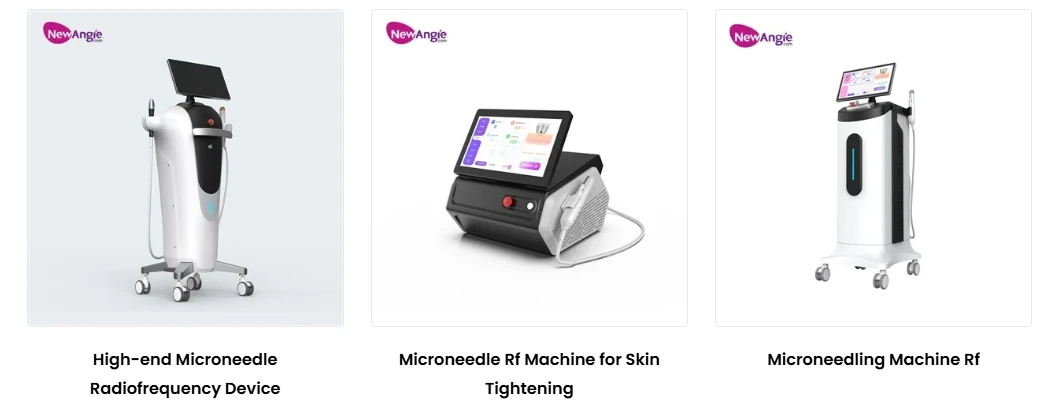
Newangie MR16-5S, MR16-6S & MR16-8S
Newangie offers several RF microneedling machine models, including the MR16-5S, MR16-6S, and MR16-8S. The available product information provides the following comparison:
The MR16-5S has published frequency, power, and depth specifications, while the MR16-6S information identifies stepping motor control, mono/bipolar operation, and a 0.25–3 mm depth range. Comparable specifications for the MR16-8S should be requested directly from the supplier before making a purchasing decision.
A higher model number does not automatically mean better performance or a more suitable configuration. Buyers should compare the actual handpieces, cartridge options, treatment functions, and technical specifications included in each quotation.
Choose a Configuration That Fits Your Clinic
A dedicated RF microneedling machine may be sufficient for a clinic focused on this treatment category, while a multi-function platform may suit a practice planning to offer additional aesthetic services. However, extra functions can also introduce additional training, maintenance, and configuration requirements.
Before selecting a model, confirm the main unit, handpieces, compatible cartridges, accessories, and any optional functions included in the price. Comparing quotations on the same configuration makes it easier to evaluate suppliers fairly and avoid unexpected costs after ordering.
Calculate Operating Costs and Finalize the Purchase
The initial equipment price represents only part of the investment. Consumables, maintenance, repairs, and potential downtime also affect the clinic's long-term costs.
Estimate the Total Cost of Ownership
Cartridges are a recurring expense, so estimate their cost based on expected treatment volume and the manufacturer's single-use instructions. Request cartridge prices, minimum order quantities, packaging quantities, and replenishment lead times.
Maintenance costs may include inspections, replacement parts, handpiece servicing, and repairs. Buyers should ask for the recommended maintenance schedule and clarify which tasks can be performed by clinic staff and which require qualified service personnel.
A practical comparison should include:
Estimated TCO = Initial Equipment Cost + Consumable Costs + Training Costs + Maintenance Costs + Repair Costs + Downtime Costs
Use the same evaluation period and expected treatment volume when comparing models or suppliers. A lower initial quotation may not represent better value if consumables are expensive, spare parts are difficult to obtain, or service delays interrupt clinic operations.
Confirm the Quotation and Delivery Terms
Before placing an order, confirm the exact model, handpieces, cartridges, accessories, power requirements, and technical specifications in writing. The quotation should also identify the MOQ, production lead time, payment schedule, warranty coverage, and any additional training or service fees.
For international purchases, clarify the applicable Incoterms, destination port or delivery address, packaging requirements, shipping arrangements, and responsibility for customs clearance. If pre-shipment inspection or specific documentation is required, include it in the order agreement.
A complete purchasing record helps ensure that the delivered equipment matches the configuration evaluated by the clinic and that the supplier's commercial and service commitments are clear.
Conclusion
Selecting an RF microneedling machine requires clinics to balance treatment requirements, technical performance, cartridge compatibility, regulatory compliance, and long-term operating costs. The most suitable equipment is the one that supports the clinic's actual services and comes with verifiable documentation, practical training, and dependable technical support. Contact us with your preferred model, treatment requirements, target market, and expected order quantity to request a configuration recommendation and detailed quotation.
Find Your Dermatology Clinic RF Microneedling Machine