



Introduction
Inspecting an RF microneedling machine before accepting a bulk order requires more than checking whether the equipment powers on and looks identical to an approved sample. Importers and OEM brands need to verify technical specifications, RF output, handpiece compatibility, consumable quality, documentation, and packaging against the original purchase agreement. A structured pre-shipment inspection helps identify inconsistencies before delivery, reducing the risk of defective products, customer complaints, and costly after-sales claims.
Establish the Inspection Criteria Before Checking the Machines
Before starting an RF microneedling machine inspection, buyers should establish clear acceptance criteria based on the purchase order, approved sample, and confirmed technical documentation.
Match the Bulk Order Against the Approved Sample
The approved sample should serve as the physical reference for inspecting mass-produced units. Compare the following details:
Model & Appearance
Confirm the model number, housing design, screen layout, control buttons, and branding against the approved sample.
Technical Configuration
Verify that the RF technology, handpiece types, needle configurations, and treatment modes match the agreed specifications.
Software & Language
Check the interface language, operating menus, software version, and customized settings where applicable.
Included Accessories
Confirm that cables, foot pedals, handpieces, needle cartridges, and other accessories match the order.
Any changes made during production should have prior buyer approval rather than being accepted as equivalent substitutions.
Prepare a Machine-by-Machine Inspection Record
Create an inspection sheet that records each unit's model, serial number, configuration, test results, and defects. Buyers should distinguish between checks performed on every machine and tests conducted through an agreed sampling plan.
Key point: The purchase order and approved sample establish what the supplier must deliver. A generic factory quality certificate cannot replace this comparison.
Check Machine Specifications, Configuration, and Physical Condition
The next step is to confirm that every machine meets the agreed technical and physical requirements, rather than relying on product descriptions or general specifications.
Verify the Technical Specifications
Compare the actual specifications with the approved technical sheet, paying particular attention to:
- RF Frequency: Confirm the operating frequency for the ordered model and treatment configuration.
- RF Output: Check the specified output power, voltage, or energy settings, depending on how the manufacturer defines and measures performance.
- Pulse Parameters: Verify pulse duration and other adjustable parameters where applicable.
- Treatment Depth: Confirm the available penetration depth or electrode working range for the ordered handpiece.
- Power Supply: Check the rated input voltage, frequency, and power requirements against the destination market.
For adjustable settings, check whether the displayed minimum, intermediate, and maximum values correspond to the approved specifications. Buyers should use model-specific limits instead of assuming that all RF microneedling machines share identical operating ranges.
Inspect the Machine Configuration and Assembly
Check the main unit, treatment handpieces, connectors, power cables, and optional accessories for correct models and quantities. Examine the housing, touchscreen, buttons, ventilation openings, and connection points for cracks, loose components, scratches, or poor assembly.
OEM buyers should also verify customized logos, labels, interface languages, and packaging details because these differences can affect product consistency across their own distribution channels.
Key point: Specification compliance and configuration consistency are separate acceptance requirements. A machine can meet its main technical parameters while still containing incorrect accessories or unauthorized component substitutions.
Test Core Functions and Verify RF Output Performance
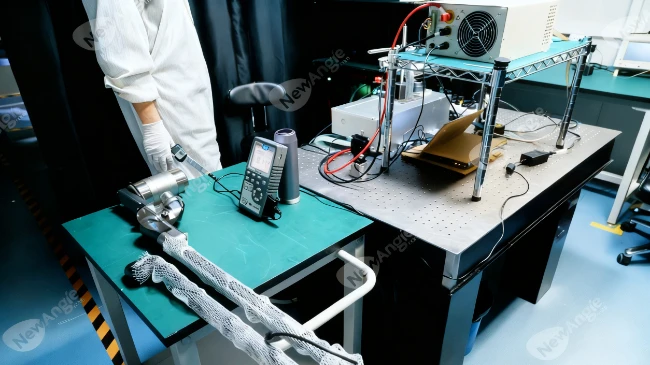
Functional testing and RF output verification are among the most important parts of RF microneedling machine quality control. A machine that starts normally does not necessarily deliver the specified electrical output under operating conditions.
Our Full Process Quality Control
Test the Main Operating Functions
Power on each machine and check its basic operating sequence:
- Confirm that the system starts normally without unexpected error messages or repeated restarts.
- Test touchscreen responsiveness, menu navigation, parameter adjustment, and treatment mode selection.
- Check whether the machine correctly recognizes connected handpieces and responds to start and stop commands.
- Test the foot pedal and other external controls if they are included in the order.
- Verify that alarms and protection functions respond as described in the manufacturer's instructions.
Record any abnormal behavior, including delayed responses, unstable connections, or unexpected shutdowns.
Verify RF Output Under Defined Test Conditions
RF output testing should use the manufacturer's specified measurement procedure, suitable test equipment, and an appropriate load. Simply reading the power value displayed on the touchscreen does not establish actual output accuracy.
For applicable models, record:
- RF Frequency: Compare the specified frequency with the measured value.
- RF Output: Record the selected setting and corresponding measured output.
- Pulse Duration: Check whether the measured pulse timing matches the approved requirements.
- Operating Modes: Test the relevant treatment modes and handpiece configurations separately.
- Output Consistency: Repeat measurements under the same conditions to identify abnormal variations.
Testing at minimum, intermediate, and maximum settings can help identify performance deviations across the operating range. FDA 510(k) technical documentation for RF microneedling equipment provides examples of bench testing that evaluates output accuracy at different power settings and frequencies.
Check Output Stability and Safety Responses
Where the manufacturer specifies continuous operation tests, monitor the equipment under those conditions for abnormal heating, unstable output, or unexpected shutdowns. Verify the operation of applicable over-temperature protection, handpiece recognition, and other safety interlocks.
The FDA has reported serious complications associated with certain uses of RF microneedling devices, including burns, scarring, fat loss, and nerve damage. This makes reliable performance verification and safety-related testing particularly important, although factory inspection alone cannot guarantee clinical safety.
Key point: A useful RF microneedling machine testing report must show the measurement conditions, actual results, applicable acceptance limits, and test equipment-not just a Pass label.
Suggested inspection record: model, serial number, RF frequency, output setting, measured output, pulse duration, test mode, test load, measurement equipment, calibration status, and result.
Inspect Treatment Handpieces and Needle Cartridges
The treatment handpiece and needle cartridge require separate inspection because their condition and compatibility directly affect the machine's intended operation. Buyers should not treat these components as ordinary accessories that only need a quantity check.
Check Handpiece Identification and Mechanical Performance
Inspect each handpiece against the approved configuration and verify the following:
Model & Connection
Confirm the handpiece model, connector type, and compatibility with the main unit.
Physical Condition
Examine the housing, cable, plug, and connection points for cracks, loose fittings, or visible damage.
Operating Response
Check handpiece recognition, activation, and needle movement where applicable.
Control Functions
Verify that the handpiece responds correctly to the machine's operating commands.
If the order includes multiple handpiece types, test each type separately rather than assuming that one successful test covers all configurations.
Verify Needle Cartridge Specifications and Condition
Needle cartridges should be checked against the exact specifications agreed upon in the purchase order.
- Needle Configuration: Verify the needle count, arrangement, type, and insulation structure.
- Working Range: Confirm the specified needle length or penetration range for the relevant cartridge.
- Physical Integrity: Check for bent needles, damaged tips, loose components, or visible manufacturing defects.
- Packaging: Inspect individual packages for tears, contamination, damaged seals, and correct batch identification.
- Sterility Information: Where cartridges are supplied as sterile single-use components, verify the sterilization documentation, package integrity, and applicable shelf-life information.
Confirm Compatibility Between Handpieces and Cartridges
Different cartridge designs may require specific handpieces or operating modes. Buyers should request a compatibility list and verify that the delivered combinations match the approved configuration.
For example, Newangie's product range includes NV, IS, and IC needle configurations, as well as the HR needle-free nano RF design. These configurations do not share identical electrode structures or inspection requirements. The HR configuration should therefore not be inspected using mechanical needle-extension criteria intended for conventional microneedling handpieces.
Key point: A functioning main unit does not prove that every handpiece and cartridge is correctly configured. Each ordered combination needs its own compatibility and condition checks.
Verify Serial Numbers, Inspection Records, and Compliance Documents
A complete RF microneedling machine inspection should establish a traceable connection between each delivered unit, its production history, and its factory test results. This is particularly important for importers and OEM brands managing large shipments.
Match Serial Numbers Across Machines and Records
Check the serial number on each machine against its nameplate, packaging label, and factory inspection records. Confirm that the model identification and production information are consistent across these documents.
For bulk orders, prepare a master serial number list that identifies every unit and links it to its corresponding inspection record. This makes it easier to identify affected products if a quality issue appears after delivery.
Review Factory Quality Control and Test Reports
Request the relevant factory quality records rather than relying solely on a general quality management certificate.
The documentation should cover:
- Incoming Quality Control (IQC): Records of incoming component and material inspections.
- In-Process Quality Control (IPQC): Checks performed during assembly and production.
- Outgoing Quality Control (OQC): Final appearance, functional, electrical, and packaging inspection records, as applicable.
- RF Output Test Records: Actual measurements, test conditions, acceptance limits, and results.
- Corrective Action Records: Details of identified defects, corrective measures, and reinspection results.
Newangie's quality management processes include incoming inspection, IPQC, OQC, and serial number traceability. Buyers can request relevant RF microneedling-specific records to understand how these controls apply to the machines in their order.
Check Technical and Market Compliance Documents
The document package should match the destination market and the actual product configuration. Depending on the product classification and applicable requirements, buyers may need to verify:
- Product specifications and technical documentation.
- User manuals and operating instructions.
- Electrical safety and electromagnetic compatibility test reports.
- Applicable declarations, certificates, registrations, or regulatory authorizations.
- Warranty terms and after-sales documentation.
IEC 60601-1 addresses basic safety and essential performance requirements for medical electrical equipment, while IEC 62353 addresses recurrent testing and testing after repair. Their applicability depends on the equipment classification, design, and regulatory requirements. Buyers should not assume that a supplier's ISO 13485 certificate proves that every delivered machine has passed these individual tests.
Key point: A certificate establishes a particular form of compliance or management-system status; an inspection report provides evidence about a specific machine or production batch. Buyers need both where applicable.
Inspect Packaging and Prepare for Shipment Acceptance
Even when all machines pass functional and technical inspections, packaging errors can still create problems during transportation, warehousing, and final delivery.
Check Protective Packaging and Carton Condition
Inspect the packaging materials and confirm that the equipment is adequately protected against foreseeable transportation damage.
Outer Packaging
Check cartons or shipping cases for crushing, moisture damage, tears, and structural weakness.
Internal Protection
Verify that foam inserts, cushioning materials, and fixing structures protect the main unit, touchscreen, and handpieces.
Component Separation
Confirm that accessories and consumables are properly secured to prevent movement or impact during transit.
Match Packed Contents Against the Packing List
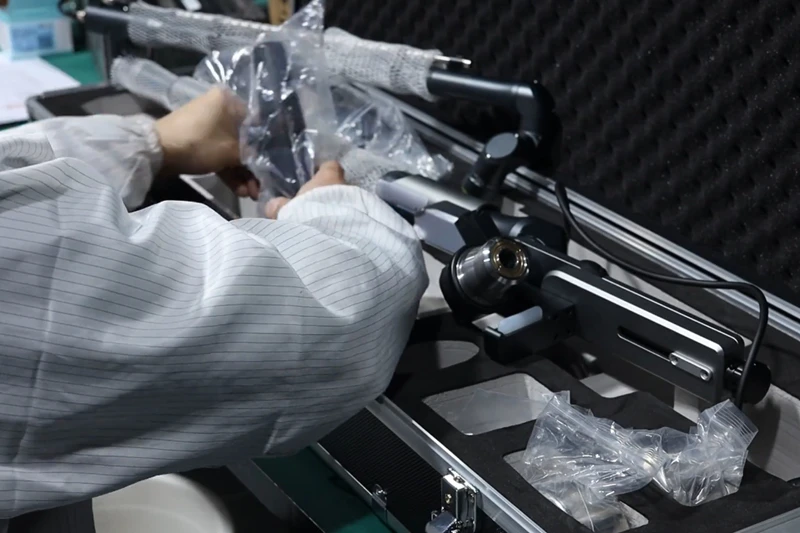
Before sealing the cartons, verify the quantity of machines, handpieces, cartridges, cables, accessories, and documents against the packing list. Check that model labels, serial numbers, and customized OEM packaging match the order.
Confirm Shipping Marks and Handling Information
Check shipping labels, consignee information, carton numbers, product identification, and any required handling instructions. The packaging and shipping documentation should also comply with the agreed transportation method and destination requirements.
Key point: Shipment acceptance covers both equipment conformity and delivery completeness. Missing accessories, incorrect labels, or inadequate protection can make an otherwise qualified order unacceptable.
Set Acceptance Criteria and Handle Inspection Failures
After completing the inspections, buyers need a clear procedure for deciding whether the shipment can be approved, requires corrective action, or must be rejected.
Define Pass, Fail, and Conditional Acceptance
Acceptance criteria should be agreed upon before production and documented in the purchase contract or inspection agreement.
Critical Defects
Issues affecting electrical safety, essential functions, or other critical requirements should prevent acceptance until resolved.
Major Defects
Incorrect specifications, non-functional handpieces, inconsistent RF output, and missing essential accessories generally require correction or replacement.
Minor Defects
Cosmetic imperfections or non-critical labeling issues should be assessed according to the agreed acceptance criteria.
Decide Between Full Inspection and Sampling Inspection
Not every inspection item requires the same sampling approach.
100% Inspection
Check serial numbers, model identification, quantities, essential configurations, and required documentation for every unit.
Functional Sampling
Use an agreed sampling plan for selected performance and appearance checks where appropriate.
Risk-Based Testing
Increase inspection coverage when previous batches show recurring defects or when production involves significant component or configuration changes.
If buyers use an AQL sampling plan, they should specify the applicable standard, inspection level, defect classification, and acceptance and rejection numbers in advance. AQL is a sampling acceptance method, not a guarantee that every unit in the batch is defect-free.
Require Corrective Action and Reinspection
When a defect is identified, isolate the affected machines and request a written corrective action report from the supplier. The report should identify the cause, affected units, proposed solution, and reinspection results.
Buyers should retain the original inspection findings and corrective action records. Any replacement, rework, or shipment release should follow the agreed contractual procedure.
Key point: A batch should only be released when all mandatory acceptance requirements have been met. Passing an appearance or sampling inspection cannot override an unresolved critical performance or safety issue.
Conclusion
A reliable RF microneedling machine inspection should verify more than appearance and basic operating functions. Buyers need to establish order conformity, measure RF output under defined conditions, inspect handpieces and needle cartridges, and verify serial number traceability, factory reports, and packaging. Contact us to request RF microneedling machine inspection checklists, sample OQC reports, and pre-shipment testing documentation for your next bulk order.
Contact for Your Next Bulk Order