




Introduction
When comparing RF microneedling machine specifications, distributors and operators of medical aesthetic clinics often compare technical specifications such as RF frequency, output power, and needle depth. However, these figures alone do not provide a comprehensive picture of a device's actual performance.
Even when devices have similar nominal power ratings, they can differ significantly in terms of their RF operating modes, needle configurations, adjustment capabilities, and the design of their treatment handpieces.
For those procuring such equipment, understanding these distinctions facilitates more informed decision-making when comparing different manufacturers and evaluating product configurations-ultimately helping to select the device best suited to specific market demands.
This guide provides a detailed analysis of the key parameters to consider when evaluating RF microneedling devices and outlines the technical features of the Newangie RF microneedling platform.
Understanding RF Microneedling Machine Specifications
RF microneedling machines combine radiofrequency energy delivery with a microneedle system. Their specifications describe the RF operating configuration, energy adjustment, needle depth, and control functions.
When comparing different machines, buyers should look beyond individual specifications and consider how these features work together.
The following table summarizes the key specifications to check when evaluating an RF microneedling machine.
|
Key Specification |
What It Describes |
Why It Matters to Buyers |
|
RF Frequency (MHz/kHz) |
Operating frequency of the RF system |
Helps compare different RF configurations. |
|
Maximum Power (W) |
Manufacturer-declared power rating |
Provides an indication of power capacity; the actual output definition should be verified. |
|
Energy Levels |
Available RF energy adjustment settings |
Shows how the energy output can be adjusted. |
|
Energy per Pin (mJ/pin) |
RF energy delivered through an individual needle electrode |
Helps evaluate energy output at the needle level. |
|
Pulse Duration (ms) |
Duration of each RF pulse |
Helps buyers understand RF output timing. |
|
RF Delivery Mode |
Electrode configurations, such as monopolar or bipolar |
Identifies how RF current is delivered. |
|
Needle Depth (mm) |
Available needle insertion depth range |
Indicates the needle adjustment capability. |
|
Needle & Cartridge Configuration |
Pin count, material, insulation, and cartridge options |
Helps compare needle designs and consumable configurations. |
|
Control System |
Parameter adjustment and operating interface |
Shows how the machine is operated and controlled. |
|
Treatment Handpieces |
Available applicators and their functions |
Helps buyers evaluate equipment configurations. |
These RF microneedling machine specifications should be evaluated together rather than individually. For example, maximum output power alone does not indicate the actual energy delivered per needle, while the maximum needle depth does not fully describe the available cartridge configurations.
How to Compare RF Frequency in Microneedling Machines
When comparing radiofrequency (RF) microneedling devices, the RF frequency is an important metric. This indicator is typically expressed in kilohertz (kHz) or megahertz (MHz) and is used to describe the operating frequency of a radio frequency system.
However, a higher RF frequency does not necessarily equate to better device performance. Buyers should also consider other factors, such as the RF operating mode and electrode configuration.
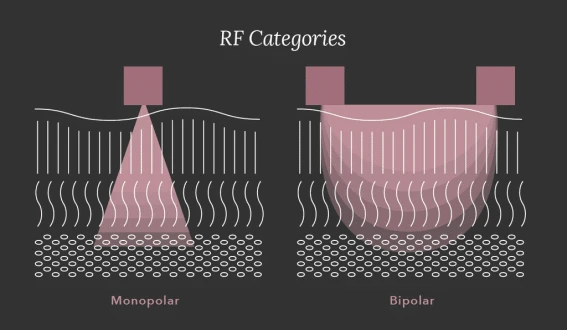
There are two primary types of RF output modes:
|
Comparison |
Monopolar RF |
Bipolar RF |
|
Electrode Design |
Active electrode and separate return electrode pad |
Two poles within the applicator |
|
Current Pathway |
Between the active electrode and return electrode |
Between the two electrodes |
|
Main Configuration |
Uses a monopolar electrical circuit |
Uses a bipolar electrical circuit |
When comparing machines, buyers should check whether they support monopolar RF, bipolar RF, or both, and which treatment handpieces are compatible with each mode.
Newangie's Dual-Frequency RF Microneedling Technology
Newangie's RF microneedling platform combines two RF frequencies with two corresponding operating modes:
- 700 kHz Monopolar RF: Uses an active electrode and a separate return electrode pad. This configuration is designed for broader and deeper RF energy delivery.
- 2.2 MHz Bipolar RF: Uses two poles within the electrode assembly to deliver RF energy between the electrodes, providing a more localized delivery configuration.
This dual-frequency and dual-mode design gives buyers additional RF configuration options within one equipment platform. When evaluating this type of system, distributors should also confirm the compatible handpieces, needle configurations, and operating parameters.
Understanding RF Output Power and Energy Levels
Maximum power and RF energy are two different specifications. Maximum power, expressed in watts (W), indicates the manufacturer's stated power rating. However, it does not directly tell buyers how much RF energy is delivered through each individual needle.
When comparing RF microneedling machines, buyers should check:
|
Specification |
What Buyers Should Know |
|
Maximum Power (W) |
What is the manufacturer's stated maximum power rating? |
|
Energy Levels |
How many RF energy adjustment settings are available? |
|
Energy per Pin (mJ/pin) |
Is the energy delivered through each needle documented? |
|
Pulse Duration (ms) |
How long does each RF pulse last? |
|
Output Stability |
Can the machine maintain stable output during operation? |
Radiofrequency microneedling devices with a higher number of energy settings do not necessarily offer greater output capacity. Buyers should compare the actual adjustment range and request technical documentation, rather than judging a device solely by the number of settings it provides.
Constant-Power RF Output Control
Newangie's radiofrequency (RF) microneedling devices feature constant power control, designed to ensure that the RF output remains stable-even when tissue impedance fluctuates-within a specified operating range.
This feature is designed to ensure consistent energy output during treatment.
For buyers, it is advisable to understand how the manufacturer controls the RF output and to confirm whether it provides test data to support output stability.
When comparing product specifications, please note that "constant power control" and "single needle energy" are not the same concept. The actual energy delivered also depends on factors such as pulse duration and specific output conditions.
How to Compare Needle Depth and Control in RF Microneedling Machines
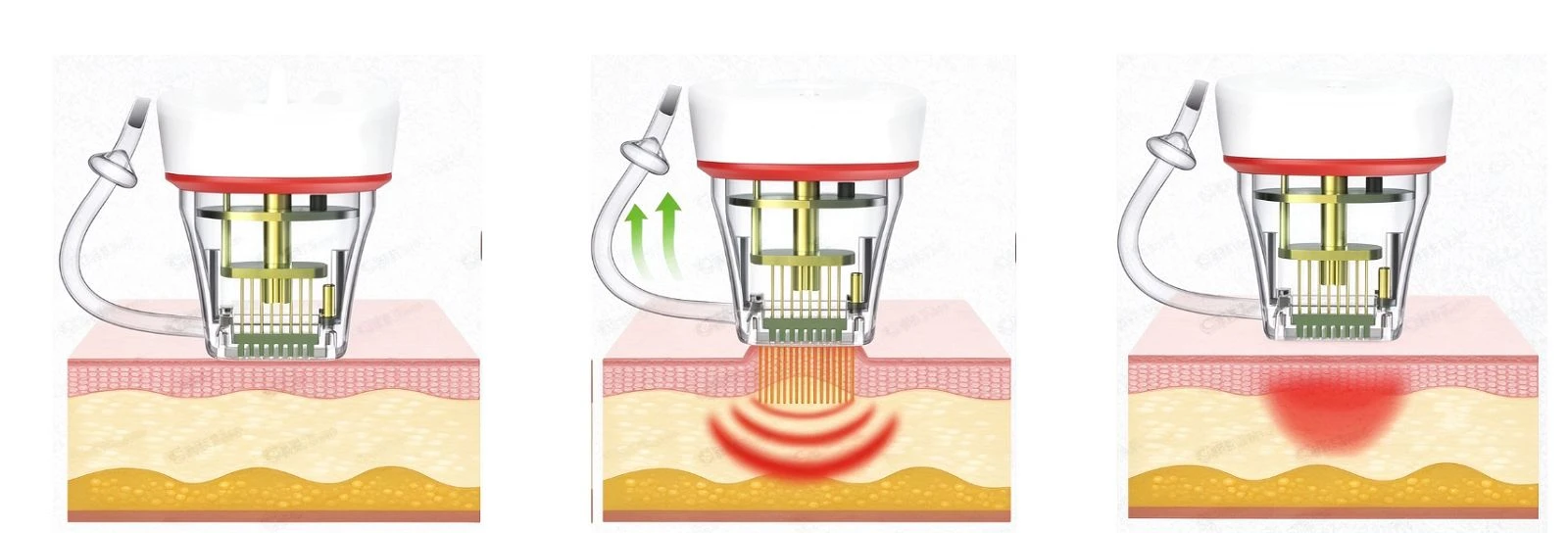
The depth of the microneedle determines the range of penetration depths that radio frequency (RF) microneedle devices can achieve. This is a critical technical specification to consider when evaluating devices for various facial and body treatment protocols.
However, buyers should look beyond the maximum depth and also assess the precision and stability with which the device controls the needles.
Key technical specifications include:
- Needle depth range: The minimum and maximum adjustable depths.
- Adjustment increment: The step size used when modifying the needle depth.
- Drive mechanism: Whether the device utilizes a stepper motor or another type of motion control system.
- Needle motion profile: How the system manages the insertion and retraction of the needles.
Newangie's 0.2–7.0 mm Needle Depth Adjustment
Newangie's RF microneedling platform supports a wide needle depth adjustment range of 0.2–7.0 mm, with 0.1 mm adjustment increments.
The system uses a precision stepping motor to control needle insertion and retraction, providing adjustable depth settings for different compatible applicators. The wide adjustment range provides configuration options for facial and body-focused applications.
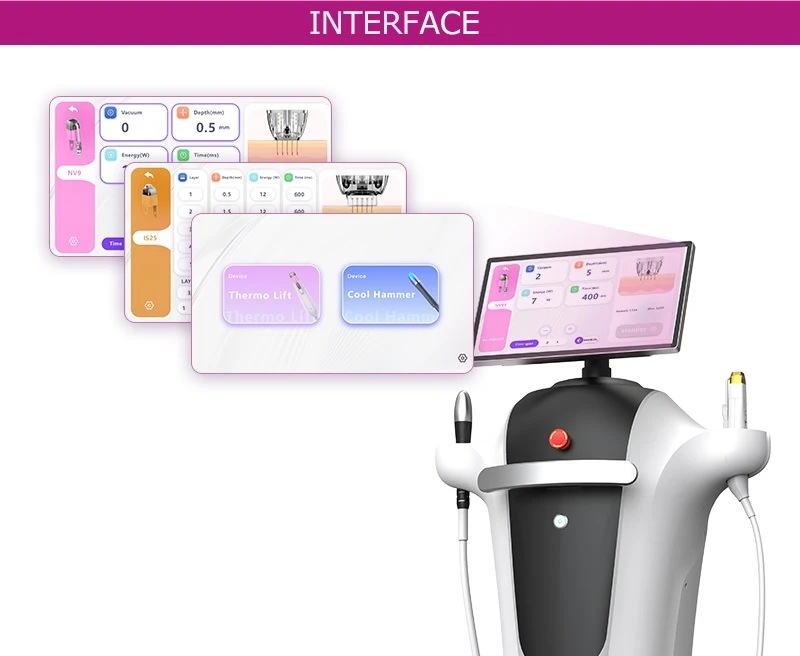
Vacuum-Assisted RF Microneedling Control
Newangie also offers a vacuum-assisted RF microneedling applicator with a maximum negative pressure level of 29 mmHg.
When the treatment tip is applied, the negative pressure function helps to draw in and secure the target area of the skin-a feature that is particularly effective when treating curved or uneven surfaces.
When evaluating radiofrequency (RF) microneedling devices with negative pressure assistance, buyers should consider the maximum negative pressure level, the adjustable range, and the compatible treatment handpieces.
RF Microneedle Types and Cartridge Configurations
RF microneedling machines may support different RF microneedle types and cartridge configurations, including insulated needles, non-insulated needles, and needle-free RF electrodes.
Understanding these differences helps distributors compare needle designs, consumable options, and compatible RF microneedling handpieces.
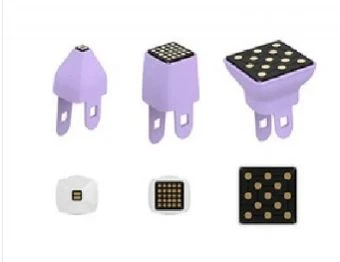
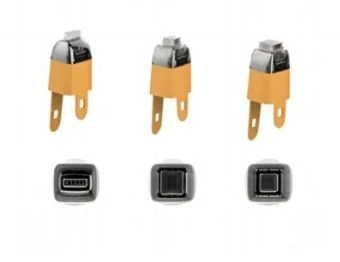
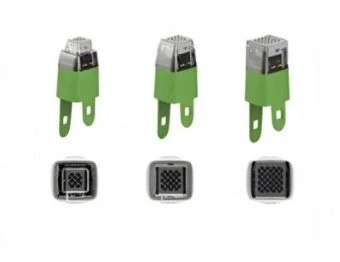
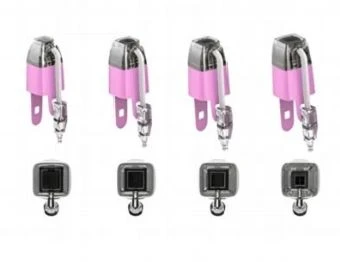
Newangie's platform offers four specialized treatment handpiece configurations:
|
Handpiece |
Needle Depth Range |
Technical Configuration |
Main Application Direction |
|
|
|
NV Series |
0.2-4.5mm |
Negative-pressure non-insulated needles |
Superficial skin-focused RF applications |
|
|
IS Series |
0.2-4.5mm |
Layered insulated needles (1–5 layers) |
Mid-to-deep layered RF applications |
|
|
IC Series |
0.2-7mm |
Common-pole insulated needles (1–5 layers) |
Deeper RF applications, including body-focused configurations |
|
|
HR Series |
Needle-free |
Needle-free nano RF electrodes |
Non-invasive RF applications |
NV Series – Non-Insulated Needles
The NV handpiece features non-insulated needle electrodes and a negative-pressure applicator design. It provides an option for superficial skin-focused RF applications.
IS Series – Layered Insulated Needles
The IS handpiece uses insulated needle structures with 1–5 layers, offering different configurations for layered RF energy delivery.
IC Series – Common-Pole Insulated Needles
The IC handpiece features common-pole insulated needle structures with 1–5 layers. It supports deeper RF application configurations, including body-focused applications, with a maximum compatible needle depth of up to 7.0 mm.
HR Series – Needle-Free Nano RF
Unlike conventional microneedle applicators, the HR handpiece uses needle-free nano RF electrodes. It provides an additional non-invasive RF treatment option within the same equipment platform.
For distributors, these four handpiece options provide different product configurations to present to professional aesthetic clinics.
When purchasing, buyers should confirm the corresponding RF frequency, operating mode, needle depth, and consumable compatibility for each handpiece.
Newangie's RF Microneedling Machine Specifications and Configurations
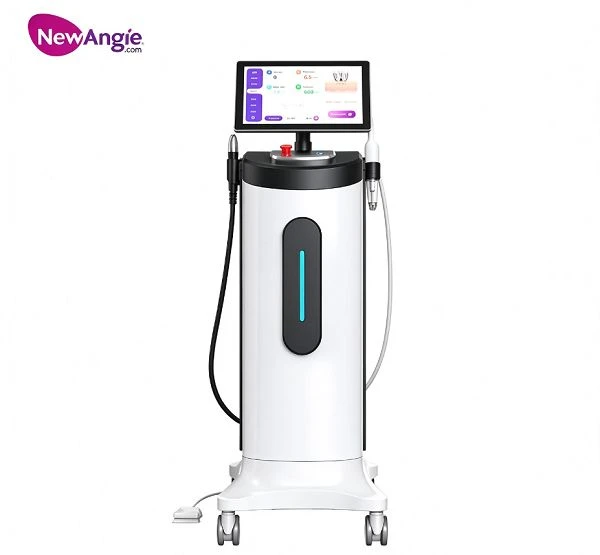
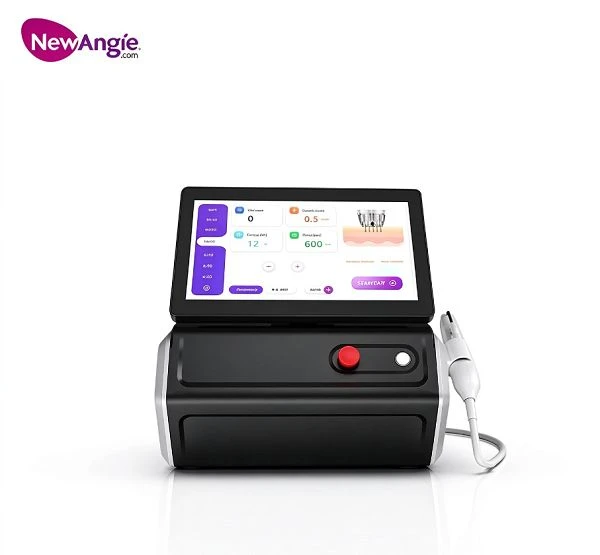
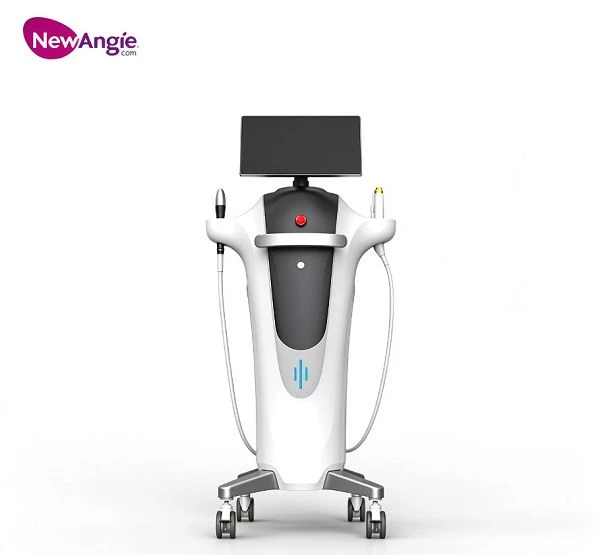
As an RF microneedling machine manufacturer, Newangie offers equipment built on a shared technical platform. Different models feature different exterior designs, while their core technical configurations and functions remain consistent.
This allows distributors and professional aesthetic clinics to select different equipment designs according to their market requirements while benefiting from the same core technical configuration.
Key Technical Specifications
|
Specification |
Newangie Configuration |
|
RF Frequency |
700 kHz / 2.2 MHz |
|
RF Operating Modes |
Monopolar / Bipolar |
|
Maximum Power Rating |
Up to 45 W |
|
Needle Depth Range |
0.2–7.0 mm |
|
Depth Adjustment Increment |
0.1 mm |
|
Needle Drive Mechanism |
Precision Stepping Motor |
|
Maximum Vacuum Level |
29 mmHg |
|
Power Control |
Constant-Power Control |
|
Consumable Management |
Automatic Usage Count and Time Recording |
|
Treatment Handpieces |
NV / IS / IC / HR |
|
Treatment Functions |
RF Microneedling / Non-Invasive Fractional RF / ICE Hammer |
For distributors and clinic operators, this shared platform offers several advantages:
- Consistent Technical Configuration: Different exterior designs share the same core technical platform.
- Multiple RF Options: Dual-frequency and dual-mode RF configurations.
- Flexible Needle Options: Four specialized treatment handpieces for different applications.
- Wide Depth Adjustment: 0.2–7.0 mm needle depth range with 0.1 mm adjustment increments.
- Multiple Treatment Functions: Microneedle RF, needle-free fractional RF, and cooling functions.
Newangie also supports equipment sourcing discussions and customization options for overseas business partners.
Conclusion
Choosing the right RF microneedling machine requires more than comparing RF frequency or maximum output power. Buyers should evaluate the complete technical configuration, including RF operating modes, energy adjustment, needle depth, cartridge design, and treatment handpieces.
For distributors and aesthetic clinics, working with an experienced RF microneedling machine manufacturer that can provide clear product specifications, compatible consumables, and technical support helps simplify the equipment sourcing process.
Looking for an RF Microneedling Machine Manufacturer?