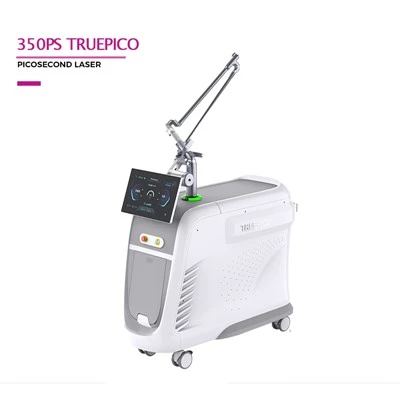






Pico laser technology is used in aesthetic dermatology for selected tattoo-removal procedures, certain pigmented lesions, and, with some treatment systems, specific skin-texture concerns. Its short pulse duration has attracted interest because it allows laser energy to interact with targeted pigments over an extremely brief period.
However, a pico laser is not a single standardized treatment, and not every device is suitable for every skin concern. Clinical results depend on the condition being treated, the laser's specifications, the treatment protocol, and the individual's skin characteristics.
This guide explains what a pico laser does, its potential benefits and limitations, who may be considered for treatment, and what published clinical evidence says about pigmentation and tattoo removal.

What Is a Pico Laser?
A pico laser, also called a picosecond laser, is a laser system that delivers energy in pulses measured in picoseconds. One picosecond equals (10^{-12}) seconds, or one trillionth of a second. The term describes the laser's pulse duration, not one specific device or a guarantee of treatment results.
According to DermNet's clinical overview of picosecond lasers, these systems can target endogenous pigmentation in the skin and exogenous pigments such as tattoo ink. Depending on the laser system, wavelengths may include 532 nm, 755 nm, or 1064 nm, among others.
A short pulse can produce photomechanical or photoacoustic effects in targeted pigment. The interaction depends on the wavelength, pulse characteristics, energy settings, and target tissue. It is therefore inaccurate to assume that every pico laser produces identical effects or has the same clinical applications.
The phrase pico laser is often used broadly in consumer and professional discussions. When evaluating a specific device, it is more useful to review its documented specifications, intended uses, applicable regulatory status, and supporting clinical evidence than to rely on the name alone.
*Explore Newangie's picosecond laser range to compare available systems and find a configuration suited to your intended applications.
What Is Pico Laser Treatment?
Pico laser treatment is a procedure in which a practitioner uses a picosecond laser system to address a selected skin concern. The treatment plan depends on the target, the device, and the individual's clinical assessment.
Commonly reported applications include:
- Tattoo removal: Targeting selected tattoo pigments to help lighten unwanted tattoos over a series of treatments.
- Selected pigmented lesions: Treating certain benign pigment-related concerns when the device and clinical assessment support its use.
- Selected skin-texture concerns: Some systems have fractional handpieces designed for applications such as acne-scar appearance, photoaging, or wrinkles.
These applications are not interchangeable. For example, DermNet describes reported uses for melasma, naevus of Ota, naevus of Ito, minocycline-induced pigmentation, and solar lentigines. It also notes that some fractional handpieces are used for acne scarring, photoaging, and wrinkles. These are reported clinical applications, not proof that every pico laser can safely or effectively treat every listed condition.
Why do wavelengths and device indications matter?
Different wavelengths interact with different pigments, and a device's documented indications may vary according to wavelength and treatment target.
For example, the FDA's 510(k) documentation for Newangie's BMPS4 picosecond laser device identifies 1064 nm and 532 nm wavelengths. It specifies different tattoo-pigment applications and skin-type ranges for each wavelength.
This illustrates why the term pico laser alone is not enough to determine whether a machine is suitable for a particular treatment. The specific device documentation should always be reviewed. Because wavelength selection depends on the target pigment and treatment goal, read our guide on how to choose a picosecond laser wavelength.
What Does Pico Laser Do?
A pico laser delivers very short pulses of energy to a selected target. Its clinical effect depends on the pigment or tissue being treated and the way the device is used.

1. Pico laser for tattoo removal
Tattoo removal is one of the main reported applications of picosecond lasers. The laser targets tattoo pigments in the skin, and the body gradually clears some of the treated pigment over time. This is why tattoo lightening generally occurs progressively rather than immediately.
The result can vary with ink color, pigment composition, tattoo depth, tattoo age, skin characteristics, and previous treatments. Some tattoos fade substantially, while others may be more difficult to clear completely.
The U.S. Food and Drug Administration (FDA) explains that laser tattoo removal may require multiple treatments and that risks can include scarring, infection, redness, soreness, and skin becoming lighter than the surrounding area. A complete removal result should not be promised.
The number of sessions cannot be reliably predicted from the term pico laser alone. A qualified practitioner should assess the tattoo and explain the likely treatment course, possible limitations, and risks. For a broader overview of equipment and treatment options, explore our laser tattoo and pigment removal solutions.
2. Pico laser for selected pigmented lesions
Pico laser systems have been reported for certain pigment-related conditions, including solar lentigines and some other diagnosed pigmented lesions. Whether laser treatment is appropriate depends on the diagnosis and the device's intended use.
A brown or dark patch is not automatically a suitable laser target. Different conditions can look similar but have different causes and treatment requirements. New, changing, irregular, or otherwise suspicious lesions should receive appropriate medical assessment before any cosmetic procedure is considered.
3. Pico laser for selected skin-texture concerns
Some picosecond laser systems include fractional handpieces designed to create controlled effects in targeted areas of skin. Depending on the device and protocol, these may be used for selected concerns such as acne-scar appearance, photoaging, or wrinkles.
This application should not be assumed for every pico laser. A device designed for pigment targeting may not provide the same treatment options as a system with a fractional handpiece. Its documented capabilities and the practitioner's assessment are important.
Pico Laser for Hyperpigmentation: What Does the Evidence Say?

Pico laser for hyperpigmentation is a common topic of interest, but hyperpigmentation is an umbrella term rather than one diagnosis. Melasma, solar lentigines, post-inflammatory hyperpigmentation, and other pigment-related conditions differ in their causes and responses to treatment.
Laser treatment may be considered for selected conditions, but it can also cause unwanted pigment changes. This is particularly important when the condition is chronic or the skin is prone to post-inflammatory hyperpigmentation.
What have clinical studies found about pico laser and melasma?
A 2023 systematic review and meta-analysis published in Lasers in Medical Science examined randomized controlled trials of picosecond lasers for melasma.
The review included six randomized controlled trials using picosecond laser wavelengths of 1064, 755, 595, and 532 nm. The authors reported a statistically significant reduction in melasma severity scores across the included evidence, but the results were highly heterogeneous ((I^2 = 70%)). In subgroup analysis, 1064 nm treatment showed improvement, while 755 nm treatment did not significantly outperform topical hypopigmentation agents and was associated with post-inflammatory hyperpigmentation in the included evidence.
The authors concluded that larger studies were needed to clarify the effectiveness of other wavelengths.
These findings should be interpreted carefully. The review does not establish that all pico lasers work equally well for melasma, nor does it prove that laser treatment is the best option for every patient. The included studies used different wavelengths and protocols, and their results cannot automatically be applied to every device or skin type.
A separate 2023 randomized controlled trial indexed in PubMed compared non-fractional 1064 nm picosecond Nd laser, 755 nm picosecond alexandrite laser, and 2% hydroquinone cream in patients with melasma and Fitzpatrick skin types III–IV. Of the 60 patients enrolled, 59 were included in the analysis. The laser groups received three sessions at four-week intervals, while the topical-treatment group used 2% hydroquinone for 12 weeks.
The study reported different outcomes between the treatment groups, with the 1064 nm group showing the greatest reduction in the Melasma Area and Severity Index among the three groups. Four patients (6.8% of the analyzed participants) experienced recurrence. These findings relate to the specific treatments and study population; they are not a universal treatment schedule or a prediction for an individual patient.
Is pico laser suitable for every type of hyperpigmentation?
No. Treatment suitability depends on the type of pigmentation, the individual's skin characteristics, and the device and protocol being considered.
Melasma can be persistent and may recur. In some patients, skin irritation from a procedure can trigger further pigment changes. Post-inflammatory hyperpigmentation also requires careful consideration because the treatment itself may cause inflammation.
Before deciding on laser treatment, a qualified practitioner should assess:
The likely diagnosis and depth of pigmentation.
Skin tone and history of pigment changes.
Previous treatments and any adverse reactions.
The device's documented indications and limitations.
Potential benefits, alternative treatments, and risks.
The American Academy of Dermatology's guidance on dark spots in darker skin tones emphasizes the importance of identifying the cause of dark spots before treating them. The correct approach is not simply to target every dark area with a laser.
Who Is a Good Candidate for Pico Laser Treatment?
A suitable candidate depends on the clinical concern, the device's intended use, and an individualized assessment. People seeking tattoo removal or treatment for a diagnosed pigment-related concern may be considered, but suitability cannot be determined from the treatment name alone.
Potential indications
Depending on the device and clinical assessment, reported applications include selected tattoo pigments, certain benign pigmented lesions, and selected skin-texture concerns when the system has an appropriate treatment mode.
The practitioner should confirm that the target condition is appropriate for the intended procedure and that the device's specifications and instructions support the proposed use.
Who may need additional caution?
People with a history of post-inflammatory hyperpigmentation, abnormal scarring, recent tanning, active skin problems in the treatment area, or other relevant medical factors should disclose this information during consultation.
Darker skin tones require particular attention to treatment selection and the risk of unwanted pigment changes. DermNet's overview of laser therapy in skin of colour explains that inflammation or injury can lead to post-inflammatory hyperpigmentation or hypopigmentation in skin of colour.
This does not mean that all people with darker skin tones are automatically unsuitable for all picosecond laser treatments. The risk depends on the indication, wavelength, device labeling, settings, practitioner expertise, and individual characteristics. As the FDA device example above demonstrates, indicated skin types can differ by wavelength and intended use.
What are the contraindications to pico laser?
There is no single contraindication list that applies identically to every pico laser and every procedure. Suitability should be determined using the device's instructions, relevant clinical guidance, and the individual's medical history.
Before treatment, disclose relevant medications, previous laser procedures, recent tanning, a history of scarring or pigment changes, and any active skin condition in the area. The practitioner can then determine whether treatment is appropriate, requires modification, or should be postponed.
Any lesion that has not been adequately diagnosed should be medically assessed before cosmetic laser treatment.
Benefits, Side Effects and Risks of Pico Laser
Potential benefits
- Very short pulse duration. Picosecond lasers deliver energy in pulses measured in trillionths of a second, allowing a different pattern of interaction with targeted pigment compared with longer-pulse systems.
- Applications for selected pigment concerns. Depending on the device and diagnosis, picosecond laser technology may be considered for tattoo pigments and certain pigmented lesions.
- Additional treatment options on some systems. Fractional handpieces or other configurations may support selected skin-texture applications, where those uses are documented and appropriate.
- Treatment can be tailored to a specific clinical objective. A practitioner can consider the target, device specifications, skin characteristics, and previous treatment history when deciding whether a particular procedure is suitable.
These potential benefits do not mean that pico lasers are universally superior to other treatments. The most appropriate option depends on the condition, the available evidence, and the individual patient's needs.
What are the side effects and risks of pico laser?
Pico laser treatment can cause temporary or more significant adverse effects. Possible reactions include:
- Pain or discomfort.
- Redness and swelling.
- Pinpoint bleeding, crusting, or blistering.
- Changes in pigmentation, including post-inflammatory hyperpigmentation or hypopigmentation.
- Scarring in some cases.
DermNet provides an overview of the reported side effects of picosecond laser treatment. The likelihood and severity of adverse effects vary with the procedure, settings, and individual risk factors.
For tattoo removal, the FDA's tattoo-removal guidance also discusses the possibility of scarring, infection, soreness, and changes in skin color.
Patients should understand the expected benefits, uncertainties, alternative options, and possible complications before treatment. Anyone who develops an unexpected or worsening reaction should contact their treating healthcare professional.
What to Expect Before, During and After Pico Laser Treatment
The process varies according to the treatment goal and device. A consultation and individualized instructions are more reliable than a universal checklist.
Before treatment
The practitioner should review the target concern, medical history, previous treatments, and relevant risk factors. Patients should disclose medications, recent tanning, prior adverse reactions, and a history of pigment changes or abnormal scarring.
If a pigmented lesion has not been diagnosed, it should be appropriately assessed before cosmetic treatment. Patients should also discuss realistic expectations, the possibility of multiple sessions, and the risks of incomplete improvement or unwanted pigment changes.
On the day of treatment
The practitioner should confirm the treatment area, explain the planned procedure, and use the device according to its intended application and instructions. Protective eyewear and other safety measures should be used as required for the specific laser system and procedure.
The sensation during treatment and the length of the appointment can vary with the treatment area, device, settings, and whether additional measures are used. There is no single treatment duration or experience that applies to all pico laser procedures.
Pico laser recovery and aftercare
Recovery depends on the treatment mode, treatment area, settings, and individual response. Some people experience temporary redness, swelling, tenderness, or other local changes. The degree and duration of these effects vary, so a fixed recovery timeline should not be promised.
Follow the treating practitioner's aftercare instructions. Ask when normal skincare, makeup, sun exposure, exercise, or other activities can be resumed for the specific procedure.
Avoid picking or irritating treated skin, and seek professional advice if the reaction is unexpected or worsening. For a closer look at expected outcomes and post-treatment recovery, see our guide to pico laser before-and-after results and recovery.
How to Evaluate a Pico Laser Device: Specifications and FDA Clearance
The term pico laser does not describe one standardized machine. When evaluating a device, professionals should review its documented specifications, intended applications, regulatory status where applicable, and supporting evidence.
Important considerations include:
- Wavelengths and the applications associated with each wavelength.
- Pulse duration and energy-delivery specifications.
- Intended uses and applicable patient or skin-type ranges.
- Available handpieces and treatment modes.
- Manufacturer instructions, training requirements, and safety documentation.
*For a device-specific example, review the Newangie BMPS-350Ps (BMPS4) picosecond laser, including its available wavelengths and technical specifications.
A real-world example: Newangie's BMPS4 picosecond laser

Newangie's BMPS-350Ps is the same device as BMPS4 in the FDA record. The U.S. Food and Drug Administration lists the Picosecond laser device (BMPS4) under 510(k) number K252447, with a substantial equivalence determination dated October 1, 2025.
The official FDA 510(k) record identifies Hebei Newangie Technology Co., Ltd. as the applicant. The FDA 510(k) Summary documents the device's specifications and indications for use.
The FDA summary lists a pulse-duration range of 300–500 ps, with 1064 nm and 532 nm wavelengths. The device-specific indications include:
| Wavelength | Indications listed in the FDA documentation |
|---|---|
| 1064 nm | Removal of black, brown, green, blue, and purple tattoos on Fitzpatrick skin types I–VI |
| 1064 nm | Treatment of benign pigmented lesions on Fitzpatrick skin types I–IV |
| 532 nm | Removal of red, yellow, and orange tattoos on Fitzpatrick skin types I–III |
| 532 nm | Treatment of benign pigmented lesions on Fitzpatrick skin types I–IV |
These are the indications specified in the FDA documentation for BMPS4. They should not be interpreted as evidence that every pico laser has the same indications or that every form of hyperpigmentation is suitable for treatment.
The FDA decision is a 510(k) clearance based on substantial equivalence for the stated indications, not a PMA approval. It also does not guarantee a particular clinical outcome for every patient.
For professional equipment buyers, the practical lesson is to evaluate the actual device documentation rather than relying on the general label pico laser or on broad marketing claims.
How Is a Pico Laser Different from a Nanosecond Laser?
The terms picosecond and nanosecond describe different pulse-duration scales. One picosecond is one thousandth of a nanosecond, so a picosecond laser delivers a shorter pulse than a nanosecond laser.
However, pulse duration alone does not determine clinical performance. Wavelength, energy delivery, spot size, treatment parameters, the target, and practitioner technique also matter.
For a more detailed technology comparison, see Newangie's existing guide: The Difference Between Q-Switched and Pico Lasers.
Pico Laser FAQ
Q: What does pico laser do?
A: A pico laser delivers very short pulses of energy that can interact with selected pigments in the skin. Depending on the device and treatment configuration, it may be used for tattoo removal, certain pigmented lesions, or selected skin-texture concerns.
Q: Can pico laser treat all types of hyperpigmentation?
A: No. Hyperpigmentation can have different causes, and treatment suitability varies. Melasma, post-inflammatory hyperpigmentation, and solar lentigines should not be treated as if they were the same condition. A qualified practitioner should assess the diagnosis, skin characteristics, and potential risks before treatment.
Q: How many pico laser sessions are needed?
A: There is no universal number. The treatment course depends on the condition, the device, the treatment protocol, and the individual's response. Tattoo removal and pigmentation treatment may require multiple sessions, but the likely number should be discussed after assessment rather than promised in advance.
Q: Is pico laser treatment risk-free?
A: No. Possible side effects include redness, swelling, discomfort, and unwanted pigment changes. More significant complications, including scarring or infection, can occur. Individual risk depends on the procedure, device, and patient characteristics.
Q: Is pico laser suitable for darker skin tones?
A: Some picosecond laser treatments may be considered for darker skin tones when the specific device's indications and the clinical assessment support their use. However, the risk of pigment changes requires careful consideration. Not every wavelength or treatment indication has the same approved or documented skin-type range.
Q: How much does pico laser treatment cost?
A: The cost depends on the location, treatment area, clinical indication, practitioner, and number of sessions. The price of a treatment received by a patient is also different from the purchase price of a professional laser device. If you are evaluating equipment for a clinic or practice, explore our guide to professional picosecond laser machine pricing.
Q: Can every pico laser remove tattoos and treat skin texture?
A: No. Applications differ between devices and configurations. A system designed for certain pigment targets may not provide the same options as one equipped with a fractional handpiece. Check the specific device's intended uses, specifications, and instructions before selecting it for a treatment.
Final Thoughts
Pico laser technology offers options for selected aesthetic applications, particularly tattoo removal and certain pigment-related concerns. Some systems also provide fractional treatment options for specific skin-texture concerns. Nevertheless, the term pico laser does not guarantee a particular result or mean that every device is appropriate for every condition.
Published research on melasma illustrates why careful interpretation matters: studies use different wavelengths and protocols, and results may vary across treatment groups. A well-informed decision should consider the diagnosis, the available evidence, the device's documented uses, the individual's risk factors, and realistic expectations.
For aesthetic professionals evaluating laser equipment, the same principle applies. Review the specifications, intended applications, training requirements, regulatory documentation where applicable, and evidence relevant to the planned use. Newangie can provide device specifications and application information to support professional evaluation.
This article is for general educational purposes only and is not a substitute for diagnosis or individualized medical advice. Treatment suitability, expected outcomes, and risks should be discussed with a qualified healthcare professional.
References and Further Reading
- DermNet - Picosecond laser
- DermNet - Laser therapy in skin of colour
- Feng et al. - Efficacy and safety of picosecond laser for the treatment of melasma: a systematic review and meta-analysis, Lasers in Medical Science (2023)
- Liang et al. - Randomized controlled comparison of 1064 nm picosecond Nd laser, 755 nm picosecond alexandrite laser, and hydroquinone for melasma (2023)
- U.S. FDA - BMPS4 510(k) Premarket Notification, K252447
- U.S. FDA - BMPS4 510(k) Summary PDF
- U.S. FDA - Tattoo Removal: Options and Results
- American Academy of Dermatology - How to fade dark spots in darker skin tones
Evidence note: The clinical findings summarized above apply to the cited studies, devices, treatment protocols, and study populations. They should not be interpreted as proof that all picosecond laser systems have the same indications, safety profile, or outcomes.