



Those familiar with cosmetic medical technology should know that fractional CO2 laser is hailed as the "gold standard" for treating acne scars (commonly known as "acne pits"). Its core advantage lies in its minimally invasive approach, effectively improving scars while keeping the recovery period within a reasonable range. So how does it achieve such a significant effect? This article will take you deeper into understanding this advanced laser skin resurfacing technology.
What are the types of acne scars?
Acne scars can be classified into the following types based on their morphological characteristics:
- Rolling scars: Laser treatment often shows significant effectiveness for these wide, shallow scars with wavy, sloping edges.
- Truck scars: These are wide, atrophic scars with well-defined edges. Lasers effectively break down fibrous tissue, smoothing the skin surface.
- Ice pick scars: These scars are narrow and deep. While treatable, deeper ice pick scars are often more difficult to treat and may require multiple treatments or a combination of methods.
- Hypertrophic/raised scars: Lasers can help smooth thickened, raised, or reddened acne scars.
Different types of scars have varying depths and degrees of adhesion, making it difficult to address all issues with a single treatment method. This highlights the high efficiency of fractional CO2 laser treatment.
Mechanism of Action of Fractional CO2 Laser
The theoretical basis of fractional CO2 laser is selective photothermolysis. The laser instrument emits ultrapulsed laser light with a wavelength of 10600nm, outputting it in a fractional pattern. When the laser irradiates the skin, it is rapidly absorbed by water molecules in the tissue, generating a thermal effect and forming multiple three-dimensional columnar micro-thermal damage zones.
This process produces a dual effect: on the one hand, the laser vaporizes and removes scar tissue, loosening underlying adhesions; on the other hand, the thermal stimulation causes collagen contraction and activates the body's self-repair mechanism, promoting fibroblast proliferation and collagen regeneration. Notably, each micro-damage zone is surrounded by undamaged normal tissue, whose keratinocytes can rapidly migrate, leading to rapid wound healing. This mechanism is the key to why fractional CO2 laser can effectively improve scars while keeping the recovery period within a reasonable range.
What are the core advantages of fractional CO2 laser treatment?
Compared to traditional treatments, fractional CO2 laser offers significant advantages, making it a popular choice for those seeking to improve skin condition and remove acne scars.
-
Significant Results:
It not only improves the skin surface but also stimulates collagen regeneration and remodeling in the dermis, showing remarkable efficacy for moderate to severe atrophic scars.
-
Fast Recovery:
Because it preserves a large amount of surrounding normal tissue, the skin heals quickly. The epidermis typically begins to heal within 8 hours, and the skin returns to its normal appearance in about 3-6 days, without affecting normal work and life. Compared to traditional lasers, the recovery period is significantly shortened.
-
Dual Benefits:
While treating scars, it also tightens the skin, minimizes pores, and improves skin texture and pigmentation, achieving a dual effect of "scar repair" and "skin rejuvenation."
-
Long-lasting Results:
The collagen regeneration and remodeling process after treatment can continue for a long time (even up to 6 months to 6 years), resulting in sustained and stable effects.
What are other indications for fractional CO2 laser treatment?
Skin Rejuvenation and Anti-Aging:
By stimulating collagen regeneration, fractional CO2 laser effectively improves various signs of skin aging.
- Wrinkles: Improves mild to moderate static wrinkles on the face, such as crow's feet, forehead wrinkles, and frown lines.
- Skin Texture and Pores: Effectively minimizes pores, improves rough skin, uneven skin texture, and addresses skin laxity caused by photoaging, resulting in smoother and firmer skin.
Treatment of Pigmented Disorders:
The thermal effect of the laser helps disperse and metabolize pigment, and can be used to treat some epidermal hyperpigmentation disorders.
- Pigmentation: Improves freckles, age spots, café au lait spots, and some other pigmentation problems.
- Other Hyperpigmentation Problems: Fractional CO2 laser also has a therapeutic effect on actinic keratosis.
Newangie offers efficient and reliable fractional CO2 laser skin resurfacing solutions
In the medical aesthetics industry, when selecting fractional CO2 laser equipment, major beauty institutions typically focus on three core factors: the certainty of clinical efficacy, the safety of the treatment process, and the long-term operating costs of the equipment.
Based on consumer demand for "efficiency" and "reliability," Newangie, as a leading brand in the medical aesthetics equipment field, offers fractional CO2 laser solutions with the following core competitive advantages, which you can refer to when selecting equipment or evaluating technology.

High-Performance Radio Frequency Laser:
Newangie devices typically employ stable radio frequency-excited CO2 lasers. Compared to conventional glass tube lasers, radio frequency lasers offer higher peak power and shorter pulse widths. This means that scar tissue can be vaporized more quickly and thoroughly in a single treatment session, while the extremely short duration of action minimizes thermal damage to surrounding healthy tissue. This is key to achieving "highly effective" and "low-side-effect" treatment.
Ultrapulse Technology:
True "ultrapulse" technology is the gold standard for fractional lasers. Newangie's approach emphasizes its ultrapulse output mode, which can reach extremely high energy peaks instantaneously, effectively stimulating dermal collagen remodeling, thereby achieving the ideal effect of smoothing acne scars and firming the skin.
Significant Clinical Endpoints:
After one course of treatment (usually around 3 sessions), the improvement rate for atrophic acne scars (pockmarks) typically reaches a relatively ideal level. Simultaneously, due to precise control of thermal damage, the risk of post-inflammatory hyperpigmentation (PIH) is manageable.
Recovery Management:
With precise parameter control, the post-operative recovery period can be shortened as much as possible (usually 5-7 days for scab shedding), ensuring efficacy. This meets the modern demand for efficient "lunchtime beauty treatments" or short downtime.
User-friendly interface:
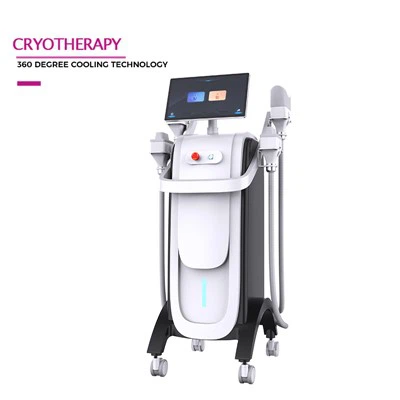
The equipment is usually equipped with a large touch screen and preset treatment plans, which reduces the learning difficulty for medical staff and reduces the possibility of operational errors.
If you need treatment for acne scars or any other skin problems, feel free to consult Newangie. Our professional estheticians will provide a detailed solution based on your skin condition and introduce each high-tech medical aesthetic device in detail to help you achieve better skin.