



Driven by the pursuit of smoother skin, the hair removal market has seen the emergence of a wide range of solutions, from temporary touch-ups to long-term improvements. We've noticed that not only women but also men are increasingly turning to hair removal treatments. This is perfectly normal, as beautiful, smooth skin boosts confidence.
However, many people still struggle with choosing the right hair removal method. While laser hair removal is currently the most popular method sweeping the beauty market, it can be a challenge for first-time hair removal seekers. Traditional hair removal methods, while convenient, also carry safety risks. This leads to people still struggling to make a decision after searching online for various effective hair removal methods, and they're also unclear about the differences between them.
So today, I will systematically compare diode laser hair removal with other common hair removal methods from four dimensions: technical principles, effect sustainability, safety, and applicable scenarios, to help you make the best choice based on your needs.
Core Difference: "Hair Removal" or "Hair Follicle Inhibition"
The fundamental difference between all hair removal methods stems from how they address the hair follicle: whether they target hair only on the surface of the skin or penetrate deep beneath the skin to affect follicle activity. This core distinction directly determines the longevity of the hair removal effect and the user experience.
The core principle of diode laser hair removal is selective photothermal therapy, which forms the scientific basis of laser hair removal.
It utilizes 800-810nm near-infrared laser light to precisely target melanin (the pigment that gives hair its color) in hair follicles. When the laser energy is absorbed by the melanin, it is converted into heat, raising the temperature of the hair follicle to 45-60°C.
This heat damages the hair follicle's germinal stem cells and nutrient supply pathways, thereby impairing the follicle's ability to grow new hair. However, due to the laser's "selectivity," it spares surrounding skin tissue (such as the epidermis, blood vessels, and nerves).

Simply put, it does not "cut or pull out" the hair that has already grown, but "heats the hair follicles" to make them enter a long-term dormant state, inhibiting hair growth - just like pressing the "pause button" on the hair follicles, reducing the possibility of hair growth from the root.

Traditional Hair Removal Methods: Temporarily Remove Surface Hair
Razors use their blades to cut the ends of hairs, which only lasts for 1-3 days. The friction from the blades can also cause redness, swelling, and scratches.
Depilatory creams use chemicals to dissolve hair structure (such as keratin) and last for 3-5 days, but some people may experience skin allergies due to the irritation.
Waxing uses a sticky substance to remove hair at the root, and the effects last for 2-4 weeks. However, the pulling process pulls on the hair follicles and epidermis, potentially causing folliculitis or enlarged pores.
What kind of results can different hair removal methods achieve?
When choosing a hair removal method, you're likely most concerned with the following: "How long do the results last?" "Will hair become thicker and harder?" "Is long-term cost high?" These differences create a distinct distinction between diode laser hair removal and traditional methods.
Duration of effect: "short-term clearance" or "long-term suppression"

-
Diode laser hair removal: The "long-lasting" effect
Because hair follicles undergo different growth cycles (anagen, catagen, and telogen), and lasers are most effective on anagen follicles (which have the highest melanin content), a course of treatment is required (usually 6-8 sessions, separated by 4-6 weeks).
After completing a course of treatment, over 90% of users experience significant hair reduction for 1-3 years, with some even experiencing nearly 5 years of long-term suppression. Subsequent "consolidation treatments" (one or two times annually) are sufficient to maintain the results.
-
Traditional hair removal methods: The "temporary" effect
After shaving, new black stubble may appear within 1-2 days.
Hair will gradually grow after 3-5 days of using depilatory creams.
After 2-4 weeks of waxing, hair follicles will re-enter the growth phase.
More importantly, these methods cannot change the activity of hair follicles and can only temporarily remove hair on the surface of the skin. After repeated long-term use, some people may experience hair follicles being irritated, resulting in thicker and darker hair.

Hair improvement: from "quantity reduction" to "quality optimization"
The advantage of diode laser hair removal isn't just that it reduces hair count; it also improves hair quality. After treatment, the remaining hair becomes finer, softer, and lighter in color. Even if it grows back, it's less noticeable and feels more like down. Traditional methods, on the other hand, can't change the thickness or color of hair; they only temporarily remove it, leaving it to grow back with its original texture.
Long-term costs: "single low price" and "one-time investment"
Single cost comparison
| Method | Cost of each treatment session | Notes |
| Diode laser hair removal |
 $150−$600 $150−$600 |
Depends on the treatment area (The smaller the area, the cheaper it is) |
| Razor | Lower amount | But it requires frequent and continuous purchases |
| Waxing |
|
Needed every 4-6 weeks |
| Depilatory cream | $10−$20 |
Replace every 2-3 weeks. (Large areas wear out faster.) |
| Method | Estimated long-term costs |
|---|---|
| Diode laser hair removal |
The initial cost for the full range is $900 to $4,800, with touch-up costs likely to be minimal over time. |
| Razor | More than $3,000 (e.g., $150 per year for 20 years). |
| Waxing | $12,000 - $20,000+ (within 20-30 years). |
| Depilatory cream | $1,200 to $2,400 or more (over ten years). |
With diode laser hair removal, the higher initial investment results in a permanent or long-lasting reduction in hair growth, eliminating the need for frequent, recurring costs.
While these traditional hair removal methods have a lower initial cost, it's important to remember that they only remove superficial hair and don't inhibit the properties of hair follicles. This means that once you've used them a few times, you'll be tempted to keep using them because the new hair will grow darker and thicker, which you won't tolerate.
Therefore, over the long term, the cumulative cost of traditional methods often exceeds the initial investment of laser hair removal, which is a more permanent solution.
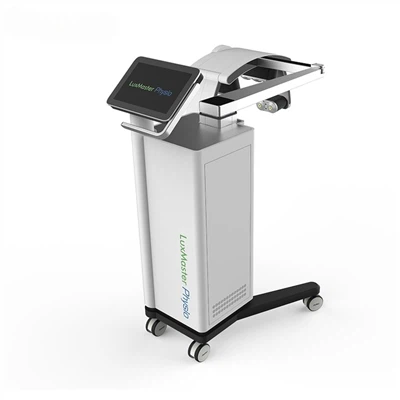
Display and treatment of a popular laser hair removal device in 2025
Safety Comparison: Reduced risk of skin irritation
The safety differences between different hair removal methods are mainly reflected in the impact on the skin barrier - especially people with sensitive skin, darker skin or abnormal hair (such as hirsutism) need to pay special attention to risk points.
Diode Laser Hair Removal: Precision Determines Low Risk
Due to the laser's selective photothermal effect, diode laser hair removal causes minimal damage to the skin. Under normal operation, only brief redness, swelling, and slight stinging (similar to a rubber band snapping your skin) may occur, which usually subsides within 1-2 hours. However, there are certain contraindications:
- Dark skin: Epidermal melanin may absorb laser energy, causing burns and hyperpigmentation.
- Light hair: Low melanin content in hair follicles prevents effective absorption of laser energy, potentially resulting in ineffective treatment.
- Treatment should be suspended if the skin is sensitive (such as sunburn, eczema, or folliculitis), or if the patient is pregnant or breastfeeding.
Traditional hair removal methods: Risks are more likely
-
Razors:
"Physical damage"-scratching the skin with the blade is not only painful but can also lead to infection. Repeated friction can damage the stratum corneum, causing redness and scaling on sensitive skin.
-
Depilatory creams:
"Chemical irritation"-Ingredients like thioglycolate may cause contact dermatitis, manifesting as itching, redness, swelling, and burning. They are particularly unsuitable for people with intact skin barriers.
-
Waxing:
Risks include both "physical traction" and "infection"-pulling hair can tear the epidermis, and residual wax can clog pores and cause folliculitis. Those with sensitive skin or large pores should exercise caution.
Choose a plan that suits you best based on your needs
There's no "absolutely best" hair removal method, only the "most suitable" option. When choosing a hair removal method, it's best to consider factors such as your desired results, skin condition, and time and cost.
Diode Laser Hair Removal: Suitable for those seeking long-term results and stable skin.
Suitable Scenario:
Suitable for those who seek long-term hair removal and are comfortable with a regular treatment schedule. This includes areas with high exposure, such as the underarms, legs, and bikini line.
Advantages:
One-time investment for long-term peace of mind, eliminating the hassle of frequent hair removal. Ideal for busy professionals or those who prioritize smoother skin.
Precautions:
Choose a reputable medical institution or a licensed beauty salon to ensure the equipment is compliant (such as the Newangie diode laser) and operated by a qualified physician. This can help prevent skin damage caused by inferior equipment or improper operation.
Newangie Intelligent diode laser hair removal device - equipped with dual cooling system
Traditional hair removal methods: Suitable for those with temporary needs and special occasions.
Razors/depilatory creams:
Suitable for emergency situations, such as when you suddenly need to wear sleeveless clothing or a short skirt, and your skin is in good condition (no allergies or wounds). They can quickly remove hair.
Waxing:
Suitable for short-term, intensive needs, such as vacations or weddings, when you want smooth skin for 2-4 weeks and can tolerate some pain.
From "repeated treatment" to "root cause improvement"
The difference between traditional hair removal methods and diode laser hair removal essentially lies in the choice between "temporary removal" and "long-term improvement"-the former addresses "immediate hair problems," while the latter addresses "long-term hair follicle activity issues."
If you're looking for convenient, low-cost, temporary results, shaving or depilatory creams are the basic options. If you're looking for a balance between effectiveness and cost-effectiveness, waxing can be a short-term solution. However, if you want to reduce hair growth at its source, avoiding the hassle of repeated procedures and the burden of long-term costs, diode laser hair removal is currently the most mature and stable option.
Whichever method you choose, it depends on your skin condition, hair characteristics, and personal needs. After all, when it comes to smooth skin, safety always comes first.