



Many people seeking laser hair removal harbor a hopeful expectation: that a single treatment will permanently eliminate unwanted hair, providing a lasting solution. However, professional doctors or technicians will always inform you that multiple sessions are usually required to achieve the desired results. This inevitably raises the question: if laser technology is so effective and long-lasting, why can't it solve the problem in one go? This is related to the hair growth cycle and the operating principles of laser technology. Understanding this will not only help us set realistic expectations but also allow for a more scientific approach to planning hair removal treatments.
The Key Factor: Hair Growth Cycle
Hair does not grow continuously without end, but rather follows a rigorous dynamic cycle. This cycle is mainly divided into three stages, which explains why laser hair removal must be a long-term process.
Anagen Phase:
This is the active growth phase of the hair. During this phase, stem cells in the hair follicle actively proliferate, and the hair continuously receives nutrients from the dermal papilla and grows outward. At this time, the hair follicle is full, the melanin content is high, and the target is prominent.
Catagen Phase:
This is a short transitional phase, lasting about 1-2 weeks. Hair growth stops, the hair follicle begins to shrink, the connection with the dermal papilla weakens, and the hair detaches from the dermal papilla. The melanin concentration in the hair also decreases.
Telogen Phase:
This is the resting phase, where the hair follicle enters a "dormant" state. The old hair completely falls out, and the hair follicle prepares to restart and enter a new anagen phase at the appropriate time. At this time, the hair follicle is located deeper, and its activity is very low. Laser hair removal at this stage will not yield ideal results.
Why is hair removal most effective during the growth phase?
During the growth phase, hair follicles are firmly anchored to the skin and directly connected to the dermal papilla, which provides the blood supply for hair growth. The hair shaft contains the most melanin during this stage, allowing it to effectively absorb laser energy. When the laser is absorbed, it converts into heat, which travels down the hair shaft, destroying the dermal papilla and hair root, preventing hair regrowth.
Therefore, hair removal during the growth phase is when the laser is most effective.
During the regression phase, hair growth stops and the hair follicle shrinks; during the resting phase, the hair separates from the follicle and falls out, and the melanin content is low, making it difficult for the laser to be effective. Therefore, only hair follicles in the growth phase are the best targets for laser treatment.
The key is that hair on any part of the body is not all in the same phase at the same time. For example, on the scalp, about 85%-90% of the hair is in the growth phase; but on the legs or bikini area, only about 20%-40% of the hair may be in the growth phase, with the majority in the resting phase. This means that multiple treatments are necessary to achieve ideal results for permanent hair removal of hair in the growth phase.
How many laser hair removal sessions are usually needed?
| Location | Treatment course | Note |
| Face (upper lip, chin, cheeks) | 6-10+ | The hair is relatively fine. |
| armpit | 6-8 | Affected by hormone levels |
| bikini | 6-8+ | Affected by hormone levels |
| Legs | 6-8+ | Large area |
| Back/Chest (Men) | 8-10+ | Large in area, with thick hair. |
Factors affecting the number of treatment sessions
Besides differences in the treatment area, individual circumstances and treatment
details also collectively determine the final number of treatment sessions required.

Individual Physiological Factors
Hormone Levels:
The level of androgens directly affects hair growth rate and density. Hair removal is more challenging for individuals with hormonal imbalances such as polycystic ovary syndrome.
Hair Color and Thickness:
Thick, dark hair rich in melanin absorbs light energy most efficiently, resulting in the best laser treatment results. Blonde, red, white, or very fine hair has low melanin content, therefore requiring more treatment sessions.
Skin Tone:
The darker the skin tone, the more melanin in the epidermis may compete for energy absorption, increasing the risk of epidermal burns. This requires the use of more cautious energy parameters, which may affect the effectiveness of each treatment and increase the number of sessions required.
For individuals with darker skin tones, the 1064nm laser, specifically designed for darker skin, offers greater safety.
Genetics and Ethnicity:
Hair density and growth patterns are also significantly influenced by genetics.
Treatment Technique Factors
- Equipment Technology and Wavelength: Professional medical-grade laser equipment (such as alexandrite, diode, and Nd:YAG lasers) is generally more effective than home-use devices or low-end phototherapy equipment due to its stable energy and precise penetration depth, resulting in a more controllable number of treatments. Furthermore, different laser wavelengths have different penetration depths and effects, thus requiring different treatment courses.
- Treatment Parameter Settings: The precise setting of energy density, pulse width, and spot size requires personalized treatment provided by an experienced physician based on individual hair and skin color. This is crucial for ensuring efficacy and safety.
- Treatment Interval: The interval between treatments must follow the recommendations of a professional physician (usually 4-8 weeks, depending on the treatment area and hair type) to ensure that newly growing hair follicles are treated promptly. Too long an interval will prolong the treatment course, while too short an interval may be ineffective for hair that has not yet entered the growth phase.


Post-Treatment Care:
- Sun Protection: Strict sun protection after treatment is crucial. Sun exposure can lead to hyperpigmentation and affect subsequent treatments.
- Avoid Self-Hair Removal: During treatment, avoid waxing, plucking, or other methods that remove the hair shaft, as this will cause the laser to lose its target. However, gentle shaving is acceptable.
- Treatment Completion: It is essential to complete the entire recommended course of treatment. Stopping midway will inevitably lead to unsatisfactory results.
Laser Hair Removal Technology Introduction
Alexandrite Laser (755nm):
The alexandrite laser is a popular choice in beauty clinics. It has strong penetration, significant results, and is fast and effective. The alexandrite laser operates at a shorter wavelength of 755 nanometers, making it ideal for fine to medium hair and lighter skin tones (Fitzpatrick I-III).
Diode Laser (810nm):
With a longer wavelength, it penetrates deeper into the hair follicle and is widely used. Its strong penetration makes it suitable for various skin tones (IV). It is also popular among men who wish to remove hair from their backs or chests.
Nd:YAG Laser (1064nm):
Due to its strong penetration and low melanin absorption rate, it is the safest for darker skin tones (I-VI) and effectively treats all skin types. In addition to efficient hair removal, this system can also be used for tattoo removal and laser skin rejuvenation.
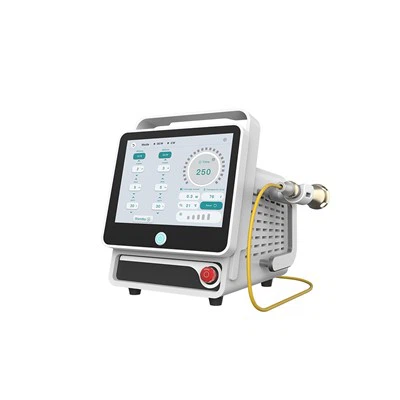
Newangie's advanced laser hair removal device achieves efficient and intelligent hair removal
Newangie Laser Way incorporates an intelligent AI system that intelligently recommends the best treatment parameters based on the patient's hair type. Its advanced cooling system, powerful energy output, and high-quality core components allow patients to enjoy the most comfortable treatment and achieve the most ideal results in the fewest treatment sessions.

AI-Powered Treatment Personnel Analysis
The intelligent system analyzes data to recommend optimal treat-ment parameters, enabling fully customized therapy plans. This ensures professional, precise treatments and delivers superior results for every client.
Intelligent Clinic & Clinic Hub
Securely manage in-clinic client information with robust data protec-tion. The system automatically organizes treatment histories and parameters, while providing timely reminders to streamline clinic workflow and enhance service quality.
High-Quality Core Components
The FL laser bar boasts a long lifespan, produces a high-quality beam, and can continuously emit 100 million beams without energy degradation or limitations, requiring no maintenance for replacement.
The Italian water pump ensures stable water pressure and quiet operation, guaranteeing efficient, stable, and long-lasting performance of the equipment.
Industrial-Grade Intelligent Cooling System
It combines air, water, wind, and compressor/TEC-based integrated cooling technologies to rapidly cool down to -25°C in a short time, minimizing pain during the hair removal process and providing a safe and comfortable treatment environment.
The superior cooling system enables the machine to operate continuously 24/7 and ensures consistent high power output.
In summary, laser hair removal cannot be effective in a single session, primarily due to the asynchronous cyclical nature of human hair growth and the limitations of the laser's mechanism of action. It is a process that requires patience and persistence. Typically, a complete course of medical laser hair removal requires 4-8 sessions or even more, with several weeks between each session, and the entire treatment may last from six months to over a year.
For consumers, understanding this scientific principle is crucial. It helps us set realistic expectations, choose reputable medical institutions and experienced practitioners, and strictly follow the treatment plan and post-treatment care instructions. Only in this way can we safely and effectively achieve the desired long-lasting smooth skin.