




As people's pursuit of healthy and beautiful skin continues to evolve, laser technology has become a core technological force in the field of cosmetic dermatology, fundamentally changing the landscape of skin rejuvenation treatments. Whether it's removing blemishes, wrinkles, scars, improving uneven skin tone, or shrinking pores, various laser devices are gaining popularity among consumers, clinics, and beauty salons due to their precision, efficiency, and minimally invasive nature.
So, are you curious about how lasers actually maintain skin health? What are the mainstream laser technologies on the market? What skin problems are they suitable for? This article will provide a detailed introduction to various laser treatments from their technical principles, applicable symptoms, and advantages, and also provide clinics, beauty salons, and other medical aesthetic institutions with information on purchasing laser equipment.
Analysis of Laser Types and Technologies for Improving Skin Condition
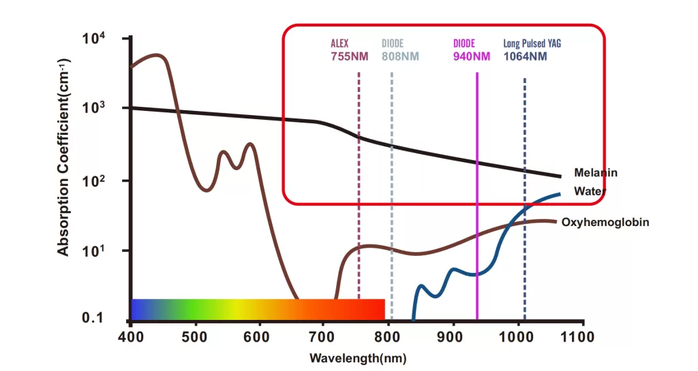
The core principle of laser cosmetic procedures is the use of photothermal and photo-ablation effects generated by the interaction between laser light and target skin tissue. Simply put, different wavelengths of laser light are selectively absorbed by different target chromophores in the skin (such as melanin, hemoglobin, and water). By precisely controlling the energy, abnormal tissue is selectively destroyed while causing minimal damage to surrounding normal skin. It is based on this principle of selective photothermolysis that laser technology can precisely and safely address a variety of skin problems.
Fractional CO2 Laser
The fractional CO2 laser device (wavelength 10600nm) is the most representative ablative fractional laser device, widely popular in dermatology and aesthetic medicine institutions.
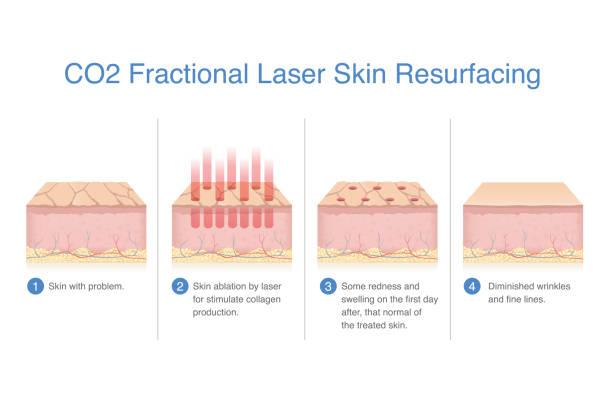
Its technical principle is based on focal photothermal effects: the laser irradiates the skin with a micron-sized beam matrix, forming microscopic columnar thermal damage zones in the epidermis and dermis. The local temperature can instantly reach 100℃, completely vaporizing the target tissue while preserving surrounding healthy skin tissue, thus greatly shortening postoperative recovery time.
The depth and spacing of the thermal damage zones can be controlled by adjusting the instrument parameters, achieving personalized treatment results.
Clinical Applications of Fractional CO2 Laser
- Scar Treatment: Fractional CO2 laser has a significant effect on improving hypertrophic scars after burns, surgical scars, acne pits, and stretch marks.
- Anti-wrinkle and Anti-aging: It effectively reduces fine wrinkles, causes dermal collagen contraction and denaturation, and stimulates collagen proliferation and rearrangement, achieving a skin-tightening effect.
- Improvement of pigmentation: Fractional CO2 lasers also show excellent results in treating melasma, freckles, age spots, etc., and are even more effective than Nd:YAG lasers in the treatment of certain pigmented skin conditions. In addition, it can be used for skin photoaging repair, acne treatment, and removal of various skin growths.
Compared to traditional continuous CO2 lasers, fractional CO2 lasers are less invasive, cause less bleeding, and have a faster recovery, avoiding the disadvantages of damaging surrounding normal tissue, forming eschars, and slow wound healing.
A recovery period of 1-2 weeks is generally required. Furthermore, strict sun protection and post-treatment care are crucial after treatment to help reduce the risk of post-inflammatory hyperpigmentation (PIH) or recurrence of melasma.
Picosecond Lasers
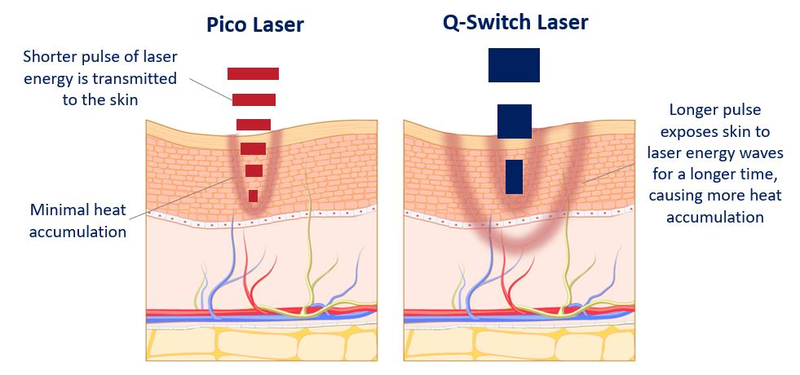
Picosecond lasers have garnered significant attention in the field of laser cosmetic procedures in recent years. Unlike traditional Q-switched nanosecond pulse widths, picosecond lasers achieve picosecond-level pulse widths, resulting in higher laser energy density. This allows them to generate a powerful "photomechanical effect" in an extremely short time, breaking down pigment particles into smaller fragments that are then naturally eliminated through the body's immune system and metabolism.
Simultaneously, they stimulate the production of collagen and elastin, helping to restore skin elasticity, smoothness, and even skin tone. In short, picosecond lasers have demonstrated significant efficacy in applications such as pigmentation removal, skin rejuvenation, and tattoo removal.
For example, Newangie's picosecond laser treatment device utilizes 350 picosecond (350 ps) ultra-short pulse width technology. Through a powerful photomechanical effect, it efficiently removes melanin from pigmented skin with minimal thermal damage.
For large medical aesthetic institutions, the advantages of this device are particularly prominent: it comes standard with dual wavelengths of 1064nm and 532nm, enabling it not only for tattoo removal and pigmentation treatment but also for simultaneous stimulation of collagen and elastin regeneration, achieving both skin rejuvenation and firming effects. Optional 585nm and 650nm dye handpieces allow for more precise treatment of stubborn colored tattoos.
Compared to traditional lasers that rely on heat energy, this technology uses pressure waves to precisely target tissue, being gentler on surrounding skin, thus significantly reducing patient discomfort and shortening recovery time.
Indications for Pico Laser Treatment:
Pico lasers can safely and effectively address tattoo removal, dermal pigmentation, various epidermal pigmentation (freckles, sunspots, melasma, age spots), as well as acne scars, wrinkles, enlarged pores, uneven skin tone, and skin whitening and rejuvenation.
The core advantages of pico lasers
Minimal thermal damage, especially safe for people with darker skin tones; rapid post-treatment recovery-generally, scabs fall off in only 3-5 days, while traditional lasers require 7-10 days; and the ability to simultaneously address pigmentation and skin texture issues, achieving multiple benefits in a single treatment.
Q-Switched Lasers
As a superior technology for treating pigmented skin diseases before the advent of picosecond lasers, Q-switched lasers remain an indispensable basic choice in dermatology. Q-switching technology concentrates laser energy into an extremely short, nanosecond-level pulse, selectively destroying pigment particles while leaving adjacent normal cells undamaged. It is currently one of the most effective methods for treating pigmented skin diseases with minimal side effects.
The most commonly used Q-switched laser device is the Nd:YAG laser treatment system, similar to Newangie's 350ps picosecond laser, which can output two wavelengths: 1064nm and 532nm.
- The 1064nm wavelength has strong penetrating power, reaching deep into the skin, and is suitable for treating dark tattoos and dermal pigmented lesions such as nevus of Ota.
- The 532nm wavelength is more strongly absorbed by epidermal melanin and is highly effective in treating superficial pigmented spots such as freckles, café au lait spots, and age spots.
Clinical practice has confirmed that Q-switched Nd:YAG lasers have good fading effects on nevus of Ota and freckles, and are effective for superficial pigmented skin diseases.
The advantages of Q-switched lasers lie in their relatively low equipment cost and high technological maturity, making them a cost-effective choice for pigmentation treatments in primary healthcare institutions and cosmetic clinics. However, compared to picosecond lasers, they cause relatively more thermal damage and are slightly less effective for deeper pigmented lesions. Clinically, they are typically used as entry-level cosmetic laser devices.
Besides the three types of lasers mentioned above, most people in the beauty industry are familiar with Intense Pulsed Light (IPL), a light energy technology often mistakenly considered a laser. Although it is not a laser, it also boasts remarkable efficacy in facial skin regeneration and the treatment of skin diseases.
Intense Pulsed Light (IPL)
Intense Pulsed Light (IPL), commonly known as "photorejuvenation," has become one of the most widely used phototherapy projects in medical aesthetic institutions worldwide due to its wide treatment range, minimal invasiveness, and lack of recovery time.
It is important to note that IPL is not a laser, but rather a broadband composite light (wavelength 400-1200nm). However, it belongs to the same light energy technology as lasers and is often introduced and treated together with "laser beauty" in daily clinical practice.
How IPL Technology Works?
IPL is based on the principle of "selective photothermolysis." By using different filters to select specific wavelengths, it can be absorbed by target chromophores in the skin such as melanin, hemoglobin, and water, achieving multiple effects in one device-including spot removal, whitening, rosacea reduction, skin rejuvenation, and hair removal.
What skin conditions can IPL treat?
- Pigmentation issues : freckles, sun spots, melasma, dull skin tone
- Vascular issues: facial flushing, rosacea, rhinophyma, post-acne red marks
- Skin texture improvement: enlarged pores, fine lines, rough skin
- Anti-aging and stabilization: stimulates collagen regeneration, delays skin aging, reduces sensitivity

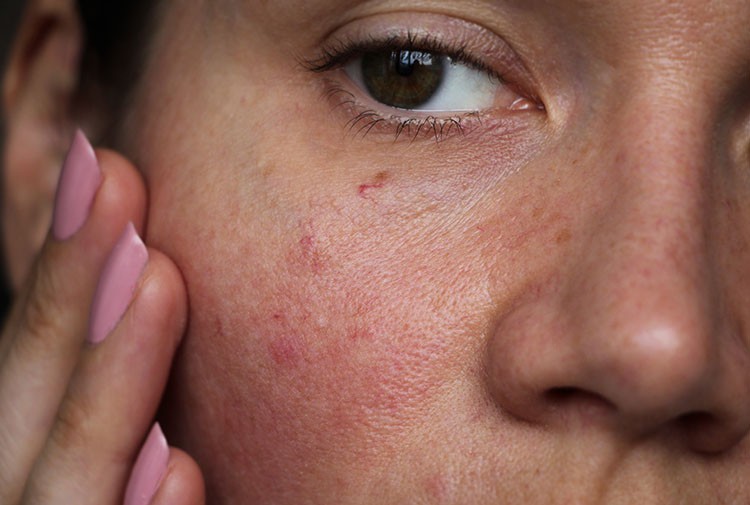

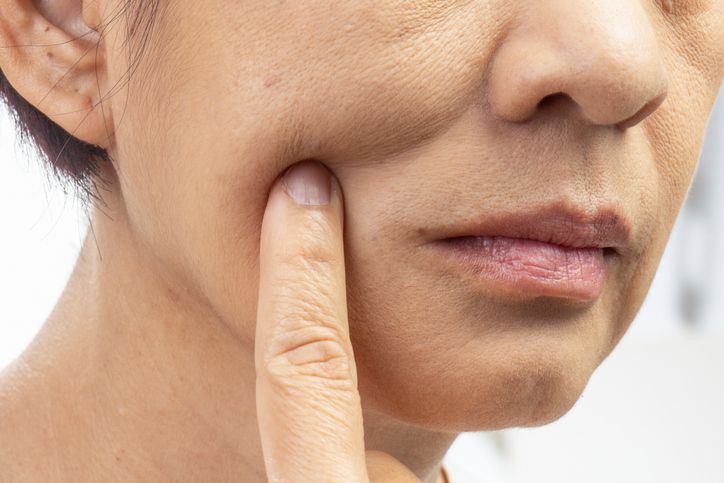
IPL (Intense Pulsed Light) therapy is especially suitable as an "entry-level" cosmetic procedure due to its high safety, high tolerance, fast treatment speed, and virtually no recovery time, making it the first choice for all those seeking cosmetic procedures for the first time.
Why is laser therapy so popular today?
The fundamental reason why laser cosmetic procedures have gradually transformed from a "high-end technology" to a "mass necessity" lies in the dual drivers of technological advancements and market demand.
Social attitudes are changing, and consumption is upgrading.
Facial anti-aging and refined skincare have become important components of modern people's pursuit of a high-quality life. Laser therapy, with its safety, effectiveness, and rapid recovery, precisely meets the psychological needs of contemporary people for "quick beauty and scarless improvement."
Technological upgrades have significantly lowered the treatment threshold.
From the initial simple "ablation" model to today's fractional, picosecond, and personalized control, laser equipment is continuously iterating towards "low pain, fast recovery, and no damage to the epidermis."
The pain points of early CO2 lasers-large wounds and long recovery periods-have been overcome by non-ablative lasers and ultra-short pulse technologies. Combined laser and drug treatments can further expand treatment boundaries and improve overall efficacy.
Personalized treatment plans are becoming increasingly common in clinical practice.
With ample clinical experience, physicians can now precisely select laser types and treatment parameters based on patients' different skin types (such as the Fitzpatrick skin type) and skin problems, maximizing treatment effectiveness and minimizing side effects. Safety improvements, especially for those with darker skin tones, allow even those previously hesitant to try laser treatments to receive safe care.
The requirement of no "recovery period" is also addressed.
In today's society, most people are unwilling to spend more than a week "resting" at home for cosmetic treatments. The "do it after get off work, go back to work the next day" model of treatments like picosecond lasers and IPL skin rejuvenation caters to the fast-paced, high-efficiency lifestyles of modern people.
Where should clinics and beauty salons source reliable cosmetic laser equipment?
Purchasing from reputable local distributors allows you to personally inspect the device's appearance, performance, and treatment effects.
Purchasing from third-party platforms, such as Amazon and Alibaba, are also viable options.
Buying directly from the manufacturer's store (e.g., Newangieshop) is another option; if possible, visit the manufacturer's factory in person.
Attending beauty exhibitions in various regions allows you to compare multiple brands at once and directly experience the differences between their devices.


