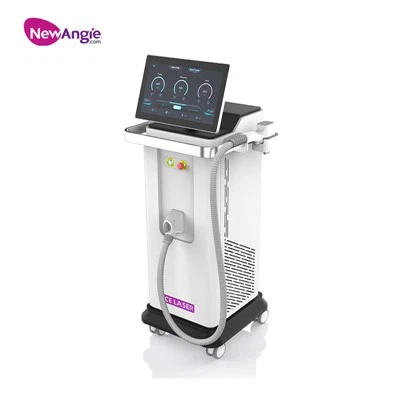




For most newly opened medical aesthetic clinics, a high-quality diode laser hair removal device is the most worthwhile professional beauty equipment to consider. This type of equipment is the first choice for many beauty salon entrepreneurs because it has the following core advantages:
- Sustained strong market demand – Laser hair removal is one of the medical aesthetic procedures with the largest customer base and the highest frequency of inquiries, and demand will continue to rise during the summer.
- High-frequency repeat consumption model – Each customer typically needs 6 to 8 treatments to achieve the desired effect, which can form a stable customer base.
- Fast return on investment cycle – Laser hair removal is a professional medical aesthetic procedure; although the cost per session for localized hair removal is relatively low, the return on investment is fast.
- Broad customer base – From young women to middle-aged men, from underarms and legs to the face and bikini line, almost every adult has hair removal needs.
Equipped with advanced multi-wavelength technology, the diode laser system can safely and efficiently handle various skin tones and hair types, making it a reliable choice for newly opened clinics to gain a foothold in the highly competitive medical aesthetic market.

For newly opened beauty salons, what type of equipment is the wisest choice?
Countless aspiring new medical aesthetic clinics share a common concern: established clinics, years in the business, possess expensive equipment and powerful marketing capabilities, promoting advanced treatments and attracting customers with competitive prices. However, for newly established clinics, gaining a foothold in such a competitive and mature market inevitably brings pressure and uncertainty.
Therefore, the fundamental question facing new clinic owners is quite clear: Which piece of equipment is the safest and wisest initial investment?
In fact, rather than investing heavily in various expensive technologies at the outset, a more pragmatic approach is to focus on a core service that drives sustained demand, generates stable revenue, and delivers a quick return on investment.
In the initial stages of a new clinic or beauty salon, prioritizing customer base and brand reputation is far more important than blindly pursuing a large number of devices. In today's beauty industry, this optimal starting point is a professional diode laser hair removal device.
Why is laser hair removal a top priority service for newly opened clinics?
Laser hair removal is one of the few cosmetic services that simultaneously meets the three criteria of "high demand, high repeat purchase rate, and broad customer base."
High Demand and Broad Customer Base
Almost everyone has a need for hair removal. Whether for cosmetic convenience, personal hygiene, or long-term hair management, the potential customers for hair removal services span every corner of society, from young women to working men, from housewives to fitness enthusiasts.
Common treatment areas include: facial hair (lip hair, chin), underarms, legs, bikini line, back, and chest-everyone can find a service that suits their needs.
Because unwanted body hair is a cosmetic concern for almost every adult, new clinics require minimal effort to promote this service. Clients already know what they want; your clinic simply needs to provide a safe, professional, and comfortable treatment experience.
High Repeat Purchase Rate
Another core advantage of laser hair removal is its treatment structure. It's not a one-time service. Most clients require 6 to 8 treatments to achieve their desired long-term hair removal results. This natural treatment design means that each client will return to your clinic for services over several months. A client's one-time purchase is thus transformed into a long-term, stable income stream.
For clinic owners, this model completely changes the logic of customer acquisition. You don't need to constantly search for new clients to maintain revenue; instead, you can build long-term service relationships with clients through treatment packages, regular follow-ups, and aftercare. This predictable and stable income model is why many industry experts consider laser hair removal the most worthwhile and profitable investment for new clinics.
What is a professional laser hair removal device?
Before delving into how to choose the right equipment, it's essential to understand a core question: how exactly does laser hair removal work?
Laser hair removal devices emit monochromatic light of a specific wavelength. This light penetrates the skin's surface, reaching deep into the hair follicle. The melanin in the hair follicle preferentially absorbs this laser energy, converting it into heat, rapidly raising the follicle temperature to 50-60 degrees Celsius. Once the follicle is heated to a certain temperature, the hair follicle stem cells and dermal papilla suffer irreversible thermal damage, thus losing their ability to regrow hair.
Selective Photothermolysis Principle
Professional laser hair removal equipment works efficiently based on the principle of selective photothermolysis-using specific wavelengths of laser energy to precisely target the melanin in the hair follicle while minimizing damage to surrounding normal skin tissue.
Why does laser hair removal require multiple treatments?
Human hair growth occurs in three phases: the anagen phase, the catagen phase, and the telogen phase. Laser hair removal can only effectively destroy hair follicles in the anagen phase. This is because only follicles in this phase contain a large amount of melanin, and the hair shaft is tightly connected to the follicle, allowing laser energy to be successfully delivered to the target area. Follicles in the telogen and catagen phases cannot effectively respond to the laser.
Approximately 85% to 90% of human hair is in the anagen phase, but hair in different areas does not enter this phase synchronously. This means that even if a single treatment covers all follicles in the anagen phase, follicles that were in the telogen or catagen phase will enter the anagen phase again after a few weeks.
Therefore, generally 6 to 8 treatments are needed, each spaced 4 to 8 weeks apart (depending on the treatment area), to fully cover all hair growth cycles and achieve the desired long-term hair removal effect.
What key technical parameters should you pay attention to when choosing a laser hair removal device?
There are many types of laser hair removal equipment on the market, with varying technical specifications. For newly opened clinics, the following points are the most important to consider:
Wavelength Selection: Multi-wavelength Systems vs. Single-wavelength Devices
Wavelength determines the penetration depth of a laser and its safety and effectiveness for different skin tones and hair types. Modern professional laser hair removal devices typically use a combination of three mainstream wavelengths:
- 755nm Alexanderite Laser: Has the highest melanin absorption rate, making it highly effective for light skin tones and fine, dark hair. However, it carries a relatively higher risk for darker skin, as melanin in the epidermis competes with melanin in the hair follicle for laser energy absorption.
- 808nm Diode Laser: Achieves the best balance between melanin absorption efficiency and penetration depth, and is considered the most commonly used wavelength in clinical applications. It is suitable for most skin types (Fitzpatrick type I to VI) and is currently the mainstream choice in the global laser hair removal market.
- 1064nm Nd:YAG Laser: Has the longest wavelength and the deepest penetration depth, avoiding absorption interference from epidermal melanin, making it the safest choice for dark skin (Fitzpatrick types V and VI). However, its effectiveness is relatively weaker for light-colored, fine hair.
In recent years, multi-wavelength three-in-one systems have increasingly become an industry trend. These devices integrate three wavelengths-755nm, 808nm, and 1064nm-into a single treatment handpiece. Therapists can flexibly switch between or simultaneously output multiple wavelength combinations on one device, depending on the client's specific skin tone and hair condition, achieving one-stop coverage for all skin tones and all types of hair.
Power and Treatment Speed
Power output directly affects treatment efficiency and actual results. Professional-grade hair removal equipment typically ranges in power from 600W to 3000W. Higher power means stronger energy emitted per unit time, resulting in shorter treatment times for large areas (such as the back and legs) and a more comfortable customer experience.
For clinics with high patient volume, high-power equipment can significantly increase daily capacity.
Cooling System: Key to Customer Comfort
During laser hair removal, the epidermis generates heat. High-quality laser hair removal devices are equipped with advanced cooling systems, commonly including contact cooling (TEC), compressor cooling, or jet cooling technologies. Cooling systems not only protect the epidermis from heat damage but also significantly improve customer comfort during treatment.
For example, Newangie's semiconductor laser hair removal machine features an integrated TEC+ compressor cooling system that can cool to approximately -27 degrees Celsius within 10 seconds, achieving a highly efficient, safe, and virtually painless hair removal experience.
For new clinics, the customer treatment experience directly determines word-of-mouth marketing and repeat purchase rates; therefore, the importance of the cooling system cannot be overlooked.
Spot Size
Spot size determines the area of skin that can be covered by each laser beam. Larger spot sizes significantly shorten treatment time for large areas, while smaller spot sizes are better suited for delicate areas (such as the perilip area and bikini line). Using different spot sizes for precise treatment helps clients achieve ideal results, greatly improving customer satisfaction and repeat purchase rates.
Safety Certification and Compliance
When purchasing laser hair removal equipment, clinics should prioritize safety and compliance as much as effectiveness. Prioritize equipment certified by authoritative organizations such as the FDA, CE, NMPA, and ISO. Uncertified equipment may pose risks such as unstable energy output, insufficient heat dissipation, and electrical safety hazards, potentially harming clients and leading to legal disputes for the clinic. Therefore, newly opened clinics must require suppliers to provide complete registration certificates and compliance documentation when purchasing equipment.
How to Choose a Reliable Equipment Supplier?
Purchasing Directly from the Manufacturer:
Directly dealing with the manufacturer, bypassing layers of intermediaries, significantly reduces initial investment costs and provides more flexible customization options. Newangie also offers OEM/ODM services, allowing clinics to imprint their own brand logo on the equipment, creating exclusive brand assets.
Comprehensive Training and Technical Support:
Rigorous operational training, skin typing methods, personalized energy parameter settings, and emergency plan development are all essential guarantees for treatment effectiveness and client safety. Reputable suppliers provide systematic training and ongoing technical support.
Product Certification and Quality Assurance:
FDA, CE, ISO, and other certifications are fundamental assurances of equipment safety. Suppliers capable of completing 100% factory testing in independent laboratories and providing complete test reports are generally more reliable in terms of product quality.
After-Sales Response and Spare Parts Inventory:
Laser equipment inevitably requires maintenance or consumable replacement during use. Choosing a supplier with a local after-sales support team or rapid response mechanism can minimize business losses caused by equipment downtime.
Choosing your first device is a decision that requires careful consideration.
Laser hair removal services-especially those using professional equipment based on multi-wavelength diode laser technology-offer a unique combination of advantages: high demand, high repurchase rates, low barriers to entry, and quick returns.
It doesn't require clients to accept a "completely new beauty concept" because it addresses a daily concern that almost everyone experiences;
It doesn't require complex client education because "hair removal" itself is a service that clients clearly understand they want;
It doesn't require a long recovery period, making it a convenient treatment that busy urban dwellers are willing to accept.
If you are currently preparing to open a new beauty clinic or planning to incorporate laser hair removal services into your business, as a professional laser beauty equipment manufacturer, we are committed to providing high-performance, safe, and high-ROI technology solutions to beauty institutions worldwide. Please contact us for more professional advice and product information.