



If you are struggling with skin concerns such as enlarged pores, acne scars, or sagging, and are currently seeking a medical aesthetic technology that can genuinely resolve these issues and deliver truly ideal results, you may have heard of Radiofrequency (RF) Microneedling and Fractional CO2 Laser treatments. These two modalities are often regarded as the leading high-tech solutions in the field of skin resurfacing, boasting remarkable efficacy in improving both the appearance and texture of the skin.
However, neither is inherently superior to the other; rather, they each possess distinct characteristics regarding their mechanisms of action, degree of invasiveness, and suitability for different patient profiles. Should you opt for the gentle yet highly efficient RF Microneedling, or the more intensive Fractional CO2 Laser? In this article, we will analyze the technical features of both methods to provide you with a step-by-step breakdown of RF Microneedling therapy versus Fractional CO2 Laser treatment.
RF Microneedling: Precise Heating, Deep Revitalization
RF Microneedling is often referred to as "Golden Microneedling"-a name derived from the fact that its microneedles are frequently coated with a layer of gold. RF Microneedling therapy is a non-ablative treatment that combines the principles of microneedling technology with Radiofrequency (RF) energy. This technique utilizes microneedles to physically puncture the skin, thereby delivering RF energy in a precise and controlled manner to specific target zones within the dermis. The penetration depth of the microneedles is typically adjustable, allowing for customized, multi-layered treatment protocols tailored to address a diverse range of skin concerns.
Compared to traditional RF treatments, RF Microneedling offers deeper energy penetration, minimizes damage to the skin's surface layer, and delivers superior anti-aging results. It effectively reshapes facial contours while simultaneously promoting deep-tissue skin repair. For patients seeking significant aesthetic improvements without undergoing surgery or assuming the associated risks, RF Microneedling therapy represents an excellent choice.
Treatment Indications:
Primarily indicated for conditions such as enlarged pores, excessive sebum production, mild skin laxity, and shallow, broad "rolling" acne scars. It is particularly well-suited for individuals with darker skin tones (Fitzpatrick Skin Types IV–VI), as the minimal epidermal damage involved results in a low risk of post-inflammatory hyperpigmentation.
Due to the insulated nature of the needles-which concentrates the energy at the very tips-the epidermis incurs virtually no thermal damage, resulting in minimal overall invasiveness. While some discomfort may be experienced during the procedure, the sensation is typically well-tolerated following the application of a topical anesthetic. Post-treatment symptoms are limited to mild redness and swelling, with a short recovery period; these effects typically subside within half a day to 5–7 days, leaving no significant scabbing. Hailed as a "lunchtime beauty treatment," the procedure allows patients to recover quickly and resume their daily routines and social activities without interruption.
The results of RF microneedling therapy emerge gradually; therefore, a standard course of treatment typically consists of three sessions, spaced 1–2 months apart. A total of three to four sessions is generally required to achieve the final desired outcome. Since the collagen generated after each treatment continues to proliferate over time, RF microneedling technology demonstrates exceptional efficacy in skin tightening, pore reduction, and the regulation of sebum secretion.
Fractional CO2 Laser: A Powerful Choice for Skin Regeneration
Fractional CO2 laser resurfacing is a minimally invasive laser treatment designed to effectively improve skin tone, texture, and overall appearance. The fractional CO2 laser device emits a laser beam with a wavelength of 10,600 nm; this energy is absorbed by the water content within skin tissues, instantly generating intense heat reaching approximately 300°C. This process causes the water within the tissue to rapidly vaporize, creating evenly distributed microscopic channels-known as Microthermal Treatment Zones (MTZs)-across the skin's surface, thereby triggering the skin's natural regenerative mechanisms. This process stimulates the production of collagen and elastin, yielding a range of therapeutic benefits such as improved skin texture, reduced wrinkles, and the repair of scars.
Treatment Indications:
Fractional CO2 laser therapy demonstrates excellent efficacy in treating deep acne scars (particularly the "ice-pick" variety). Furthermore, it delivers ideal results for addressing deeper static wrinkles (such as nasolabial folds), skin laxity, and age spots. However, due to the significant epidermal damage and pronounced inflammatory response associated with this treatment, individuals with darker skin tones must exercise extreme caution.

The recovery period for CO2 laser resurfacing is longer than that for non-ablative treatments. Post-procedure, patients may experience noticeable redness, swelling, and peeling; a thin layer of brown crusting will also typically form over the treated area. Applying ice packs immediately after treatment can help soothe the skin and alleviate discomfort. Most patients are able to resume their normal daily activities within two weeks.
For severe acne scarring, optimal results can sometimes be achieved with just one or two treatment sessions-a key reason why fractional CO2 laser resurfacing remains such a popular therapeutic option. However, post-treatment care requirements are extremely rigorous, necessitating strict sun protection measures to prevent post-inflammatory hyperpigmentation.
How to Choose the Right Treatment Technique and Plan for You?
When selecting a treatment plan, one should not base the decision solely on the "strength of the results." Instead, it is essential to take a comprehensive approach that considers your specific skin concerns, skin tone, and tolerance for the recovery period. In other words, you must choose the treatment that is best suited to your individual skin type and condition.
You may consider Radiofrequency (RF) Microneedling if you meet the following criteria:
- Your primary concerns are enlarged pores, excessive oil production, or mild skin laxity;
- You have a darker skin tone (prone to tanning or developing pigmentation spots);
- You cannot accommodate a recovery period involving visible side effects (such as redness, swelling, or scabbing) that lasts longer than one week;
- Your acne scars are of the "rolling" type-shallow yet broad.
Fractional CO2 Laser treatment may be a more suitable option for you if you meet these criteria:
- You have deeper, more pronounced acne scars;
- Your primary objective is a significant reduction in wrinkles (such as nasolabial folds) and powerful skin tightening;
- You have a lighter skin tone and do not mind a recovery period of 1 to 2 weeks;
- You have previously undergone RF microneedling but felt the results were not sufficiently ideal.
The Possibility of Combination Therapy:
For complex cases involving multiple issues-such as enlarged pores, excessive oiliness, and deep acne scars-a single treatment technique may not be sufficient to address every concern comprehensively. In such instances, a combination approach may be considered: begin with Fractional CO2 Laser treatment to leverage its powerful ablative effects in improving deep scars; then, after an interval of approximately two weeks-once the skin has passed its initial inflammatory phase-proceed with RF Microneedling to further tighten pores and regulate oil production. This combined therapy allows you to harness the distinct advantages of both techniques, thereby achieving enhanced, synergistic results.
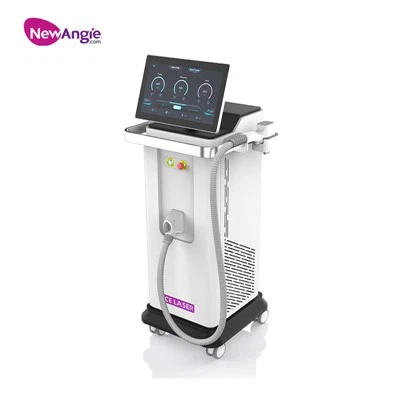
Newangie can provide you with professional RF microneedling devices and Fractional CO2 laser equipment
Newangie possesses nearly two decades of extensive experience in the medical aesthetics industry, specializing in the R&D and export of high-end medical aesthetic equipment-including RF microneedling devices and fractional CO2 laser systems.

Multiple treatment heads precisely address skin concerns at varying depths
Microneedle RF devices are suitable for treatments requiring skin ablation and remodeling. Equipped with vacuum suction tips, they ensure optimal skin contact, making them particularly effective for the delicate areas around the eyes and neck.
Fractional RF devices utilize flat electrodes applied directly to the treatment area to couple controlled RF energy into the tissue, thereby achieving a therapeutic thermal effect.
The Ice Hammer handpiece delivers a soothing cooling sensation, helping to calm and comfort the skin following microneedle or RF treatments.

Fractional CO2 Laser Skin Resurfacing: Faster and More Effective
The Newangie Fractional CO2 Laser is a high-end, advanced device for skin care and rejuvenation, distinguished by its exceptional efficiency and precision.
Operators can interchange treatment heads and operating modes to suit specific patient needs, thereby delivering highly precise treatments and achieving optimal aesthetic results.
Newangie's Fractional CO2 Laser system utilizes a high-power 70W laser source imported from Coherent, Inc. (USA). This ensures a robust and consistent energy output that effectively improves the skin's surface while simultaneously minimizing collateral damage to surrounding tissues.
Conclusion
Radiofrequency microneedling and fractional CO2 laser are not mutually exclusive choices, but rather two exceptional technologies within the field of skin regeneration. The former is gentle, highly efficient, and involves a short recovery period-making it ideal for routine maintenance and improvement for those who prioritize safety and speed. The latter delivers intensive results with significant impact after a single session, making it suitable for individuals seeking dramatic transformations who are able to accommodate a period of downtime. By selecting reliable, high-end medical aesthetic equipment-and, under the guidance of a professional physician, making a choice based on one's own specific circumstances-one can identify the treatment plan that is truly best suited to their needs.