



Have you ever dealt with this frustrating issue: after removing hair from your legs, small red, swollen bumps appear on the skin, or you can even see hairs curling beneath the surface, unable to grow out properly?
Medically known as "ingrown hairs," this condition often manifests as small, raised red dots on the skin's surface. Beyond affecting appearance, improper handling can lead to folliculitis and leave behind noticeable pigmentation.
This article explores the causes, symptoms, and treatment options for ingrown hairs, and explains how laser hair removal can effectively prevent and improve the condition.
| What is an ingrown hair?
An ingrown hair occurs when a hair fails to break through the skin's surface during growth and instead curls or grows sideways beneath the skin. This condition typically arises when hair is forcibly removed or when the hair follicle opening becomes blocked by a thick layer of dead skin cells, forcing the new hair to grow within the subcutaneous tissue.
Most cases of ingrown hairs resolve without treatment. You can prevent this condition by avoiding hair removal altogether or by shaving with caution, keeping the blade at a distance from the skin. Alternatively, you might consider laser hair removal, a method associated with a lower risk of ingrown hairs.
Common areas for ingrown hairs include:
- Chin, cheeks, and neck
- Legs, pubic area, and underarms
- Buttocks
Common symptoms of ingrown hairs
Localized redness and swelling: Small red bumps appear in the affected area.
Papules or pustules: If a secondary infection occurs, white or yellow pus may form at the bump.
Itching or pain: Significant discomfort arises as the hair irritates the subcutaneous tissue.
Visible coiled hair: Sometimes, the curled hair can be seen beneath the translucent epidermis.
Pigmentation: Dark marks may remain in the area after the inflammation subsides.

| What Causes Ingrown Hairs?
To treat ingrown hairs effectively, we must first understand their underlying causes.
🔹Improper hair removal methods
- Razor cutting: Razors cut hair at a sharp angle; as the hair grows back, the sharp tip can easily pierce the follicle wall.
- Forcible extraction: Rough removal can damage the hair follicle, causing the opening to close and preventing the new hair from breaking through.
🔹Excessive stratum corneum
An accumulation of dead skin cells on the surface blocks the hair follicle opening.
🔹Hair characteristics
Thick, curly hair is more prone to becoming ingrown.
🔹Friction and irritation
Wearing overly tight clothing increases friction between the skin and hair, triggering ingrown hairs.
| How can ingrown hairs be effectively treated?
For existing ingrown hairs, the following staged treatment measures are recommended to minimize skin damage and the risk of infection:
🔸Pause hair removal
Immediately stop shaving, plucking, or waxing the affected area if redness, swelling, or papules appear. Continued hair removal can aggravate inflammation at the follicle opening, damage the follicle, and potentially lead to deep-seated infection.
🔸Chemical exfoliation and keratin softening
Salicylic Acid (BHA): Being oil-soluble, salicylic acid penetrates deep into the hair follicle to dissolve accumulated sebum and dead skin cells. Daily or intermittent use of toners or lotions containing low concentrations of salicylic acid helps clear the follicle pathway.
Alpha Hydroxy Acids (AHA): Acids such as lactic acid or glycolic acid primarily act on the epidermis, softening the thickened stratum corneum and reducing the resistance the hair faces when trying to penetrate the skin surface.
🔸Gentle physical guidance
Warm compress: Apply a warm, moist towel (approx. 40°C) to the affected area for 10–15 minutes, 2–3 times daily. This softens the outer skin layer and increases hydration, encouraging the trapped hair to move toward the surface.
Sterile lifting: If the hair tip is clearly visible near the surface, use alcohol-sterilized tweezers to gently lift the tip out so it is exposed above the skin.
Note: Only lift the tip out; do not pluck the hair out completely, as the newly growing hair may still become ingrown.
🔸Anti-inflammatory and antimicrobial treatment
Topical antibiotics: If pustules or significant tenderness develop, use a topical antibacterial ointment (as advised by a doctor) to control bacterial infection.
Soothing ingredients: Use products containing *Centella asiatica* or aloe vera extract to help alleviate local redness, swelling, and itching.
🔸Skin barrier repair
During treatment, focus on moisturizing the area to prevent the skin from drying out and the keratin from hardening, which could worsen ingrown hair symptoms. It is recommended to use restorative creams free from irritating ingredients.
Professional Medical Intervention
You must seek assistance from a dermatologist if any of the following occur:
- The area of localized redness and swelling expands rapidly and is accompanied by severe pain.
- Large cysts or deep-seated abscesses develop.
- Significant scarring or persistent pigmentation remains after the inflammation subsides. Doctors may treat the condition using incision and drainage, local corticosteroid injections, or prescription-strength antibiotics.
| Can ingrown hairs be prevented?
Yes, ingrown hairs can be prevented. Beyond regular exfoliation and keeping the skin moisturized, the most effective preventive measure is to change your hair removal approach.
Traditional hair removal methods-such as shaving, scraping, or plucking-only address hair that has already emerged and do not alter growth patterns. In contrast, laser hair removal inhibits hair follicle activity, fundamentally reducing the frequency and thickness of hair growth and thereby eliminating the physical conditions that lead to ingrown hairs.
| How does laser hair removal address ingrown hairs?
An effective way to resolve ingrown hairs is to reduce the hair's growth activity. Laser hair removal devices utilize the principle of selective photothermolysis, emitting a specific wavelength of light that penetrates the epidermis and is selectively absorbed by the melanin within the hair follicle. Once the light energy converts into heat, it causes the germinative tissue of the follicle to coagulate. For hairs that have already become ingrown and are trapped beneath the skin, the laser can still detect the melanin they contain and transmit energy to them, destroying the follicle's growth capability without requiring physical contact.

Furthermore, laser energy can induce hair follicles currently in the growth phase to enter a dormant phase prematurely. As the germinative tissue atrophies, the hair's growth drive weakens, and the growth rate drops significantly. With a reduced growth frequency, the likelihood of hair pushing against the skin barrier decreases, thereby lowering the incidence of ingrown hairs.
Laser hair removal is a non-invasive technique that avoids the mechanical damage to the epidermis caused by razors and the pulling forces on follicle structures associated with physical plucking. This treatment method prevents inflammatory hyperplasia or the closure of the follicular opening caused by tissue damage; by keeping the follicular channel clear, it prevents the formation of closed-type ingrown hairs.
This method differs fundamentally from traditional hair removal:
Traditional methods: Merely treat the hair that has already emerged and cannot affect the hair follicle itself.
Laser method: Acts directly on the hair follicle. With repeated treatments, the follicle enters a dormant state, and the hair becomes finer, softer, and grows more slowly.
When hair stops growing vigorously or becomes extremely fine, the physical conditions required for ingrown hairs and red, swollen bumps to form are eliminated, thereby fundamentally solving the problem.
Choose Newangie Laser Hair Removal Equipment to Treat Ingrown Hairs
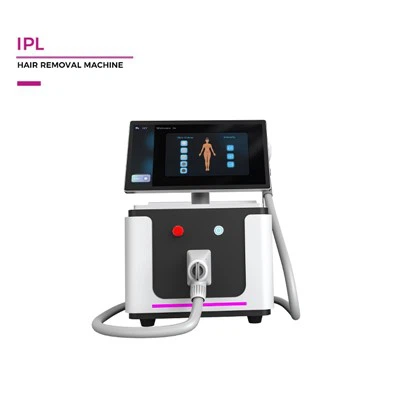
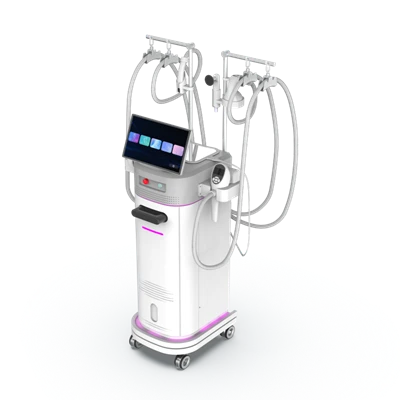
Newangie's laser hair removal equipment delivers exceptional performance for individuals struggling with ingrown hairs.
Customizable High Power Output (Up to 3000W)
Newangie laser systems offer customizable power output ranging from 600W to 3000W. High power not only enhances the efficiency of destroying deep-seated, stubborn hair follicles but also-through optimized pulse width-maximizes therapeutic results while minimizing side effects like thermal damage.
Four-Wavelength Coverage & US Coherent Laser Stack
The device utilizes a high-performance laser stack from US Coherent, boasting a lifespan of up to 50 million shots. By integrating four wavelengths-755nm, 808nm, 940nm, and 1064nm-it precisely addresses the needs of various skin tones and follicle depths, ensuring consistent, long-lasting energy delivery.
Dual Active Cooling System (TEC + Compressor)
Equipped with integrated compressor and TEC cooling technologies, the system cools down rapidly within 10 seconds, achieving a minimum operating temperature of -27°C. This superior cooling performance effectively protects the epidermis from heat accumulation and significantly enhances patient comfort during treatment.
Unique FAC Beam Shaping Technology
Utilizing FAC (Fast Axis Collimation) technology, the system emits vertical, parallel laser beams. This design ensures highly uniform energy distribution, eliminates the risk of burns caused by localized overheating, and significantly improves hair removal precision and efficiency.
Magnetic Interchangeable Spot Tips
The device comes with four magnetic, interchangeable spot tips (13×28mm, 13×24mm, 13×13mm, and 6mm), allowing for flexible switching based on the treatment area-ranging from large zones like the back and underarms to delicate areas like the bikini line, nostrils, or ear canals. This versatility ensures targeted hair removal across the entire body, achieving efficient coverage with no missed spots.


For optimal hair removal results, it is recommended to follow these steps:
Pre-treatment: Exfoliate the skin 24 hours prior to laser hair removal to help bring ingrown hairs closer to the skin's surface.
Precise Hair Removal: Keep the skin dry and adjust the energy level according to your skin tone. Tailor the number of treatment sessions based on the results observed.
Aftercare: Maintain a consistent basic moisturizing routine after the procedure. After completing a full course of treatment, the occurrence of ingrown hairs will be significantly reduced, and skin texture will become smoother.
Treating ingrown hairs requires more than just superficial trimming. Inhibiting hair follicle activity through laser technology is currently recognized as an effective solution for this issue. Opting for professional laser hair removal equipment helps you maintain skin health more safely and with longer-lasting results.