
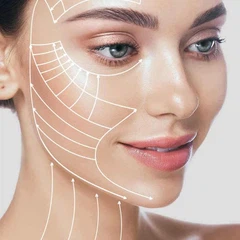



Have you ever noticed in the mirror that your once-defined jawline has gradually lost its sharpness, or that your skin-formerly firm and smooth-now appears somewhat slack? If this sounds familiar, you are certainly not alone.
How to tighten skin on face? Facial skin laxity is no longer a concern for just a few; an increasing number of people are seeking effective loose skin treatment.
As we approach 2026, the desire for youthful, firm skin has evolved beyond basic facial care. Thanks to innovations in aesthetic technology, those looking to improve skin firmness now have a wide range of options-from zero-downtime laser treatments to transformative surgical procedures.
But which option is truly the best skin tightening treatment?
This article provides a comprehensive breakdown of today's leading facial skin tightening therapies. Whether you are seeking a maintenance routine with no downtime or are open to surgery for more dramatic, long-lasting results, this guide offers a clear, practical reference to help you choose the solution that best aligns with your goals, budget, and lifestyle.
Why does facial skin lose its firmness?
The face is a complex structure composed of multiple tissue layers. From the outside in, these generally include the epidermis, the dermis, the subcutaneous fat layer, and the SMAS (Superficial Musculo-Aponeurotic System) layer-which is responsible for supporting and anchoring the facial soft tissues.
In youth, abundant collagen and a strong, resilient SMAS layer keep facial contours naturally firm and lifted. However, as we age, two major changes occur:
- First, the loss of collagen causes the dermis to thin and lose elasticity;
- Second, the SMAS layer slackens and sags due to gravity, causing the overlying fat and skin to shift downward.
This results in the classic signs of aging, such as deepened nasolabial folds, a blurred jawline, and sagging cheeks.
The effectiveness of a skin-tightening treatment depends fundamentally on its "depth of action"-that is, which tissue layer it can reach and improve.
- Treatments acting only on the epidermis or superficial dermis can improve skin texture and fine lines but are largely ineffective against sagging and drooping;
- Treatments that heat or tighten the deep dermis and subcutaneous tissue can produce some degree of firming;
- True lifting and tightening can only be achieved when the energy or procedure targets the SMAS layer.
| Non-Invasive Skin Tightening (Zero Downtime)
Non-invasive facelift treatments are the ideal choice for those seeking a "lunchtime lift" effect. This therapy is designed to stimulate the body's natural healing response without compromising the skin barrier.
High-Intensity Focused Ultrasound (HIFU)
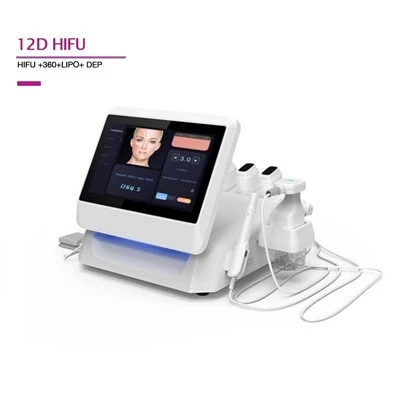
HIFU devices precisely focus ultrasound energy onto tiny "hotspots" deep within the skin. At each focal point, temperatures exceed 65°C, creating a thermal coagulation point. These points cause the lax SMAS (Superficial Musculo-Aponeurotic System) layer to contract immediately and trigger long-term collagen synthesis.
The core advantage of HIFU lies in its unparalleled precision and depth. It bypasses the epidermis and dermis to deliver energy accurately to the SMAS layer-located 4.5mm beneath the skin-achieving a true "non-surgical face lift."
Advantages
Best skin tightening treatments for face that requires no downtime; results continue to improve over 3–6 months as newly formed collagen creates a natural support network.
Best Treatment Areas
Jawline lifting, brow lifting, and jawline contouring.
Ideal Candidates
Individuals aged 35–60 whose primary concerns are facial sagging and blurred contours, and who have moderate subcutaneous fat thickness.
Professional HIFU: The Best Facial Skin Tightening Equipment


Radiofrequency (RF) Technology
RF technology delivers concentrated heat energy to the dermal layer. This thermal energy causes aging, lax collagen fibers to instantly denature and contract; simultaneously, the heat triggers the skin's wound-healing response, stimulating fibroblasts to continuously produce new collagen over the following months.
A key advantage of RF is that it does not target a single point but instead uniformly heats a specific volume of tissue.
Characteristics of Results
RF focuses on "tightening"-making loose skin tissue denser and more elastic. It effectively improves issues such as loose skin texture, enlarged pores, and mild nasolabial folds.
Advantages
It delivers remarkable results in facial tightening, lifting, and improving skin density, achieving a smoother, firmer appearance after just one treatment.
Best Treatment Areas
Full-face tightening, lifting the eye area, and smoothing fine lines.
Ideal Candidates
Individuals aged 30–45 whose primary facial concern is softness rather than significant sagging.
Microwave Technology
Representative Device: Newangie 2.45GHz Pro Microwave Skin Tightening System
Unlike radiofrequency (RF) or ultrasound technologies, microwave technology utilizes energy at a specific frequency to preferentially disrupt fat cells. It simultaneously leverages the resulting secondary thermal effect to stimulate the production of new collagen in the dermis, thereby achieving both fat reduction and skin tightening.
Results
Clinical data indicates that the device improves skin firmness by approximately 70% for postpartum abdominal laxity; for a double chin, a defined jawline can be achieved in about four treatment sessions.
Who can benefit from this facial skin tightening treatment?
Individuals experiencing both localized fat accumulation and skin laxity.
Those seeking to address postpartum abdominal laxity and cellulite.
Consumers looking for a multi-functional device to simultaneously improve body contours and skin tightness through non-invasive means.

| Minimally Invasive Procedures (The Precision Lift)
Minimally invasive therapies involve placing lifting threads or filling agents into specific facial tissue layers through tiny incisions or injections to achieve immediate lifting, structural support, or volumizing effects. They differ fundamentally from non-invasive treatments by involving the implantation or injection of physical materials into the skin, and from traditional surgery by eliminating the need for extensive skin incisions or tissue dissection.
RF Microneedling
This therapy combines controlled physical micro-trauma with localized radiofrequency (RF) thermal energy. The needles create channels that allow energy to penetrate deep into the dermis (reaching depths of 4mm or more), thereby maximizing tissue remodeling results.
• Advantages: It is the premier choice for loose skin treatment and improving skin texture. It simultaneously addresses scarring, large pores, and moderate sagging, making the skin look significantly younger.
• Best for: Deep facial and neck wrinkles, acne scars, and moderate skin laxity.
Thread Lifting
During the procedure, a physician uses an ultra-fine guiding needle to insert absorbable protein threads (typically made of PDO, PLLA, or PCL)-featuring barbs or cogs-into the deep layers of the facial skin. Once anchored, the threads provide physical tension to lift the tissue, creating an immediate lifting effect.
• Advantages: It provides an instant skin-tightening effect. It is the closest non-surgical alternative to a facelift for repositioning fat pads and lifting the mid-face.
• Limitations: The physical tension provided by the absorbable threads diminishes as the material is gradually absorbed by the body; results typically last 1–3 years.
• Best for: Nasolabial folds, sagging cheeks, and immediate jawline contouring.
| Surgical Facial Skin Tightening
Although non-invasive and minimally invasive technologies were highly advanced by 2026, no non-surgical treatment can surpass the traditional facelift in terms of the significance, longevity, and predictability of results.
What is a surgical facelift?
Discreet incisions are made in front of the ears or within the hairline. Through precise dissection techniques, the epidermis and subcutaneous fat are separated from the deep SMAS (Superficial Musculo-Aponeurotic System) layer. The lax SMAS layer is then folded, tightened, or partially excised. Finally, the surface skin is redraped without tension, and any excess skin is removed.
Longevity and Degree of Improvement
Surgical facelifts significantly outperform any energy-based devices in addressing indicators of facial laxity-such as the definition of the mandibular angle, sagging cheeks, and platysmal bands. The results last for years; during this period, you may only require occasional non-invasive treatments for loose skin as part of your maintenance routine.
Factors to Consider
- Long recovery period
- High cost
- Surgical risks
- Irreversibility
Who is a suitable candidate?
Individuals aged 50–70 with moderate to severe facial sagging and laxity who are in good general health, willing to undergo a recovery period of several weeks, and have high expectations for facial rejuvenation.
Best Skin Tightening Treatments For Face: Which Procedure is Right for You?
| Feature | Non-Invasive | Minimally Invasive | Surgical (Facelift) |
| Invasiveness | Zero | Low | High |
| Recovery Time | 0 Days | 3 - 5 Days | 2 - 4 Weeks |
| Longevity | 6 - 12 Months | 1 - 2 Years | 5 - 10 Years |
| Best For | Early prevention | Moderate sagging | Severe laxity / Extra skin |
| How to Get Rid of Crepey Skin on the Neck?
The neck is often the first area to show signs of aging, yet it is frequently overlooked until sagging becomes obvious. If you are searching for how to get rid of crepey skin on neck, you must understand that the neck requires a specialized approach compared to the face.
Why Neck Skin Is Unique?
The skin on the neck is significantly thinner than facial skin and has fewer sebaceous glands, making it prone to dryness and sagging. Furthermore, the neck is subject to constant mechanical stress-particularly from the habit of looking down at electronic devices-which accelerates the development of sagging skin.
The Limitations of Single-Modality Treatments
Many patients hope to resolve all issues with just a single non-invasive skin tightening procedures. However, when it comes to the neck, a single treatment method often yields limited results:
• Energy-based devices (such as HIFU) can lift deep tissues but may not fully smooth out the fine, paper-like texture of the skin's surface;
• Topical creams can provide hydration but cannot offer the structural lift and support required for sagging skin.
Best Skin Tightening Treatment Solution: The "Hybrid" Protocol
To achieve the best facial skin tightening treatment results for the neck, 2026 specialists recommend a dual-action approach:
- Energy-Based Foundation:
Utilize non invasive skin tightening technologies like HIFU or RF to tighten the deep platysma muscle and stimulate dermal collagen. This provides the structural "lift" to get rid of saggy skin.
- Mesotherapy & Biostimulators:
Following the energy treatment, micro-injections of skinboosters or biostimulators are used to "flood" the thin neck skin with hydration and collagen-building blocks. This addresses the "texture" and is the most effective loose skin treatment for the neck's surface.
By combining these skin tightening procedures, you address both the structural sagging and the fine surface wrinkles, providing a comprehensive solution for those wondering how to tighten skin effectively on the neck.

How to Tighten Skin Naturally: Maintenance and Prevention
While clinical skin firming treatments provide the most dramatic results, many users still ask what helps tighten skin in their daily routine.
Sun Protection: UV damage is the primary cause of collagen breakdown. Constant use of SPF is the best way to tighten skin naturally by preventing future damage.
Topical Actives: Retinoids and Vitamin C are essential for at-home maintenance between professional skin tightening procedures.
Hydration: Internal and external hydration keeps the skin plump, which temporarily masks minor laxity.
| How to Choose the Best Skin-Tightening Treatment for You?
Faced with a range of skin-tightening options-from non-invasive treatments to surgery-you need to clarify a few key questions before deciding how to address sagging facial skin.
What is the degree of sagging?
Mild sagging (blurred jawline, loss of elasticity) - Non-invasive treatments;
Moderate sagging (noticeable drooping, prominent nasolabial folds) - Minimally invasive treatments;
Severe sagging (jowls, visible platysmal bands) - Surgical facelift.
What length of recovery time can you accept?
No downtime acceptable → Non-invasive treatments are the only option;
3–7 days acceptable → Thread lifts and dermal fillers;
Willing to accept a recovery period of 2–4 weeks or more → Surgical facial tightening procedures.
What is your overall budget?
Surgery has the highest upfront cost but results can last over seven years, so the long-term amortized cost may not necessarily be higher; non-invasive and minimally invasive treatments have lower costs per session but require multiple maintenance treatments to achieve optimal facial tightening results.
None of these facial skin-tightening treatments is inherently superior to the others; you can choose the one best suited to your specific skin condition and needs.
However, please bear in mind that any treatment begins with a professional consultation at a reputable medical facility, where a doctor can assess your skin-including through physical examination-and create a personalized treatment plan. Crucially, facial skin tightening is not a "one-and-done" procedure; it requires long-term commitment. To achieve the best results, you must also maintain a healthy lifestyle, practice rigorous sun protection, and follow a scientifically sound skincare regimen.