




What is fractional CO2 laser technology?
Fractional CO2 laser technology is an advanced skin rejuvenation treatment that utilizes an infrared laser with a wavelength of 10,600 nm-light that is strongly absorbed by water molecules within skin tissue.
Unlike traditional lasers that remove the entire surface layer of the skin, fractional technology creates an array of tiny "micro-thermal zones" (MTZs) while leaving healthy, undamaged tissue between them, thereby accelerating healing and reducing recovery time. Simultaneously, the controlled heat vaporizes damaged tissue and triggers the body's natural healing response, stimulating the production of new collagen and elastin fibers.
What treatments can you offer clients using fractional CO2 laser technology?
Fractional CO2 lasers offer exceptional clinical versatility, addressing a wide range of treatment needs spanning from the epidermis to the deep dermis.
| Treatment Services | Addressing Key Concerns | Clinical Value | Profitability Assessment |
| Acne Scars | Ice-pick, boxcar, and rolling acne scars | Induces deep collagen remodeling | ⭐⭐⭐⭐⭐ |
| Facial Rejuvenation | Fine lines, enlarged pores, and dull complexion | Rapid skin renewal; combined with exosomes for doubled penetration efficiency | ⭐⭐⭐⭐ |
| Stretch Marks | Postpartum recovery and extensive stretch marks | Deep remodeling; promotes postpartum recovery | ⭐⭐⭐ |
| Intimate Rejuvenation | Vaginal laxity, dryness, and stress urinary incontinence | 360° mucosal remodeling; restores elasticity and thickness | ⭐⭐⭐⭐⭐ |
| Surgical Lesion Removal | Pigmented moles, syringomas, and common warts | Surgical alternative; ultra-pulsed cutting with no bleeding and minimal scarring | ⭐⭐ |
Why is the 2026 fractional CO2 laser so popular?
AI-Powered Scanning Technology
The new 2026 devices integrate AI vision sensors capable of automatically detecting skin thickness and adjusting pulse width in real-time, significantly lowering the barrier to operation and reducing the risk of adverse effects.
Combination Therapy & Synergistic Effects
The fractional micro-channels created by the CO2 laser serve as physical pathways to the dermis, enabling the delivery of active agents (such as PDRN, collagen, and exosomes) into deeper skin layers. Clinical data demonstrates that this combination therapy reduces downtime by 40% and more than doubles anti-aging efficacy.
All-in-One Platform
The widespread adoption of multifunctional handpieces allows a single machine to address needs ranging from general skin treatments and intimate area procedures to minor surgical cutting. For clinics with limited space, this highly integrated equipment offers a smaller footprint and superior revenue-per-unit efficiency.
2026 Market Pricing Reference for Fractional Co2 Laser Cost
| Treatment Service | Target Clientele | Suggested Price Per Session | Treatment Plan | Estimated Annual Revenue Potential (Per Device) |
| Atrophic Acne Scars | Adolescents and individuals concerned about scarring | $300 - $800 | 3–5 sessions | High |
| Deep Facial Anti-Aging | Individuals aged 40+ with wrinkles or skin laxity | $600 - $1,500 | 1–2 sessions/year | Very High |
| Stretch Marks | Postpartum individuals | $400 - $1,000 | 5–8 sessions | Medium-High |
| Intimate Health Care | Middle-class women | $800 - $1,800 | 3 sessions | Very High |
Factors Influencing the Cost of Fractional Laser Treatment
Technical Tier of the Equipment
This is a fundamental factor influencing cost. RF tube systems produce a finer laser spot (typically <0.1mm) and offer more precise control over thermal damage; while the initial equipment cost is higher, they significantly reduce the risk of post-inflammatory hyperpigmentation and shorten recovery times.
| Feature | Glass Tube | RF Tube |
| Excitation Method | High-voltage DC | RF waves |
| Material | Glass (fragile, prone to gas leaks) | Metal or ceramic (durable) |
| Beam Quality | Thicker, blurred edges | Ultra-fine, highly uniform energy distribution |
| Service Life | Approx. 1,000 – 3,000 hours | Approx. 20,000 – 50,000 hours |
| Maintenance | Requires frequent replacement of the tube body or inflation. | Virtually maintenance-free; supports multiple gas refills |
| Treatment Outcome | Large scabs, difficult to control thermal damage | Fine scabs, significantly shorter recovery period |
Systems featuring intelligent scanning modes (such as non-sequential scanning) minimize heat accumulation and enhance patient comfort, thereby adding value to the treatment.
Treatment Area and Complexity
Procedures such as full-face rejuvenation, neck anti-aging, and the treatment of extensive stretch marks differ vastly in terms of time and energy requirements. Large-area treatments generally entail higher service costs.
Repairing deep acne scars requires higher parameter settings and greater procedural precision compared to superficial skin resurfacing, which directly increases the cost associated with technical complexity.
Practitioner Expertise
CO2 laser therapy is an ablative procedure that balances risks and benefits. The professional fees for an expert physician-capable of accurately interpreting skin responses and dynamically adjusting energy density and depth-are significantly higher than those for a standard operator.
What the client pays for is not merely the laser beam itself, but the physician's professional expertise in preventing complications such as burns, infections, and pigmentation issues.
Post-procedure recovery and combination treatment protocols
🔸Ancillary product usage:
The use of exosomes, PDRN repair solutions, or premium medical cooling masks immediately after the procedure-while increasing the material cost per session-significantly optimizes the final outcome.
🔸Comprehensive care:
A closed-loop service model-encompassing pre-procedure assessment, intra-procedure cooling, and a follow-up visit seven days post-treatment-is also factored into the total cost.
Market Positioning and Geographic Location
🔸Regional variations:
Rent and operating costs in prime commercial districts of Tier-1 cities are naturally reflected in the price of a single treatment session.
🔸Brand endorsement:
The private environment and international service standards offered by high-end private clinics inherently include a brand premium.
Comparison of Fractional Co2 Laser Machine Price
| Equipment Tier | Key Technical Specifications | Market Purchase Price (Estimated) | Target Applications | Core Selling Points |
| Basic Entry-Level | 30W–40W; Glass tube generator | $3,500 – $7,500 | Small studios, beauty salons in Tier 2 cities | Rapid ROI, low barrier to entry |
| Professional Mid-Range | 30W–60W RF tube; Imported 7-joint articulated arm | $15,000 – $30,000 | Professional dermatology clinics, chain facilities | High stability, excellent clinical reputation |
| Medical Flagship | AI assistance; High-power RF; Hybrid pulse technology | $45,000 – $90,000 | Large private hospitals, teaching and research institutions | Brand premium, superior safety and efficacy |
Factors Influencing the Cost of Fractional CO2 Lasers
Functional Modules and Regulatory Certifications
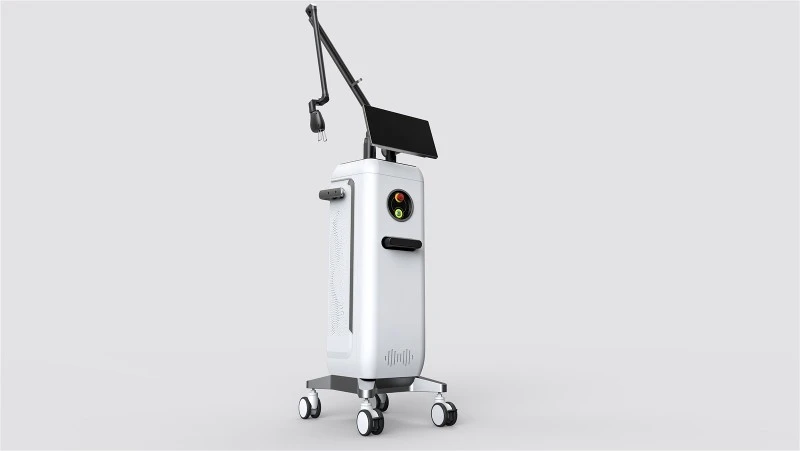
- Multifunctional Handpieces: High-end devices (such as Newangie's fractional CO2 laser) often come equipped with specialized handpieces for procedures like vaginal tightening and general surgery.
- Regulatory Compliance: Devices certified by the FDA, EU CE (MDR), or local medical device authorities typically carry a higher market price due to the significant upfront investment in clinical trials and rigorous quality control.
Brand Reputation and Market Position
Renowned brands like Newangie are trusted by customers for their superior quality and innovative technology. They not only deliver significant therapeutic results but also ensure comfort and safety during treatment. Furthermore, premium brands provide complimentary training and responsive after-sales support, helping clinics and beauty salons maximize the utility of their fractional CO2 laser equipment.
Quality of the Beam Delivery System
- Articulating Arm: High-quality seven-joint arms (such as those imported from South Korea or Israel) ensure minimal energy loss and precise positioning; they cost several times more than standard domestically produced arms.
- Lenses/Mirrors: The quality of the optical coating determines laser transmittance and purity, directly impacting the final treatment outcome.
Output Power and Pulse Technology
- Peak Power: Higher power (typically 30W–60W) results in a greater capacity for tissue vaporization.
- Super-pulse Technology: "Super-pulse" capabilities-characterized by extremely short pulse widths and high energy density-require complex circuitry, significantly driving up costs.
Scanning Systems and AI Algorithms
- Scanning Modes: Systems that support various shapes (circles, rectangles, triangles, etc.) and multiple scanning patterns command a higher price.
- AI Assistance: Advanced algorithms for automatic skin recognition and dynamic energy adjustment represent a key value-added feature at the software level.
Common Mistakes and Key Considerations When Purchasing
Opting for high-power glass tubes solely due to low price
Glass tubes suffer from rapid energy degradation, which can lead to inconsistent treatment results during the mid-to-late stages of a course of therapy and trigger client complaints.
Overlooking the quality of the articulated arm
Inferior articulated arms can cause beam misalignment and energy loss, or even damage the scanner head. It is recommended to choose a fractional CO2 laser system equipped with a high-quality, seven-joint articulated arm imported from South Korea.
Ignoring certification marks
As medical equipment, ensuring the device holds FDA, CE (MDR), or local regulatory certification is a fundamental requirement for legal operation.
Lack of responsive after-sales support
Laser systems are high-precision instruments; if a supplier cannot provide remote or on-site support within 24 hours, the facility risks significant losses due to equipment downtime.
How can you make wise investment decisions?
If you are planning to introduce fractional CO2 laser equipment to your clinic or beauty salon, you should seriously consider my advice. When selecting equipment, do not focus solely on the initial purchase price. Although models equipped with RF tubes entail a higher upfront cost, the superior beam stability and extremely low failure rates they offer are crucial for maintaining your facility's reputation and ensuring a rapid return on investment. Competition in 2026 is fundamentally about efficiency and results; investing in high-quality equipment is the true path to low-cost operations.
FAQ
Q: How much does co2 laser cost for a professional clinic?
A: The price of medical-grade fractional CO2 laser equipment typically ranges from $15,000 to $35,000, depending on the laser tube technology (RF tube vs. glass tube) and the level of AI-assisted functionality integration.
Q: Why is there such a significant difference between brands of fractional CO2 lasers prices?
A: The core difference lies in the internal components. High-end RF tubes and imported articulated arms significantly increase co2 fractional laser cost, but they also deliver finer beam spots and shorter patient recovery times.
Q: How should clinics view the cost per treatment when calculating project expenses?
A: When evaluating fractional co2 laser costs, clinics must consider not only equipment depreciation but also the cost of consumables-approximately $10 to $20 per treatment. High-value treatment outcomes justify higher service prices, thereby offsetting the financial pressure of the initial equipment investment.