



Summary
This article provides an in-depth analysis of mainstream laser hair removal technologies for 2026, helping you select the best laser for your specific needs. By comparing three major technologies-755nm (ideal for light skin), 810nm (a balanced all-rounder), and 1064nm (essential for dark skin)-we reveal the key performance indicators that define the best lasers: energy density, pulse width, and cooling systems.
Read on to learn how to choose the right technology based on your skin tone and make an informed decision by incorporating insights from "Laser Hair Reduction Reviews."

When making purchasing decisions, people naturally seek out superior products, and the quest for permanent hair removal is no exception; "which laser works best" remains the primary concern for consumers. A quick online search reveals a dizzying array of marketing claims-such as "highest power" or "latest technology"-yet the "best laser" is not a one-size-fits-all concept. Rather, it is an advanced technology that precisely matches your specific skin tone and hair characteristics.
The medical aesthetics market currently offers a wide range of hair removal technologies, including Alexandrite, IPL, diode, and Nd:YAG lasers. For the average person, distinguishing the truly "best" option from this multitude of choices is no easy task. This article cuts through the marketing hype to explain the underlying scientific principles, helping you clarify your options and find the laser technology that is best suited to your needs.
The Core Principle of Laser Hair Removal: Selective Photothermolysis
Before discussing which lasers are the "best," we must understand how the technology works. All effective laser hair removal relies on a fundamental physical principle: selective photothermolysis. Simply put, this process involves using light at a specific wavelength to penetrate the epidermis and be precisely absorbed by the melanin within the hair follicle. The light energy is converted into heat, destroying the follicle and thereby inhibiting long-term hair growth, all without damaging the surrounding skin tissue.
Therefore, determining whether a specific laser ranks among the "best" depends on whether its wavelength reaches the optimal depth and whether its energy control is sufficiently precise. If the wavelength is too short, the energy is absorbed by melanin in the epidermis, leading to burns and pigmentation issues; conversely, if the wavelength is too long, it cannot be effectively absorbed by the hair follicle.
A Comparison of Three Mainstream Laser Technologies: Which is Your "Best Laser"?
The core technologies behind the mainstream laser hair removal devices currently on the market fall into three main categories. It is worth noting that none is inherently superior to the others; each possesses unique advantages and is suited to specific patient profiles.
Alexandrite Laser (755nm)
For individuals with lighter skin tones (Fitzpatrick types I–III) and dark hair, the 755nm Alexandrite laser is often hailed as the "best laser" option.
- Advantages
The 755nm wavelength offers an optimal balance, boasting an exceptionally high absorption rate for melanin. This allows for significant results with lower energy output. Additionally, the 755nm laser enables rapid coverage, making it ideal for treating large areas and reducing overall treatment time.
- Limitations
Because the Alexandrite laser is highly sensitive to melanin, individuals with darker skin tones (such as Fitzpatrick types III–V, common among Asians) may face an increased risk of blistering and post-inflammatory hyperpigmentation (PIH) when using this wavelength.
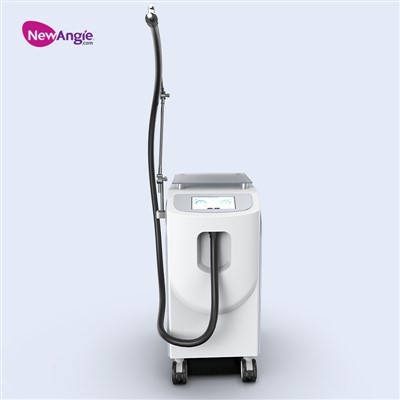
An effective solution is to choose an Alexandrite laser system equipped with a cold-air cooling unit; this eliminates the need for topical anesthetic creams, as the powerful cooling effect significantly enhances patient comfort and satisfaction during treatment.
Diode Laser (810nm)
The diode laser is widely regarded as the "all-rounder" of the hair removal world and is a top choice for many professional clinics seeking the "best laser" solution.
- Advantages
With a wavelength of 810nm, it penetrates deeper into the dermis than the 755nm laser, bypassing competition from epidermal melanin to reach the depths of the hair follicle directly. Crucially, it offers an excellent safety profile; when combined with advanced cooling technology, it can effectively treat a wide range of skin tones, from light to dark.
- Laser hair removal reviews
Real-world clinical data shows that 4–6 sessions of 808nm diode laser treatment can achieve ideal hair removal results, leading to a significant reduction in hair count and causing regrowth to become finer and softer. The diode laser is highly acclaimed for causing relatively little pain, delivering long-lasting results, and minimizing side effects.
Long-pulsed Nd:YAG Laser (1064nm)
The 1064nm Nd:YAG laser is widely recognized as the best laser for individuals with darker skin tones (Fitzpatrick skin types IV–VI).
- Characteristics
With the longest wavelength among hair removal lasers, the 1064nm Nd:YAG laser offers the deepest penetration and the lowest absorption rate by epidermal melanin; this allows it to safely bypass surface melanin and reach deep into the hair follicles.
- Ideal Candidates
The 1064nm Nd:YAG laser is the safest choice for individuals with dark skin (Fitzpatrick types IV–VI) and those with tanned skin. Although its energy absorption by melanin is less efficient than that of the other laser types-potentially requiring more treatment sessions-its unparalleled safety profile makes it the "best laser" for this demographic.
Newangie Laser Hair Removal Equipment: An FDA-Certified Professional Choice
With nearly two decades of industry experience as a Chinese manufacturer of medical aesthetic equipment, Newangie offers a product line-backed by robust technical specifications and authoritative certifications-that serves as a reliable choice for professional clinics and distributors seeking top-tier laser hair removal machines.


High Power and Rapid Treatment
The equipment offers laser power options ranging from 600W to 1200W, with energy densities reaching up to 10–120 J/cm². This high power, combined with an adjustable frequency of 1–10 Hz, significantly reduces treatment times for large areas (such as legs and backs) and increases daily client throughput.
Smart Cooling and Comfortable Experience
The system integrates multiple cooling technologies-including TEC sapphire contact cooling, compressor cooling, air cooling, and water cooling-to rapidly lower epidermal temperature. This not only protects the skin and allows for the use of higher, more effective energy levels but also minimizes the burning sensation and pain during treatment, thereby enhancing client comfort.
Versatile Application and Precision Treatment
Interchangeable treatment heads of various sizes allow for flexible adaptation to different areas-such as the face, underarms, and bikini line-balancing efficiency with precision.
How do you identify the best lasers?
Beyond wavelength, there are other key factors to consider when evaluating whether a laser is truly the best.
Energy Density
This determines the laser's ability to destroy hair follicles. While low-power devices may only inhibit hair growth, lasers with sufficient energy density can achieve genuine, permanent hair reduction.
Pulse Width
Hair follicles require time to dissipate heat after being heated; this duration is known as Thermal Relaxation Time (TRT). The best lasers allow for precise adjustment of pulse width, ensuring that while the heat destroys the follicle, the surrounding tissue has sufficient time to cool down.
Cooling System
Comfort during the procedure directly influences whether a user will complete the full course of treatment. Since lasers generate heat-raising temperatures and posing a risk of burns-advanced cooling systems are crucial; they can rapidly lower the skin's surface temperature to as low as -25°C, significantly alleviating the sensation of burning.

How do technical specifications translate into real-world results?
Data alone often fails to fully capture the true reliability of laser technology. Ultimately, the quality of a technology is best demonstrated through actual user feedback.
For instance, a user with light skin and coarse, dark hair might achieve remarkable immediate results with an Alexandrite laser, whereas someone with fine, soft hair might require the higher energy output of a diode laser.
To give you a clearer picture of how these technologies perform in real-life scenarios, we have gathered and compiled authentic feedback from a wide range of our clients. We invite you to read our in-depth summary to see how different laser technologies perform on various individuals.
Laser Hair Reduction Reviews Guide: What Do Real Users Say?
How do you choose the best laser hair removal machine for your needs?
When purchasing laser hair removal equipment, a higher price tag does not necessarily mean a better machine; the truly "best" device is one that aligns with your skin tone, hair type, and personal requirements.
| Target Skin & Hair Type | Recommended Laser Type |
| Light skin & Dark hair | 755nm Alexandrite Laser |
| Seeking a balance between comfort and effectiveness | Diode Laser (808nm/810nm) |
| Darker skin tones (or tanned skin) | 1064nm Nd:YAG Laser |
In addition to the laser wavelength, it is crucial to consider the operator's level of expertise and the safety of the equipment.
If you operate a clinic, beauty salon, or medical aesthetics facility and serve a diverse clientele, you might opt for a laser hair removal system that incorporates multiple wavelengths. For instance, the Newangie laser hair removal machines I mentioned earlier offer four wavelengths-755nm, 808nm, 940nm, and 1064nm-ensuring safe, precise, and personalized treatments.