




Introduction
When buyers compare RF microneedling machine prices, the gap between quotations can be surprisingly wide. Two systems may look similar yet differ substantially in RF technology, needle configuration, engineering, compliance, customization, and commercial support. For clinics and distributors, the quoted machine price is therefore only the starting point for evaluating the investment. A useful comparison should show what the buyer receives at the time of purchase, what expenses will continue after installation, and whether the overall cost matches the intended business model.
How Much Does an RF Microneedling Machine Cost
|
Equipment Tier |
Indicative Price Level |
Typical Buyer |
|
Entry-level OEM systems |
~$500–$1,500+ |
Small Businesses & Price-sensitive Buyers |
|
Professional factory-direct systems |
~$1,500–$5,000+ |
Clinics, Medical Spas & Distributors |
|
Higher-spec OEM/ODM platforms |
Several Thousand Dollars+ |
Established Clinics & Distributors |
|
Premium branded clinical platforms |
Tens of Thousands of Dollars |
Buyers Prioritizing Brand & Established Clinical Infrastructure |
What Determines the RF Microneedling Machine Price
The quotation is shaped by five major factors: the technical platform itself, the investment required to develop and validate it, regulatory compliance, commercial positioning, and the extent of customization. These elements explain why equipment with a similar appearance can sit in very different price categories.
Hardware & RF Technology
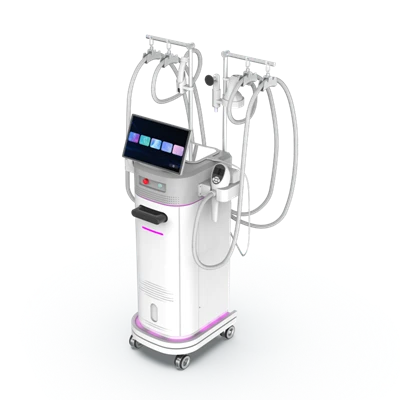
The RF generator and microneedle delivery system represent the most direct technical contributors to equipment cost. RF output stability, energy control, needle depth, needle configuration, insertion precision, and motor performance all influence engineering requirements. Vacuum assistance, cooling, multiple handpieces, and touchscreen control can add further value when they are integrated into the system.
The needle system deserves particular attention because different configurations can change both treatment flexibility and manufacturing complexity. A professional platform may support insulated or non-insulated needles, different penetration depths, or vacuum-assisted delivery rather than relying on a single fixed configuration.

R&D, Software & Engineering
Development costs are less visible than hardware but can have a significant effect on the final quotation. RF power management, control software, parameter adjustment, motor coordination, user-interface design, and reliability testing all require engineering resources.
This becomes especially relevant in OEM/ODM projects. Changing the operating logic or internal configuration requires substantially more development work than applying a private label. A qualified manufacturer should have a professional team of many core R&D experts and enough related patents, better supported by an independent laboratory for product development and testing.

Certifications & Regulatory Compliance
Compliance adds another layer to the equipment cost because manufacturers may need to complete testing, prepare technical documentation, maintain quality systems, and meet market-specific requirements. The financial impact depends heavily on the destination market and the intended distribution model.
A clinic purchasing one unit and a distributor importing equipment for repeated commercial sales should not assume that they face identical compliance requirements. Buyers should confirm which certifications and documents apply specifically to the quoted model and target market. CE, ISO, FDA, and RoHS-related certification capabilities should be provided within a quality and compliance system.

Brand Positioning & Distribution Channel
The route from manufacturer to end user also affects the final price. A factory-direct quotation may focus primarily on equipment production, while a branded or distributor-supplied system can include local inventory, sales infrastructure, training, technical service, warranty administration, and market development costs.
Consequently, a price difference between two suppliers does not necessarily represent an equivalent difference in manufacturing cost. Buyers should establish how many commercial layers are included and what services those layers provide before judging one quotation as expensive or inexpensive.

OEM/ODM Service
Customization costs depend on how deeply the buyer wants to modify the product. Logo placement and packaging changes are relatively straightforward. Altering the housing, materials, internal components, software interface, language settings, or functional configuration involves additional engineering and validation.
OEM/ODM service should cover areas including machine branding, cover and material customization, internal component upgrades, program and interface development, and packaging. Buyers should therefore compare the scope of customization rather than simply asking whether a supplier offers OEM.

What Are the Hidden Costs Beyond the Machine Price
Some expenses do not necessarily appear in the headline equipment quotation but can affect the actual acquisition cost. The main items include disposable cartridges, freight and import charges, installation or training fees, spare parts, and potential downtime.
For procurement purposes, these costs should be confirmed before placing an order. A buyer can then distinguish the supplier's quoted equipment price from the landed acquisition cost and avoid building a budget around an incomplete figure.
How Clinics Should Build an RF Microneedling Machine Budget
Once the additional expenses are identified, a clinic can convert them into a practical financial model.
How Distributors Should Evaluate RF Microneedling Machine Cost
Distributors need a different calculation because their revenue comes from reselling equipment and supporting a wider customer base. The key question is whether the supplier's commercial terms leave enough margin after all market-entry expenses.
Important variables include wholesale price, MOQ, OEM/ODM charges, regional certification, cartridge availability, warranty terms, spare-parts access, lead time, and technical support. These factors influence both the distributor's landed cost and the resources required to support downstream customers.
A supplier with structured partner support can also reduce the distributor's internal workload. For example, a supplier should offer a partner program, which includes training, marketing support, technical assistance, and regional partnership options.
For distributors, the appropriate benchmark is therefore the net commercial opportunity after sourcing and support costs, rather than the factory quotation alone.
Is the Cheapest RF Microneedling Machine the Best Value
The lowest quotation is not necessarily the lowest-cost option over the equipment's useful life. At the same time, paying more does not guarantee that a machine is better suited to a particular clinic or distribution market.
A sound purchasing decision should match four elements: technical capability, regulatory suitability, total ownership cost, and supplier support. Buyers should pay for capabilities that support their actual business requirements rather than for specifications or brand positioning they will not use.
Why Consider an Experienced RF Microneedling Manufacturer
An experienced manufacturer can reduce uncertainty across the equipment's lifecycle because product engineering, production, quality control, customization, and technical support are handled through an established operating system.
Newangie brings more than 17 years of aesthetic equipment development and manufacturing experience, supported by 20+ R&D experts, 70+ patents, an ISO-certified factory, and OEM/ODM capabilities. The company also reports serving customers in 100+ countries and working with 10,000+ partners, with applicable orders supported by 7–15-day delivery.
For procurement teams, the practical value of this experience lies in supplier reliability and execution capability, rather than simply adding another brand name to the comparison list.
Conclusion
The RF microneedling machine price is only one part of the purchasing equation. Clinics should build their budgets around acquisition cost, operating expenses, and expected utilization, while distributors need to add landed cost, market-entry requirements, and resale economics. The strongest purchase is not necessarily the cheapest or most expensive option. It is the system whose technical specification, ownership cost, and supplier support are appropriate for the buyer's actual business model. If you want to learn more about the components of RF microneedling machine prices, please feel free to contact our product experts.