




Introduction
Shockwave therapy is currently one of the most commonly used non-invasive treatments.
It can replace many surgical procedures and is primarily used as a physical therapy for musculoskeletal disorders. Among all extracorporeal shockwave systems, two types dominate the market: Radial Shockwave Therapy (RSWT) and Focused Shockwave Therapy (FSWT).
This guide explains how they differ in energy delivery, penetration depth, clinical applications, and treatment outcomes-so you can choose the right device for your clinic, sports center, or business.

Understanding the Two Shockwave Technologies
What Is Radial Shockwave Therapy (RSWT)?
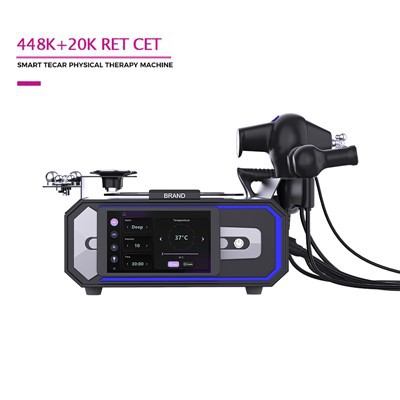
Radial Shock Wave Therapy is one of the most common and widely applied forms of shockwave treatment. It is primarily composed of three components: ultrasonic pulses, acoustic pulses, and slow shear waves. A radial ESWT unit generates low- to medium-energy radial shock waves through mechanical or pneumatic mechanisms, dispersing the energy across a broad area of superficial tissues. Most radial extracorporeal shockwave therapy devices are equipped with a gun-like applicator. Inside the applicator's barrel, a projectile is accelerated to a high speed and strikes the tip of the applicator, producing an energy pulse upon impact.

What Is Focused Shockwave Therapy (FSWT)?
Focused Shock Wave Therapy (FSWT) is another type of shockwave treatment. Compared with Radial Shock Wave Therapy (RSWT), it penetrates deeper into tissues and concentrates energy on a more localized and deeper target area. FSWT typically uses electromagnetic, piezoelectric, or electromechanical methods to generate high-energy focused shock waves, allowing precise targeting of the affected site. It is commonly used to treat chronic tendinopathy, calcifications, bone healing, and deep soft-tissue injuries.

Radial vs Focused Shockwave: Key Differences
Radial vs Focused Shockwave Comparison Table
|
Comparison Dimension |
Radial Shockwave |
Focused Shockwave |
|
Energy Propagation |
Energy disperses radially, spreading outward |
Energy converges at a defined focal point |
|
Penetration Depth |
Up to 4cm |
Up to 12cm |
|
Energy Density |
Lower |
Higher |
|
Waveform Type |
Mainly pressure waves |
True shockwaves |
|
Treatment Area |
Covers a larger area; ideal for broad muscle tightness and pain |
Small, highly focused area; ideal for deep, point-specific lesions |
|
Typical Indications |
Plantar fasciitis, calf tightness, tennis elbow, myofascial trigger points |
Calcific tendinitis, non-union fractures, deep tendinopathies, chronic stubborn pain |
|
Treatment Duration per Session |
10–15 minutes |
5–10 minutes |
|
Treatment Sensation |
Generally mild and less painful |
Stronger, more intense shock sensation |
|
Safety Profile |
Very safe, fewer restrictions |
More precise professional operation is required. |
|
Primary Therapeutic Goal |
Pain relief, improved circulation, soft-tissue relaxation |
Tissue regeneration, breaking calcifications, deep-tissue repair |
|
Use in Physiotherapy/Sports Medicine |
Very common and widely used |
More specialized; often for chronic or deep pathologies |
How Radial and Focused Shockwave Machines Work
How RSWT Works
RSWT devices typically use pneumatically driven projectiles to impact a conduction head, generating a pressure wave. Its characteristics include:
• Radial pattern of energy diffusion outward from the conduction head
• Low energy density with a wide distribution range
• Penetration depth is generally around 3–4 cm (suitable for superficial soft tissues)
• Primarily targets muscles, fascia, and superficial tendons

How FSWT Works
FSWT is characterized by highly concentrated energy, penetrating to a depth of 4–12 cm, making it suitable for treating deep lesions. Its working principle includes:
• Utilizing electromagnetic, piezoelectric, or mechanical devices to generate shock waves
• These shock waves, through a focusing lens or device, concentrate energy into the target tissue
• Deep penetration and high energy density stimulate cell metabolism, promote blood circulation, and accelerate tissue repair.

Conditions Treated by Radial and Focused Shockwave Therapy
What Conditions Radial ESWT Machine Helps Treat
RSWT is particularly effective for soft tissue and superficial pain problems. Common indications include:
• Plantar fasciitis
• Achilles tendinitis
• Patent tendinitis
• Rotator cuff tendinitis
• Golf elbow/tennis elbow
• Greater trochanteric bursitis

What Conditions Focused ESWT Machine Helps Treat
FSWT is best suited for deep tissue problems, chronic diseases, and bone lesions. Common indications include:
• Calcific tendinitis
• Erectile dysfunction
• Deep fascial pain syndromes
• Bone healing and nonunion of fractures
• Deep tissue fibrosis or scarring
• Lateral epicondylitis of the humerus

Pros and Cons of Radial vs Focused Shockwave Units
|
Feature |
Radial Pressure Wave |
Focused Shockwave |
|
Pros |
• Easy to operate: compact, portable, handheld • Wide treatment area: energy spreads over large soft tissue areas, such as shoulders, back, and buttocks • High safety: shallow penetration, low risk, suitable for early-stage pain or chronic muscle injuries • Low cost: relatively inexpensive equipment and low maintenance costs |
• Treats deep lesions: precisely targets deep tendons, ligaments, or bone lesions • High efficacy: high-energy shockwaves break down calcifications, stimulate blood circulation, and promote tissue repair • Precise localization: can be combined with imaging techniques (e.g., ultrasound) to improve accuracy • Wide applicability: suitable for soft tissue and bone conditions |
|
Cons |
• Limited penetration: energy may not reach deep structures, such as the hip joint or deep rotator cuff tendons • Relatively mild effect: less effective for deep or stubborn lesions compared to FSWT • Energy dispersion: cannot precisely target lesions |
• Complex operation: requires professional training and experience • Low patient comfort: high-energy shockwaves can be painful, may require local anesthesia or analgesia • High equipment cost: purchase and maintenance are expensive • Potential risk: improper use may damage deep tissues or blood vessels |
How to Choose the Right Shockwave Therapy Machine?
The choice between Radial or Focused shockwave therapy equipment depends primarily on the treatment goals, patient type, budget, and operating environment. The following analysis categorizes them by different usage scenarios:
-
For Clinics & Physiotherapists
-
For Sports Centers or Massage Therapists
-
For Medical or Orthopedic Practices
-
For Home Use


Real Customer Feedback on Newangie Shockwave Devices
To help you better understand how our shockwave machines perform in real clinical environments, here is feedback from our clients using Newangie radial and focused shockwave systems:
Newangie – Professional Manufacturer of Radial & Focused Shockwave Therapy Machines
Newangie is a leading manufacturer specializing in Radial Shockwave Therapy Machines (RSWT) and Focused Shockwave Therapy Machines (FSWT) for physiotherapy clinics, rehabilitation centers, sports medicine facilities, and global distributors. With years of experience in rehabilitation and aesthetic medical equipment, Newangie is committed to delivering high-performance shockwave devices.
Why Choose Newangie?
• Complete Product Line: From portable radial pressure wave devices to advanced high-energy focused shockwave systems
• OEM & ODM Support: Custom interface, branding, colors, and packaging for distributors and clinic chains
• Strict quality assurance: Each device is calibrated and tested before shipment and is certified by ISO 13485, MDS, FDA, CE, RoHS and other standards.
• Professional training and after-sales service: We have a professional team to provide operational training, marketing materials, technical support, and other after-sales services.
• Factory direct pricing: We can offer highly competitive prices to distributors, wholesalers, and physiotherapy clinics.

If you need help choosing the right machine or want to compare models, feel free to contact Newangie-we are always ready to support your practice or business with the right equipment.
FAQ
Q: Which shockwave machine is better for deep tissue problems?
A: Focused Shockwave Therapy (FSWT) is better for deep tendons, ligaments, chronic pain, and calcifications.
Q: Do clinics need both radial and focused shockwave machines?
A: Many advanced clinics use both-RSWT for superficial tissues and FSWT for deep or calcified lesions.
Q: Can I use a shockwave machine at home?
A: Home users typically choose RSWT because it is safer, easier to operate, and designed for superficial pain relief.
Q: Can focused shockwave break calcifications?
A: Yes. FSWT is highly effective at breaking down calcific deposits and stimulating tissue repair.
Q: Is focused shockwave therapy safe?
A: Yes, when performed by trained professionals. Incorrect operation can risk deep-tissue irritation.