



Have you ever felt self-conscious about the faint "mustache" visible around your lips? Or perhaps you've noticed that fine facial down prevents your foundation from sitting smoothly, causing it to look cakey or patchy? For beauty enthusiasts, while this fine fuzz poses no health risks, it can detract from skin texture and the overall sophistication of a makeup look.
Meanwhile, for operators of medical aesthetic clinics, a key priority is finding a "traffic-driving service"-one that is accessible to offer, delivers immediate results, and ensures high customer satisfaction.
Picosecond laser hair bleaching perfectly meets the needs of both parties, offering consumers an effective solution for lightening fine facial hair while serving as a high-frequency service that encourages repeat visits to aesthetic clinics.
What is picosecond hair bleaching?
Pico Hair Bleaching-clinically referred to as "laser vellus hair bleaching" or "fine hair management"-is a laser treatment designed to effectively lighten the appearance of dark facial hair.
Rather than destroying the hair follicle, the procedure leverages the physical properties of ultra-short pulse durations to precisely target the melanin within the hair shaft, inducing a physical alteration. Post-treatment, the hair instantly shifts from dark black to a milky white or translucent shade; this reduces the contrast against the skin, creating a "visually invisible" effect that preserves the skin's natural texture while resolving concerns about a dull complexion.
For consumers
It acts as a safe bleaching treatment for fine body hair, instantly transforming dark strands into a near-transparent, milky white color.
Since the hair remains on the skin's surface, the texture feels natural, and the procedure avoids the common misconception that hair appears coarser after shaving.
For business operators
This is a non-invasive aesthetic procedure that requires no topical anesthesia and involves a very short treatment time. It serves effectively as a standalone service to attract new clients and can also be bundled with treatments like picosecond pigment removal or skin rejuvenation to increase the average transaction value.
Picosecond Hair Bleaching vs. Laser Hair Removal
Although both technologies act on the hair, their underlying principles and final results are vastly different.
| Aspect | Pico Laser Hair Bleaching | Laser Hair Removal |
| Primary Goal | "Invisibility": Lightening color through physical modification | "Removal": Destroying hair follicles via thermal energy |
| Hair Status | Hair Retained: Hair remains but becomes transparent | Hair Reduced: Hair quantity decreases gradually over the course of treatment |
| Visual Result | Natural & Soft: Preserves the skin's natural barrier and texture | Smooth & Hair-free: Achieves ultimate smoothness and a hair-free look |
| Durability | Non-permanent: Results last 4–6 weeks, depending on the growth cycle | Long-term Reduction: Achieves long-lasting hair-free results after completing the treatment course |
| Technical Principle | Photoacoustic Effect: Shatters pigment without damaging the germinal layer | Photothermal Effect: Converts to heat to seal off the hair papilla |
| Ideal For | Those wanting to make upper lip hair or fine facial fuzz "visually disappear" | Those wanting to completely eliminate thick body hair from underarms or limbs |
How Does Picosecond Hair Bleaching Work?
The core technology behind picosecond bleaching lies in its groundbreaking method of energy delivery-specifically, the shift from the traditional "photothermal effect" to the "photoacoustic effect."
🔹From Photothermal Effect to Photoacoustic Effect
Traditional laser technologies (such as nanosecond lasers) rely primarily on the "photothermal effect," where heat conduction is used to ablate pigment; this often results in significant heat accumulation and pain. In contrast, picosecond lasers feature ultra-short pulse durations (only 10⁻¹² seconds) and extremely high peak power. When this energy is released instantaneously, the resulting pressure waves generate a powerful photoacoustic effect.
🔹Precise "Pigment Shattering"
When the laser interacts with the hair, melanin granules within the hair shaft are mechanically shattered into extremely fine, "dust-like" particles before heat can even build up. This alteration of physical structure causes the melanin to lose its original pigmentation properties, transforming the hair color from deep black to a nearly transparent shade.
🔹Deep Penetration with the 1064nm Wavelength
The 1064nm wavelength is typically recommended for this procedure. It offers exceptional penetrating power, reaching deep into the hair shaft while exhibiting low selective absorption by epidermal melanin. This means that while the hair is being bleached, there is virtually no thermal damage to the surrounding skin tissue, significantly reducing the risk of post-inflammatory hyperpigmentation (skin darkening) in clients with darker skin tones.
🔹Non-Invasive Mechanism
Because the process occurs so rapidly, heat is not conducted to the germinal layer deep within the hair follicle. Consequently, picosecond bleaching serves as a non-invasive method of physically modifying pigment; it achieves a clean visual appearance while preserving the integrity of the skin barrier.
Why Choose Picosecond Laser Over Traditional Bleaching Creams?
When dealing with unwanted facial hair, many people first think of buying bleaching creams at the supermarket for at-home use. However, with advancements in medical technology, more professional clinics are recommending picosecond lasers; the safety and aesthetic results they offer are unmatched by standard bleaching creams.
🔹Skin Safety
Traditional facial hair bleaching creams often contain high concentrations of hydrogen peroxide or other oxidizing agents. When applied to the skin, these chemicals affect not only the hair but also severely irritate the skin barrier.
Frequent use of such creams can easily lead to redness, stinging, or even chemical burns. In contrast, picosecond lasers utilize a physical photoacoustic effect-requiring no bleaching creams-thereby completely eliminating the risks of chemical allergies and burns.
🔹Visual Results
After using traditional facial hair bleaching products, dark hair is often lightened to an unnatural, scorched-yellow hue. Under bright light, the hair remains clearly visible and lacks a natural texture. The results achieved through picosecond laser treatment are entirely different. The laser shatters pigment into microscopic particles invisible to the naked eye, achieving true "visual invisibility."
Whether treating hair around a woman's mouth or lightening a man's beard, picosecond technology produces a semi-translucent, milky-white finish that blends seamlessly with the natural skin tone.
🔹Operational Efficiency and Coverage
Treating unwanted body hair over large areas using traditional hair bleach for body hair is an incredibly tedious and unpleasant process, often accompanied by strong, offensive odors. In contrast, picosecond laser technology offers exceptional efficiency for large-scale treatment, capable of addressing areas like the back or arms in just a few minutes.
When it comes to delicate facial areas, professional bleaching requires extreme precision; the picosecond laser's precise beam spot allows it to perfectly avoid areas that should not be treated-such as the eyebrows-whereas bleach cream for face often make it difficult to control boundaries accurately.
While bleaching creams may appear more cost-effective at first glance, picosecond laser technology represents the safest and most advanced solution currently available for facial hair lightening when considering long-term skin health and aesthetic results. Beyond simply addressing hair color, the laser energy delivers potential skin-rejuvenating benefits-an advantage that no bleaching cream can provide.

The Clinical Advantages of Picosecond Bleaching: A Profit-Driving Asset for Your Clinic
For aesthetic clinics and spas, picosecond bleaching is more than just a simple cosmetic service; it is a highly competitive, core selling point.
Immediate, Visible Results
Unlike hair removal treatments that require multiple sessions to show results, picosecond bleaching offers immediate, noticeable feedback. Upon completion, dark hair instantly turns transparent or milky white; this visual transformation significantly boosts client satisfaction and trust right away.
An Exceptionally Comfortable Experience
The procedure is virtually painless and requires no pre-treatment application of anesthetic cream. For fast-paced urban consumers, this "lunch-break aesthetic treatment" is highly appealing, as it lowers the psychological barrier for clients while reducing operational costs for the facility.
Dual Benefits: Bleaching Plus Skin Rejuvenation
This is the unique value proposition of picosecond bleaching. While treating the hair, the picosecond laser's "honeycomb" mode stimulates collagen remodeling in the dermis, delivering the added benefits of refined pores and a brighter complexion. Clients enjoy the skin-texture improvements associated with high-end picosecond rejuvenation alongside their facial hair bleaching treatment.
Superior Safety and Low Risk
Thanks to its minimal heat accumulation, picosecond bleaching significantly reduces the risk of post-inflammatory hyperpigmentation (PIH). For business owners, this translates to a lower likelihood of post-treatment complaints and more consistent, positive word-of-mouth.
Recommended Picosecond Laser Equipment for Hair Bleaching
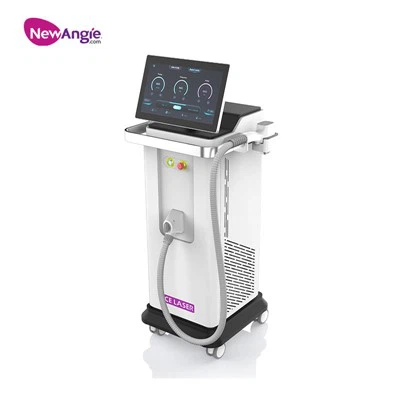
This professional Q-switched laser system lightens hair in just 10 minutes-whether it is dark, fine, or blonde-delivering a painless, highly effective lightening treatment that also instantly brightens your skin tone.
Immediate results
Non-invasive Treatment
Painless
No downtime

Who is The Ideal Candidate for Picosecond Laser Facial Hair Bleaching?
In the realm of facial aesthetics, addressing fine, soft facial hair is a service in high demand. The precision of picosecond hair bleaching makes it an ideal choice for the following groups:
Ideal Candidates

Individuals with darker skin tones
For those with darker complexions, fine, dark facial hair can visually dull the skin or make it appear unclean. Picosecond technology safely bleaches facial hair, enhancing the skin's clarity and radiance.
Clients wishing to preserve natural skin texture
Many clients want to eliminate the visual appearance of a "mustache" but worry that permanent hair removal might compromise the skin's natural feel or barrier function. In such cases, bleaching chin hair to visually soften its appearance is the optimal solution.
Those seeking to treat fine vellus hair
Traditional diode or long-pulsed lasers have limited efficacy on vellus hair (peach fuzz) due to its extremely low melanin content; however, picosecond lasers utilize a powerful photoacoustic effect to effectively target these stubborn, fine hairs.
Common Treatment Areas
- Facial vellus hair and the upper lip
Achieves an overall aesthetic enhancement and ensures makeup sits smoothly on the skin.
- Fine hair in specific areas
Such as long, fine hairs on the chin, as well as fine hair covering large areas of the inner arms and back, resulting in a silky-smooth skin texture even under bright light.
Get Your Personalized Solution
Post-Procedure Precautions and Skin Care
✅Strict Sun Protection
Post-treatment skin is sensitive to ultraviolet (UV) rays. Avoid sun exposure for one week following the procedure; when outdoors, apply a broad-spectrum sunscreen (SPF 30+) and use physical sun protection measures (such as hats or face masks).
✅Gentle Cleansing
For the first 24 hours after the procedure, wash your face using only water. For one week, avoid exfoliating products, skincare containing AHAs or salicylic acid, and potent brightening products to prevent further irritation to the skin while it is healing.
✅Intensive Hydration
Laser treatments can temporarily deplete moisture from the skin's surface. Focus on intensive moisturizing for 3–5 days post-procedure; medical-grade repair sheet masks or simple hyaluronic acid lotions are recommended.
✅Avoid Heat Exposure
For 48 hours after the procedure, avoid hot showers, saunas, strenuous exercise, and high-temperature environments. Heat can cause local capillary dilation, potentially worsening post-procedure redness and swelling or causing discomfort.
✅Prohibited Actions
Do not manually scrape or pluck the bleached hairs immediately after the procedure, as this may irritate the hair follicles and surrounding tissues that have not yet fully recovered.
FAQ
Q: How long do the effects of picosecond bleaching last?
A: The bleaching effect generally aligns with the natural hair growth cycle. After treatment, the lightened hair remains on the skin's surface. As new hair grows in (typically after 4–6 weeks), darker roots will gradually become visible. At this point, a second treatment is recommended to maintain the results.
Q: Will the hair become thicker or more abundant after bleaching?
A: This is a common misconception. Picosecond bleaching is a purely physical process that alters pigment; it has absolutely no impact on the reproductive structure of the hair follicle. Hair thickness and density are determined by hormonal levels and follicle depth; physical color alteration does not cause hair to thicken. In fact, because the hair appears lighter in color, it often looks finer and softer than it did before treatment.
Q: Is the bleaching process painful? Do I need downtime?
A: Picosecond bleaching is a classic "lunchtime" aesthetic procedure. Due to the ultra-short pulse duration and minimal heat accumulation, most clients experience only a mild sensation-like the snap of a rubber band-and no topical anesthetic is required. Post-treatment skin redness is minimal and usually subsides within 1–2 hours, allowing for an immediate return to work and social activities.
Q: Is this treatment suitable for all skin tones?
A: Yes. Thanks to the 1064nm wavelength's precise targeting of melanin and its low thermal effect, picosecond bleaching is highly safe even for clients with darker skin tones (Fitzpatrick types IV–V).