





As consumer demand for treatment solutions that are "highly effective, safe, and entail minimal downtime" continues to intensify, the limitations of traditional Q-switched lasers in treating pigmentation issues have become increasingly apparent. In contrast, picosecond lasers-distinguished by their revolutionary technological breakthroughs-are rapidly emerging as a core asset for medical aesthetic clinics worldwide.
For clinic operators, the question of whether to acquire a picosecond laser system in 2026 is no longer merely a matter of technical preference; rather, it represents a strategic decision with profound implications for an institution's competitiveness, profitability, and long-term growth. Accordingly, this article aims to provide clinic decision-makers with an objective analytical framework, examining the subject from multiple perspectives-including technical principles, return on investment, and equipment selection.
What is a Picosecond Laser Device?
A picosecond laser is a device that emits pulses with a duration in the picosecond range (1 picosecond = 10⁻¹² seconds, or one-trillionth of a second). Its commonly used operating wavelengths include 755 nm, 532 nm, and 1064 nm.
Compared to traditional Q-switched nanosecond lasers (10⁻⁹ seconds), the pulse duration of a picosecond laser is approximately 1,000 times shorter. The fundamental difference resulting from this technological leap lies in a complete shift in the mechanism of action:
-
Traditional Laser
Traditional lasers rely on the "photothermal effect"-using thermal energy to "burn" pigment particles. This approach often leads to heat diffusion into the surrounding normal tissues, causing unnecessary thermal damage.
-
Picosecond Laser
Picosecond lasers primarily utilize the "photoacoustic effect" or "photomechanical effect." By harnessing the extremely high peak power instantly released by ultra-short pulses, they generate physical shockwaves that shatter pigment particles into minuscule, dust-like fragments, generating almost no excess heat in the process.
These shattered, dust-like fragments are significantly smaller than the particles produced by traditional lasers, making them much easier for the body's macrophages to engulf and for the lymphatic system to metabolize and eliminate from the body.
Furthermore, when paired with a honeycomb-patterned focusing lens, picosecond lasers can induce a Laser-Induced Optical Breakdown (LIOB) effect. This stimulates the production of new collagen and elastic fibers within the dermis, thereby achieving a dual effect of both "pigment removal" and "skin rejuvenation."
What conditions can picosecond laser technology treat?
Picosecond lasers primarily exert their effects through the photoacoustic (photomechanical) effect and laser-induced optical breakdown, precisely shattering pigment particles and stimulating neocollagenesis in the dermis. They are indicated for the following conditions:

Hyperpigmentation Disorders

Tattoo Removal

Skin Rejuvenation

Scar Repair
New Trends in Picosecond Laser Equipment for the Medical Aesthetics Market in 2026
Consumer Demand Shifts Toward "Efficiency + Safety."
By 2026, aesthetic patients are no longer satisfied with the mere ability to remove spots; instead, they seek fewer treatment sessions, shorter recovery periods, and a lower risk of side effects. Picosecond lasers align perfectly with this evolving demand. Compared to traditional lasers, picosecond lasers can reduce the number of required sessions by approximately two-thirds, shorten recovery times from 1–2 weeks to just 1–3 days, and significantly lower the risk of post-inflammatory hyperpigmentation.
The Penetration of AI and Intelligent Technologies Accelerates.
Advanced control systems driven by AI algorithms are enhancing the precision and efficiency of picosecond lasers. This allows operators to make real-time parameter adjustments based on individual skin types and treatment requirements, rendering the devices more intelligent and user-friendly.
By 2026, high-end picosecond laser devices are widely equipped with intelligent parameter presets, real-time energy monitoring, and case comparison systems.
Multifunctionality Becomes the Mainstream.
The ability of a single picosecond laser device to simultaneously address multiple functions-including pigment treatment, tattoo removal, skin rejuvenation, and scar repair-has become a primary consideration for clinics when making purchasing decisions. A single device capable of meeting the needs of various dermatological procedures can significantly boost the return on investment.
What Can Introducing a Picosecond Laser Device Bring to a Clinic?
For a clinic, a picosecond laser device can provide a tremendous boost to both your business operations and your professional reputation.
Increased Revenue and Profitability
Picosecond laser treatments are high-ticket services. Taking pigmentation removal as an example, the fee for a single session typically ranges from 2,000 to 8,000 RMB, while the average spend for a complete course of treatment (3–6 sessions) can reach well over 10,000 RMB. Tattoo removal-due to its greater complexity and the higher number of sessions required-commands even higher fees per session, resulting in a significantly more substantial total revenue per patient. Given the strong market demand, a single picosecond laser device can quickly recoup its initial investment within a reasonable operational timeframe.
Expanded Service Offerings
A single picosecond laser device can cover a wide spectrum of dermatological treatments: treatment of pigmentary disorders (such as freckles, sun spots, Nevus of Ota, and melasma), tattoo removal (including professional tattoos, traumatic tattoos, and cosmetic tattoos), skin rejuvenation (addressing fine lines, enlarged pores, and uneven skin tone), and the repair of acne scars.
This means a clinic can utilize a single device to serve a broader client base, thereby avoiding missed business opportunities that might arise from relying on equipment with limited, single-purpose functionality.
Enhanced Patient Satisfaction
Picosecond laser treatments offer a high level of comfort and a short recovery period, providing a client experience far superior to that of traditional treatment methods. Fewer required sessions, more dramatic results, and a more comfortable experience collectively lead to significantly higher patient satisfaction-a factor that actively encourages client referrals and positive word-of-mouth promotion.
Building a Professional Clinic Image
The picosecond laser represents the cutting edge of technology in today's medical aesthetics field. Clinics equipped with a picosecond laser naturally position themselves in the minds of clients as being "professional, advanced, and reliable." In an increasingly competitive medical aesthetics market characterized by product homogeneity, this establishes a powerful differentiator that sets your clinic apart.
Improved Operational Efficiency
Picosecond laser treatments require very little time per session. The combination of high energy output and an adjustable spot size design dramatically boosts operational efficiency, allowing the clinic to significantly increase its daily patient throughput. This results in a simultaneous improvement in both space utilization efficiency (revenue per square foot) and staff productivity.
Recommended Manufacturer of High-End Picosecond Laser Equipment - Newangie
Among the many brands of picosecond laser equipment available today, Newangie stands out as a premier supplier worthy of serious consideration, distinguished by its technical prowess and global service capabilities.
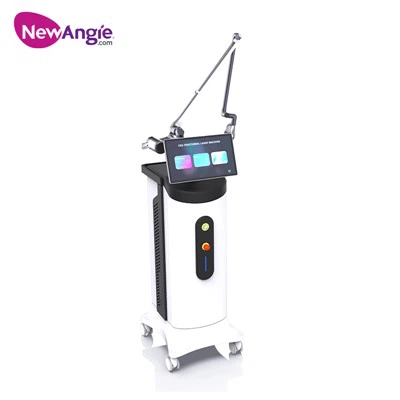
Established in 2008, Newangie is a high-tech enterprise dedicated to the R&D, manufacturing, and sales of high-end aesthetic and medical laser technologies. Its products are exported to over 100 countries and regions worldwide. Its flagship product-the 350ps TruePico Picosecond Laser System-represents the cutting edge of picosecond laser technology as of 2026.

-
Solid Technical Capabilities Ensure Clinical Efficacy
The BMPS4 model utilizes 350ps ultra-short pulse technology, featuring a pulse duration that is merely one-thousandth that of traditional nanosecond lasers. Equipped with a dual-wavelength system (1064nm and 532nm), it delivers pulse energies of up to 500mJ and 250mJ, respectively, achieving a maximum peak power of 1.43GW.
The spot size is adjustable within a range of 2–10mm, and the light-guide arm features an imported 7-joint articulated design that allows for flexible 360° rotation. The system is further enhanced by a 10-inch high-definition touchscreen interface, integrating intelligent parameter presets, real-time energy monitoring, and a patient case comparison system.
-
Versatile Handpiece Configurations
The ZOOM DOE 1064nm/532nm handpiece incorporates Diffractive Optical Element (DOE) technology to enable precise, targeted treatment of pigmentation issues.
The FLA non-ablative fractional handpiece creates micro-thermal zones within the dermis to stimulate collagen remodeling; as the epidermis remains undamaged, patients can apply makeup immediately after treatment.
Optional 585nm and 650nm extended-wavelength handpieces are also available, specifically designed to target stubborn colored tattoos (such as green and cyan).
-
Backed by Authoritative Certifications
Newangie's picosecond laser equipment has obtained U.S. FDA clearance and has also successfully passed other authoritative international certifications, including CE and ISO13485.
-
Comprehensive Customization and Support Services
Newangie offers comprehensive OEM/ODM customization services (allowing for the customization of exterior colors, logo placement, and functional modules). The system comes with a one-year full-unit warranty, and the dedicated after-sales support team is available 24/7 to provide detailed operational training and technical assistance.

From the perspective of market trends, picosecond laser technology is currently experiencing a period of rapid growth, with its global market size continuing to expand.
In terms of technological value, picosecond lasers offer distinct advantages over traditional Q-switched lasers-delivering superior results, fewer side effects, and shorter recovery periods.
Regarding financial returns, factors such as high average transaction values, a wide range of indications, and strong client testimonials endow this technology with the potential for a rapid return on investment.
Of course, any investment in medical equipment requires careful evaluation based on a clinic's specific positioning, target clientele, and budgetary constraints. Nevertheless, it is undeniable that picosecond laser systems have become an indispensable core asset for modern aesthetic clinics.
Selecting a device that features leading-edge technology, reliable quality, and comprehensive after-sales support-such as Newangie's advanced picosecond laser system (Model BMPS4)-represents a pivotal step for any clinic seeking to enhance its competitive edge and maximize its profitability.