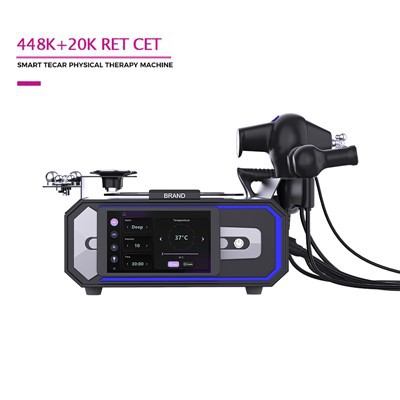



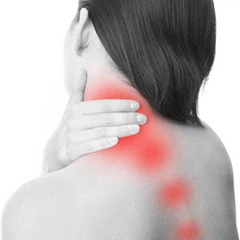


Do you, as an office worker, frequently experience muscle, shoulder, or knee tendon pain, or do you have other skeletal conditions? You may have heard of shockwave therapy, a widely used treatment in orthopedics, physical therapy, sports medicine, and rehabilitation. It can effectively help people recover from various pain symptoms.
So, what exactly is shockwave therapy? How can you purchase the best shockwave therapy device? Let me introduce you to information about shockwave therapy and related products in detail.
What is a shockwave therapy device?
Shockwave therapy is a medical device that uses high- or low-energy sound waves (shock waves) to penetrate the epidermis and reach damaged tissues to achieve therapeutic effects.
- Original Application: It originated from extracorporeal shock wave lithotripsy (ESWL) used to break up kidney and urinary tract stones, employing high-energy shock waves.
- Current Application: Later, doctors and researchers discovered that low-energy shock waves were effective for soft tissue diseases such as bone and tendon injuries, leading to the development of extracorporeal shockwave therapy primarily for rehabilitation. The "shockwave therapy device" we usually refer to today mainly refers to the latter.
Simply put, you can think of it as a highly targeted, indirect deep massager that stimulates the body's own repair mechanisms.
What is the working principle of a shockwave therapy device?
The working principle of shockwave therapy devices is based on the physical effects they produce and the resulting biochemical effects. It can be mainly divided into the following aspects:
Physical and Mechanical Effects (Direct Action)
A shock wave is a type of energetic sound wave characterized by instantaneous high pressure and rapid conduction. When it enters the human body, it produces:
-
Cavitation effect
Shock waves cause tiny bubbles in the body's tissue fluid to expand and collapse, thereby loosening adhered tissues and clearing blocked capillaries.
-
Stress effect
Shock waves generate different tensile and compressive stresses at the interface between tissues of different densities. This "differential force" can pulverize hard calcifications and loosen stiff fibrous tissue.
-
Piezoelectric effect
For tissues such as bone, the pressure of shock waves can generate tiny electric currents, stimulating osteoblast activity and promoting bone healing.
Biochemical Effects (Indirect Effects)
The physical effect is merely a "starting switch"; the real therapeutic effect comes from a series of biochemical reactions that occur in the human body after being stimulated by the shockwave:
-
Induction of Angiogenesis:
Shockwaves stimulate the release of vascular endothelial growth factor and other substances, promoting the formation of new microvessels at the treatment site and significantly improving local blood circulation. This means more oxygen and nutrients are delivered to damaged tissue, accelerating repair.
-
Stimulation of Tissue Regeneration and Repair:
As a mechanical stimulus, shockwaves can activate osteoblasts, fibroblasts, and other cells, promoting collagen synthesis and thus repairing damaged tendons, ligaments, and other soft tissues.

-
Analgesic Effect:
Overstimulation Analgesia:
High-intensity shockwave stimulation can overload local nerve receptors, temporarily inhibiting the transmission of pain signals to the brain (similar to the relief felt when rubbing a sore area).
Alteration of Pain Threshold:
Shockwaves can damage pain receptors and reduce their sensitivity, thereby increasing the pain threshold and achieving long-term analgesia.
Release of Analgesic Substances:
Shockwaves may promote the release of analgesic substances such as endorphins in the body.
-
Anti-inflammatory and Dissipative Effects:
Improved blood circulation helps remove inflammatory metabolic substances (such as lactic acid and inflammatory factors), thereby reducing chronic inflammation.


Shockwave therapy devices deliver focused or radial sound waves to deep tissues, stimulating metabolic responses, blood circulation, and natural healing mechanisms. This therapy targets only damaged tissue and does not harm surrounding healthy tissue.
Extracorporeal shockwave therapy devices can be categorized as follows:
These use a gun-like treatment head to generate high-speed energy pulses. This energy diffuses outward in the form of radial waves (spreading in a fan shape), making them ideal for treating superficial soft tissue lesions.
These emit high-energy waves that penetrate deeper and are more concentrated, allowing for precise targeting of deep tissues to promote tissue repair and relieve pain.
| Characteristics | Radial Shock Wave Therapy (RSWT) | Focused Shock Wave Therapy (FSWT) |
| Energy Characteristics | Energy diverges, propagating radially |
Energy is focused, converging at a specific depth to a single point |
| Energy Distribution |
Energy is highest at the skin surface and rapidly diminishes inward. |
Energy is highest at the focal point, lower in the epidermis and surrounding tissues. |
| Depth of Action | Relatively superficial (1-4cm) |
Adjustable, can penetrate very deep (reaching directly to the bone). |
| Main Effects |
Regeneration and Repair • Stimulates collagen production • Improves circulation • Releases soft tissue adhesions |
Destruction and Reconstruction: • Breaks up stones/calcifications • Promotes deep bone regeneration • Precise deep analgesia |
| Core Application Areas |
Rehabilitation Medicine: Chronic soft tissue diseases, myofascial pain Medical Aesthetics: Skin tightening, cellulite, stretch marks |
Urology/Hepatobiliary Surgery: Lithotripsy Orthopedics/Rehabilitation: Calcific tendinitis, nonunion |
| Therapeutic Experience |
Similar to a strong, deep tissue massage, with a vibrating sensation |
Pain may be more pronounced, possibly with momentary sharp stinging. |
| Common Metaphors | "Large-area care and repair" | "Precise Targeted Removal" |
Required purchase cost: What factors affect the price?
According to research, the price of a single shockwave therapy device is around USD 3000, and many manufacturers offer discounts, such as lower prices for higher minimum order quantities. This is especially beneficial for those who want to buy in bulk with friends or for distributors.
It's important to note that the prices of shockwave therapy devices vary between brands, and price shouldn't be the only factor in your purchase decision. The best shockwave therapy device is one that meets your treatment needs and budget. The following factors influence the price:
-
Shockwave Types:
Focused shockwaves offer deeper penetration and higher energy density, but also require more advanced technology. Radial shockwaves, on the other hand, have lower technical complexity, making focused shockwave devices more expensive than radial shockwave devices.
-
Performance Parameters:
Higher energy results in greater treatment depth and intensity, but also higher technical difficulty and device price, although the treatment effects are also better.
-
Certifications:
Products certified by CE, FDA, etc., demonstrate their compliance and safety, guaranteeing treatment effectiveness and customer safety.
-
Support and Warranty:
When purchasing beauty equipment, consider not only the current cost but also the long-term benefits. Excellent after-sales service is part of the product's value and will be reflected in the price.
-
Purchase Channels:
Purchasing directly from the original manufacturer is more advantageous than purchasing from a distributor.
Recommend Newangie's shockwave therapy device
Those familiar with the shockwave therapy market are likely well-acquainted with Newangie. Newangie's shockwave equipment has consistently been popular among customers because it combines advanced technology with practical applications to deliver truly reliable therapeutic results.
Advantages of the Newangie Shockwave Therapy Device
- Non-invasive
No surgery, no needles, minimal side effects.
- Rapid Pain Relief
Significant improvement is usually achieved after 1-3 treatments.
- Accelerated Healing
Improves blood circulation and promotes tissue repair.
- Widely Used
Effective for plantar fasciitis, tendinitis, erectile dysfunction, muscle pain, and other conditions.
- No Downtime
Daily activities can be resumed immediately after treatment.
- Cost-Effective
A safe and affordable non-surgical alternative.
Clinical Applications of Shockwave Therapy
This therapy is a non-invasive treatment method that can be used to treat a variety of musculoskeletal disorders:
Achilles tendinitis, Plexus fasciitis, Tennis elbow, Shin splints, Heel spurs, Shoulder and knee tendon pain, Difficult-to-heal fractures, Chronic foot ulcers and so on.
Frequently Asked Questions about Shockwave Therapy Devices
Is shockwave therapy painful?
The experience during treatment varies from person to person, depending on the severity of the illness, the treatment site, and the energy level of the equipment. Most patients will feel a "deep, tingling" vibration, but this is generally within a tolerable range.
Are there any side effects to shockwave therapy?
After treatment, mild redness, swelling, soreness, or bruising may occur for several hours to a few days. This is a normal inflammatory response and a sign that the treatment is working; it usually subsides on its own quickly.
How many treatments are needed? How long does the effect last?
Generally, a course of treatment consists of 3-5 sessions, with each session spaced 5-7 days apart (to allow the body time to repair itself).
Some people experience significant relief after just one treatment, but most people need to complete the entire course of treatment to achieve the best results.
Who/what conditions are unsuitable for shockwave therapy?
Absolute contraindications (absolutely cannot be performed):
- Malignant tumors in the treatment area.
- Acute infections or purulent inflammations in the treatment area.
- Severe coagulation disorders (such as hemophilia) or currently taking anticoagulants.
- Pregnant women, especially those with treatment sites in the lower abdomen or lower back.
- Children and adolescents whose epiphyseal plates have not closed (this can affect bone development).
- Important nerves or blood vessels directly exposed in the treatment area, or areas with blood clots.
Relative contraindications (requires careful evaluation by a physician):
- Severe heart disease or those wearing pacemakers.
- Sensory disturbances in the treatment area.
- Recently received corticosteroid injections in the treatment area (an interval of at least 2 weeks is recommended).
What precautions should be taken after treatment?
To consolidate the therapeutic effect and promote recovery, we offer the following suggestions:
- Rest and Activity:
For 1-2 days after treatment, avoid high-intensity or weight-bearing activities on the treated area. However, gentle stretching and normal range of motion joint movements are permissible.
- Ice Application:
If significant soreness is felt after treatment, apply ice to the treated area (10-15 minutes each time) to reduce inflammation.
- Hydration:
This helps the body metabolize inflammatory substances produced during treatment.
- Avoid High Temperatures:
Avoid hot baths, saunas, and hot compresses for 48 hours after treatment.
- Cooperate with Rehabilitation Training:
Targeted strength strengthening and stretching exercises under the guidance of a doctor are key to preventing recurrence.