



When picosecond lasers are mentioned, most people immediately think of labels like "highly effective spot removal" and "tattoo pigment removal." This is no misconception-with its ultra-short pulses of one trillionth of a second, picosecond lasers are a well-established fact in the beauty industry for their ability to break down melanin particles. However, its capabilities extend beyond this. For skin concerns that don't involve melanin-stubborn acne scars, enlarged pores, and emerging fine lines-picosecond lasers also perform exceptionally well, providing ideal solutions. So how exactly does it demonstrate its power that surpasses conventional understanding? This article will provide a detailed explanation.
Core Mechanism of Action: Addressing the Root Cause of Skin Problems
To understand the effectiveness of picosecond lasers on non-pigmented skin problems, the key lies in grasping the fundamental principles and unique features of their action.
Traditional lasers (such as nanosecond lasers) primarily rely on the "photothermal effect," converting energy into heat. Through selective photothermal decomposition, they heat and destroy targets (such as melanin or hemoglobin). However, this inevitably causes some heat diffusion, potentially damaging surrounding normal tissue, leading to a longer recovery period and a relatively higher risk of post-inflammatory hyperpigmentation.
Picosecond lasers, on the other hand, utilize the "photoacoustic effect." They release energy instantaneously in a picosecond (one trillionth of a second) instantaneously, too fast to generate significant heat. This enormous energy creates a powerful photomechanical shockwave within the target, directly shattering the target material (whether pigment particles, aged collagen, or diseased blood vessels) into extremely fine, almost dust-like particles. This process causes negligible thermal damage to surrounding tissues, making it safer, resulting in faster recovery, and enabling "ultra-short pulse width, lower damage, and stronger effects."
It is precisely these characteristics of "ultra-short pulse width, lower damage, and stronger effect" that give picosecond lasers the potential to reshape the skin's internal structure.
Picosecond laser technology: the nemesis of three major non-pigmented skin problems
Acne Scars

-
Red Acne Scars (Post-inflammatory Erythema):
This is a result of capillary dilation and inflammation. Picosecond laser energy can be absorbed by hemoglobin in blood vessels. Its photoacoustic effect precisely destroys dilated capillaries, causing them to close and degenerate, thus quickly reducing redness and improving red acne scars.
-
Black Acne Scars (Post-inflammatory Hyperpigmentation):
This is often a result of melanin deposition. The ultra-short pulse width of picosecond laser technology can more efficiently shatter melanin particles into dust, which is then naturally metabolized and eliminated from the body through the lymphatic system. Treatment efficiency is generally higher than traditional nanosecond lasers, with a lower risk of post-inflammatory hyperpigmentation.
Large pores
Large pores are mainly related to excessive sebum secretion, loss of collagen and elastin around the pores, and relaxation of elastic fibers. In addition, dirt, oil, and dead skin cells clogging pores, as well as the use of acne-causing (pore-clogging) cosmetics and skincare products, can all cause pores to enlarge.


How does picosecond laser improve pores?
-
Stimulating collagen and elastin regeneration:
The energy of picosecond lasers can penetrate the epidermis and reach the dermis. The resulting photoacoustic effect creates tiny thermal damage zones in the dermis. This activates the skin's self-repair mechanism, promoting the production of a large amount of new collagen and elastin fibers, thus supporting the skin from within, restoring elasticity to the pore walls, and visually shrinking pores and tightening the skin.
-
Inhibiting sebaceous gland activity:
Some of the energy can act on the sebaceous glands, mildly inhibiting excessive secretion, thus alleviating the problem of enlarged pores caused by excess oil at its source.
Fine lines
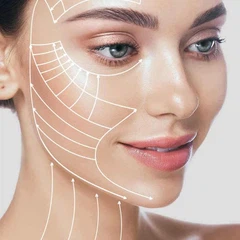
The early appearance of fine lines is similar to that of enlarged pores, both being external manifestations of collagen loss and aging of the elastic fiber network in the dermis. Therefore, the principle behind picosecond laser treatment for improving fine lines (especially early-stage and mild to moderate fine lines) is similar to that for improving pores, with the core being "collagen regeneration."


The micro-damage created by picosecond lasers in the dermis triggers the skin's self-repair mechanism, promoting the production of new collagen. This newly generated, well-organized collagen fills the collagen gaps caused by aging, increasing skin thickness and elasticity, thus smoothing fine wrinkles and improving skin texture and smoothness. Because collagen regeneration and remodeling takes time, this process usually requires a certain number of treatments and a recovery period.
Advantages of Picosecond Laser Technology
- Precision:
Picosecond lasers can highly selectively target specific tissues while minimizing damage to surrounding healthy tissues.
- Low Thermal Damage:
The ultra-short pulse width generates almost no heat diffusion, significantly reducing the risk of burns and minimizing post-operative redness, swelling, scabbing, and pigmentation.
- Shortest Recovery Time:
Compared to traditional lasers, picosecond lasers generate less heat and inflammation, are safer and more efficient, and have a shorter recovery period, allowing for a quicker return to daily life.
- Deeper Target:
Effectively stimulates collagen regeneration in the dermis, fundamentally improving skin texture.
- Multifunctionality:
One device can simultaneously address pigmentation issues (spots, dark acne scars) and non-pigmentation issues (redness, pores, fine lines), achieving "comprehensive facial rejuvenation."
- Long-lasting Results:
Picosecond laser technology stimulates the body's own collagen regeneration, bringing ideal skin improvement results that gradually appear over time and can be maintained for a long period.
In summary, picosecond lasers, with their unique photoacoustic effect and powerful collagen regeneration capabilities, continuously provide patients with non-invasive and highly effective skin rejuvenation solutions. They not only effectively remove blemishes and tattoos, but also give you smooth and firm skin.
On the long road to defying the aging process, advanced picosecond laser technology, with its scientifically sound, safe, and minimally invasive approach, allows us to achieve a youthful appearance and mindset. Feel free to contact us anytime; we are always ready to provide you with professional knowledge and services related to medical aesthetics.