



Author: Newangie
HIFU (High-Intensity Focused Ultrasound) and RF (Radio Frequency) are the two most widely used non-invasive skin tightening technologies in modern medical aesthetics. Although both treatments stimulate collagen production and improve skin firmness, there are significant differences between them.
HIFU targets deeper tissues, including the SMAS layer, making it ideal for facial lifting and contouring; RF, on the other hand, primarily acts on the dermis to improve skin texture, elasticity, and achieve overall rejuvenation.
Understanding the differences between HIFU and RF helps patients and practitioners select the most effective solution for specific anti-aging and skin tightening goals.

HIFU and RF, two widely used anti-aging cosmetic technologies, are both marketed as "non-invasive skin tightening techniques," but their principles, focus of effect, and target populations are fundamentally different. In short, HIFU excels at "lifting," addressing sagging tissue; RF excels at "firming," addressing loose skin and signs of aging.
Understanding the differences between these two technologies will help you make a more suitable choice when introducing anti-aging programs to your clinic or beauty salon, or to combine the two for better results.
What is HIFU? How HIFU Promotes Facial Skin Tightening?
HIFU (High-Intensity Focused Ultrasound) utilizes the focusable properties of ultrasound to precisely concentrate energy at a tiny point deep within the skin, creating a thermal coagulation point at 60-70°C. During this process, the epidermis and superficial dermis remain completely unaffected; the energy directly "penetrates" the surface and focuses at the target depth.
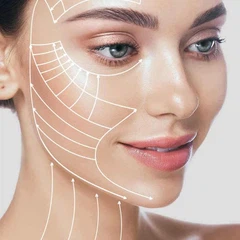
Through the thermal contraction of the SMAS layer, HIFU achieves structural lifting, improving issues such as sagging cheeks, a blurred jawline, and a double chin. Because HIFU targets deeper supporting structures, it is often referred to as a non-surgical facelift technique.
HIFU's most significant advantage lies in its depth of action-it can reach the SMAS fascia layer, the deep structure supporting facial contours and the primary layer targeted in surgical facelifts.
Clinical Data: A study published in the Journal of Cosmetic Dermatology evaluated the efficacy of Micro-focused Ultrasound (MFU). Results showed that 80.7% of subjects exhibited visible improvement in facial and neck laxity at 90 days post-treatment. Quantitative measurements confirmed a mean reduction of 28.5 mm² in the submental (double chin) area.
Source: Luebberding, S., et al. "Effectiveness of noninvasive skin tightening: A systematic review." Journal of Cosmetic Dermatology.
HIFU addresses a full range of skin needs, from superficial skin texture to deeper contouring:
• Superficial Improvement (1.5mm): Targets epidermis and superficial dermis. Improves early aging signs (eye fine lines, crow's feet, forehead wrinkles), shrinks pores (nose/cheeks), and fixes dullness from late nights by stimulating superficial collagen. Delivers brighter, smoother skin.
• Mid-Layer Firming (3.0mm): Energy penetrates deep into the dermis, helping to tighten minor sagging in the cheeks and apples of the cheeks, improve early-stage fine lines in the neck, and restore elasticity and volume. Ideal for those with mild to moderate sagging.
• Deep Lifting (4.5mm): Directly reaches the SMAS fascia layer, fundamentally rebuilding the skin's support structure. It's particularly effective for aging-related facial contour collapse, such as a double chin, blurred jawline, and prominent nasolabial folds. The results are comparable to non-surgical facelifts, re-lifting and tightening the overall contour.
What is RF?
RF (Radio Frequency) is a type of high-frequency alternating electromagnetic wave. When radiofrequency current acts on skin tissue, water molecules within the tissue vibrate and rub against each other at high speed, generating heat.
Unlike HIFU, radiofrequency energy penetrates and diffuses through the tissue rather than concentrating at a precise focal point. When the dermal temperature reaches approximately 65°C, collagen fibers immediately contract, producing an immediate tightening effect. Simultaneously, this thermal effect triggers the skin's wound healing response, stimulating fibroblasts to produce new collagen, resulting in continuous improvement in skin texture for 3-6 months after treatment.
Depending on the electrode configuration, radiofrequency devices can be categorized as monopolar, bipolar, and multipolar. Monopolar radiofrequency (such as Thermage) penetrates to the deepest depth, reaching 4.3mm, and has the most significant effects; bipolar and multipolar radiofrequency have relatively shallower and gentler effects.
Multi-Mode
RF technology offers various modes: monopolar, bipolar, or multipolar, and microneedle. Newangie's microneedle RF device combines microneedle technology with radiofrequency (RF) energy. Compared to traditional RF technology, microneedle RF offers more precise energy penetration, less surface damage, and superior anti-aging effects.
Multi-Area Compatibility
It can be used on multiple areas, including the face, neck, abdomen, and arms. It generally focuses on improving both the epidermis and dermis, addressing both facial anti-aging and body contouring needs. Newangie's Youshape ID Flex RF, for example, targets body contouring, tightening the skin through deep thermal stimulation, sculpting the body, and reducing the appearance of cellulite.
The Core Differences: HIFU VS RF
While both technologies stimulate collagen production, several differences exist between them.

This is the most fundamental difference.
HIFU can precisely target the subcutaneous layer at depths of 1.5mm, 3.0mm, 4.5mm, or even deeper, reaching the SMAS fascia layer;
RF primarily targets the dermis (approximately 2mm-4.3mm), unable to reach the depths of HIFU.
HIFU utilizes focused ultrasound energy to heat deep tissues in a point-like manner, creating multiple thermal coagulation points and generating a lifting effect;
RF utilizes radiofrequency energy to heat skin tissue in a three-dimensional, volumetric manner, covering a wider and more even area. Its primary effect is on the dermis, effectively improving skin texture.
Optimal Suitable Candidates
HIFU is suitable for those with moderate to severe facial sagging due to collagen loss and fascia laxity, such as drooping cheekbones and blurred jawline.
Radiofrequency (RF) is suitable for those with mild to moderate skin laxity and numerous wrinkles, especially those with thin faces who wish to achieve a plump, collagen-rich appearance.
Treatment Sensation
HIFU produces a tingling sensation at the moment of energy focusing, particularly noticeable in bony areas such as the jawline and below the cheekbones.
RF provides a continuous warming sensation; monopolar RF has a stronger warming effect and requires topical anesthesia.
Results and Duration
HIFU provides an immediate lifting effect of approximately 20%, with optimal results appearing after 3-6 months and lasting for about 1-2 years.
RF offers an immediate tightening effect, with collagen regeneration reaching its peak around 3 months and lasting for about 1-1.5 years.
Clinical data: According to a 12-month follow-up study published via PubMed (NCBI):
Longevity: 67% of patients maintained their peak results for 12-15 months after a single high-intensity session.
Safety: The incidence of temporary erythema (redness) was recorded in 92% of cases, but 100% of these resolved spontaneously within 2.5 hours, proving the high safety profile of non-invasive energy devices.
Source: National Center for Biotechnology Information (NCBI): "Long-term efficacy and safety profiles of high-intensity focused ultrasound for skin tightening."
Recovery Period
Both are non-invasive treatments with virtually no recovery period.
HIFU may cause slight swelling and tenderness upon pressure. Treatments for superficial and mid-layers produce little to no redness or swelling, allowing makeup to be applied the same day. Deeper layers may cause slight redness, which subsides within a few hours to a day, ensuring no disruption to work or appointments.
RF may cause slight redness, which subsides within hours to one or two days. There is no noticeable epidermal trauma, without downtime.
Main Effects
HIFU excels at lifting, effectively lifting sagging tissue, reshaping the jawline, and reducing double chin;
RF excels at tightening, effectively tightening loose skin, reducing fine lines, minimizing pores, and improving skin texture.
Clinical data: Clinical histology reports from the Aesthetic Surgery Journal indicate that Radiofrequency (RF) treatments trigger a significant biological response. Biopsy samples taken 3 months after a full RF treatment cycle showed a 40% increase in Type I and Type III collagen density compared to baseline. Additionally, the average thickness of the papillary dermis increased by 19%, leading to measurable improvements in skin elasticity.
Source: Hantash, B. M., et al. "Bipolar fractional radiofrequency treatment induces neoelastogenesis and neocollagenesis." Aesthetic Surgery Journal.
HIFU vs RF for Fat Loss
- HIFU: Utilizes a probe at a specific depth (e.g., 6mm-13mm) to dissolve fat cells physically, making it suitable for stubborn localized fat deposits.
- RF: Primarily uses heat energy to accelerate metabolism and shrink fat cell volume, while also improving cellulite and creating smoother lines.
Which Technology Provides Better Lifting Results?
When clients are primarily interested in facial lifting treatments, HIFU typically offers greater advantages.
Because HIFU targets the SMAS layer, it can tighten the deep tissues responsible for facial sagging.

HIFU is commonly used for:
- Jawline lifting
- Cheek lifting
- Neck tightening
- Double chin reduction
- Brow lifting
Patients seeking a more defined facial contour typically benefit from HIFU treatment.
Radiofrequency (RF) can also produce tightening effects, but these results are usually more subtle and primarily affect the superficial layers. For those seeking significant lifting results without surgery, HIFU is generally considered the preferred option.
Clinical data: Clinical measurements using 3D skin imaging (VECTRA) have demonstrated the following measurable outcomes:
Brow Elevation: An average lift of 1.7mm to 2.1mm at the 90-day mark post-HIFU.
Jawline Sharpness: A 22% reduction in submental (double chin) volume within 6 months.
Collagen Density: RF treatments contribute to a 15-20% increase in dermal collagen density after a complete treatment cycle (measured via skin biopsy/ultrasound).
Which Technology Is More Effective For Improving Skin Texture?
If a patient's primary goal is to improve the condition of their facial skin, radiofrequency (RF) typically delivers outstanding results.
RF treatments help improve:
- Enlarged pores
- Fine lines
- Uneven skin texture
- Mild wrinkles
- Dull complexion
Microneedle RF systems are particularly effective because they combine controlled micro-injuries with radiofrequency energy. This dual stimulation promotes deep collagen remodeling and skin renewal. For patients seeking to improve skin texture and revitalize their skin, radiofrequency (RF) may be the treatment of choice.
Choosing the right technology depends on whether the patient requires a 'structural lift' (HIFU) or 'surface remodeling' (RF Microneedling). The following clinical matrix provides a professional guide for treatment selection."
| Clinical Indications | HIFU | RF Microneedling | Clinical Recommendation |
| Face & Neck Laxity (Mild to Moderate) | ★★★ | ★★ | HIFU energy can precisely reach the SMAS layer to achieve structural tightening. |
| Acne Scars | - N/A | ★★★ | RF microneedling is exceptionally effective for dermal remodeling and scar repair. |
| Periorbital Wrinkles | ★★ | ★★★ | RF microneedling is suitable for thin skin; treatment depth is 0.5–1.5 mm. |
| Jawline Contouring | ★★★ | ★ Limited | HIFU targets a depth of 4.5mm to achieve a non-surgical lifting effect with a defined jawline. |
| Nasolabial Folds / Marionette Lines | ★★★ | ★★ | HIFU provides foundational support by tightening the fascia. |
| Skin Texture & Enlarged Pores | ★Mild | ★★★ | Mechanical microneedling combined with RF technology tightens pore walls. |
| Submental Fat / Double Chin | ★★★ | - N/A | The body transducers (6mm–13mm) included with HIFU devices can effectively target fat cells. |
| Active Acne |  |
|
Neither-treat the acne first, then the scarring. |
★Mild/Limited ★★Good ★★★Best
Looking to offer both lifting and texture solutions? Newangie's multi-platform systems allow your clinic to cover 90% of facial rejuvenation demands.
Choosing Between RF Treatment vs HIFU: Precisely Matching Needs and Scenario
Now that we have a detailed understanding of the principles and differences between HIFU and RF technologies, the key to choosing lies in clearly identifying your most pressing facial concerns. You can choose a treatment method based on your core needs, or consider a combination approach.
Feeling your face is sagging overall, with droopy cheeks;
A blurred jawline, a double chin;
Wanting to improve droopy eyebrows or eye corners.
Loose facial skin, many fine lines, large pores;
Frequent facial expressions leading to prominent nasolabial folds and marionette lines;
A thin face, wanting fuller, more elastic skin;
Wanting to improve fine lines around the eyes or localized sagging on the body.
HIFU and RF are not mutually exclusive. For most people over 30 who have both loose and sagging skin, combining HIFU with radiofrequency (RF) is a better solution.
First, HIFU acts on the deep fascia, lifting the entire facial structure; then, RF acts on the dermis, tightening the skin comprehensively and stimulating collagen regeneration. HIFU addresses structural sagging, while RF addresses superficial laxity and skin texture issues. The two complement each other, resulting in a natural synergistic effect.
Clinical data: Multi-center clinical trials have compared standalone HIFU vs. Combined HIFU/RF protocols. Data suggests that patients receiving the combined treatment experienced a 35% higher satisfaction rate in overall facial contouring compared to those receiving HIFU alone. The combination protocol resulted in a 1.5x faster visible improvement in skin texture and "glow" due to the dual-layer stimulation of both the SMAS and the superficial dermis.
Source: International Journal of Medical Aesthetics & Clinical Research: "Evaluating the Synergistic Outcomes of Ultrasound and Radiofrequency in Non-Surgical Rejuvenation."

Of course, you can also choose the treatment that suits you based on the following categories.
• Emergency Contouring Needs:
For those with age-related concerns (such as a blurred jawline, a prominent double chin, or sagging skin), HIFU is the preferred choice. It targets the SMAS fascia layer, quickly rebuilding the facial support structure.
• Overall Skin Enhancement:
If your primary concern is skin texture, such as enlarged pores, noticeable fine lines, or rough, inelastic skin, RF technology can stimulate dermal collagen regeneration throughout the skin layer. Long-term use can lead to firmer, more refined skin.
• Anti-aging Body Treatment:
For those with a firm abdomen and excess arm fat, monopolar RF can effectively tighten large areas of subcutaneous tissue, creating a smoother, firmer body contour.

• Preventive Anti-Aging (25-35 years):
At this stage, skin begins to experience collagen loss but hasn't yet experienced noticeable sagging. Radiofrequency technology gently stimulates collagen regeneration and maintains skin elasticity.
• Corrective anti-aging (ages 35-50):
Fascial laxity leads to sagging contours. HIFU's deep-level intervention can precisely address the core issue.
• Senile anti-aging (ages 50 and older):
Thinning skin and insufficient collagen reserves can be treated with low-energy HIFU combined with radiofrequency. This can improve contours and skin texture while reducing the risks of a single treatment.
• Highly Effective and Long-Lasting: If you're looking for a treatment lasting more than a year and can tolerate minimal pain and a higher budget, HIFU is a more economical option.
• Gentle and Gradual: If you seek a comfortable treatment experience and desire gradual improvement over the course of treatment, radiofrequency technology better meets your expectations and offers a more affordable price per treatment.
Newangie Core Technology Facial Tightening Device

/ HIFU-Multifunctional Platform
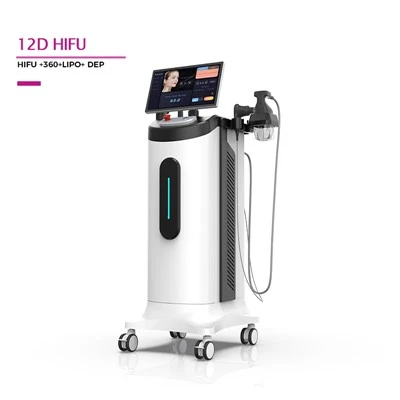
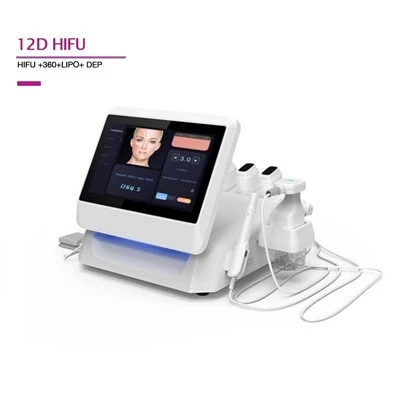
Professional Non-Invasive Face Lift HIFU Machine for Facial Lifting Treatments
🔹Technology Integration: A cutting-edge 4-in-1 system integrating four major modules: 12D HIFU, Vmax, Liposonix, and Vaginal Tightening.
🔹Operational Efficiency: The 12D HIFU handpiece supports up to 12 lines per shot, significantly enhancing treatment coverage uniformity; facial treatment time is reduced by approximately 50% compared to traditional single-line devices.
🔹Consumable Longevity: Highly cost-effective consumable design-the 12D handpiece cartridge lasts for 20,000 shots, while the Vmax cartridge supports up to 60,000 shots, significantly lowering per-treatment operating costs for clinics.
🔹Precision Depth: Equipped with a comprehensive range of cartridges. Facial options include 1.5mm, 3.0mm, and 4.5mm; body options range from 6mm to 16mm, allowing for precise selection based on the specific treatment area and the extent of fat accumulation.
🔹Ideal For: Medium-to-large medical aesthetic clinics seeking high operational efficiency and a single-device solution for facial laxity, deep tissue sagging, and stubborn localized fat.
🔹Certifications: CE, ISO 13485.

/ RF Microneedling Therapy - Precision Vacuum-Assisted System
High-end Microneedle Radiofrequency Device
🔹Core Technologies: Vacuum suction + Gold microneedles + Bipolar RF.
🔹Depth Adjustment: Precise depth control (0.2mm–3.5mm) via an electric motor, with 0.1mm increments, covering the full range from superficial skin rejuvenation to deep scar repair.
🔹Needle Configuration: Offers four types of professional, sterile needle tips designed for targeted treatment of acne scars, fine lines, and stretch marks of varying sizes and severity.
🔹Skin Protection: Utilizes gold-plated insulated microneedles; energy is delivered exclusively from the tip to the target depth, effectively minimizing thermal damage to the epidermis and reducing the risk of post-procedure redness and pigmentation.
🔹Ideal For: Skin care centers specializing in scar repair, enlarged pore reduction, and gentle yet effective anti-aging treatments for the eye area.
🔹Certifications: CE, ISO 13485.
What Safety Precautions Should Be Taken During Treatment?
No matter which technology is chosen, safety is always the top priority.
Operator Qualifications
HIFU and RF are both high-energy devices. Improper operation may lead to adverse consequences such as skin burns, fat atrophy, and even nerve damage. Some instruments are designated for operation by a doctor; it is essential to choose a reputable institution and a qualified operator.
Equipment Certification
Ensure that you are using certified and legitimate equipment. Many counterfeit and knock-off machines exist on the market, with unstable energy output and significant safety risks.
Pre-treatment Assessment
A professional skin test and consultation are required before treatment. Consult a professional doctor to help determine if you are a suitable candidate for this treatment and which energy parameters are appropriate.
Post-treatment Care
After both types of treatment, pay attention to moisturizing and sun protection. Avoid high-temperature environments (such as saunas and strenuous exercise) for one week.
Contraindications
Pregnant women, those with metal implants in the treatment area, those with severe acne or skin infections, and patients with bleeding disorders are not suitable for these treatments.
For Clinics and Beauty Salons: HIFU or RF?
| Your Organization Profile | Best-Match Technology | Recommended Machine | Rationale |
|
High-end Medical Aesthetics Center
(Focusing on anti-aging for the 35–55 age demographic; prioritizing high efficiency) |
HIFU | 12D HIFU 4-in-1 Platform(FU8) |
12-line technology drastically reduces treatment time compared to single-line systems. Zero downtime ensures high client acceptance, while extremely low consumable costs (mere cents per shot) guarantee exceptionally high profit margins per treatment. |
|
Dermatology Clinic
(Specializing in acne scar repair and skin texture management) |
RF Microneedling | Microneedling Machine Rf (MR16-6S) |
Vacuum suction ensures precise treatment delivery, even on uneven scarred areas.
Treatment-based revenue: A 3–5 session protocol helps build client loyalty and secures long-term cash flow. |
|
Comprehensive All-in-One Solution
(for addressing both sagging and skin texture issues) |
Combined Treatment Protocol | FU8+MR16-6S/MR16-8S | The total investment for this combined package ranges from approximately $10,000 to $25,000, covering over 90% of non-surgical facial rejuvenation needs at the clinic. |
|
Start-up Clinics/Studios
(Limited budget, seeking a broader client base) |
RF Microneedling | MR16-8S |
RF microneedling's effectiveness in addressing enlarged pores, acne marks, and fine lines appeals to a large demographic of young adults aged 25–40.
It offers an accessible entry-level price point, while its versatile needle configurations allow it to treat a wide range of common skin concerns. |
|
Body Contouring Center
(Seeking to expand into facial treatments alongside body shaping) |
12D HIFU (Includes Liposonix module) | FU5-1S |
Utilize 6mm–16mm transducers for localized fat reduction while simultaneously expanding into facial treatments using 1.5mm–4.5mm transducers.
Eliminates the need for two separate devices, maximizing clinic space efficiency and minimizing initial investment costs. |
|
Markets with high risk of PIH
(e.g., populations with darker skin tones, such as Fitzpatrick types III–V) |
HIFU | FU8 |
HIFU causes zero damage to the epidermis and carries virtually no risk of post-inflammatory hyperpigmentation (PIH).
For clients with darker skin tones, HIFU is the safest, preferred anti-aging solution, offering a lower risk profile compared to laser or invasive treatments. |

Looking to introduce HIFU or RF technology to your clinic?
Newangie offers a variety of beauty technologies, including HIFU, RF microneedling, laser hair removal, picosecond lasers, microwave therapy, and roller massage, helping your clinic or beauty salon expand its offerings with the latest beauty treatments.
Conclusion: RF vs HIFU Which is Better?
If your primary concern is lifting and improving sagging skin contours, HIFU is a more direct choice. If your primary concern is tightening and improving skin laxity and texture, RF is more effective. For most people over 30 who experience both sagging and drooping skin, combining HIFU and RF treatments often achieves a synergistic effect greater than the sum of its parts, which is currently recognized as a superior strategy in the medical aesthetics field.
Regardless of which option you choose, it is crucial to consult a reputable medical institution and an experienced doctor for thorough communication and evaluation to develop a truly personalized anti-aging plan. There is no single best cosmetic technique, only the most suitable cosmetic plan for your individual needs.
If you would like to learn more about how HIFU compares to other non-invasive facial tightening technologies, please read "How To Choose The Best Skin Tightening Treatment For You?"
If you are interested in Non Surgical Face Lift treatments, you can read "Non Surgical Face Lift: Regain A Youthful, Firm Appearance Without Surgery"
Explore More Professional Resources >>
If you're still researching before purchasing, explore our expert buying guides and educational resources: